
This month, Americans commemorated the 25th anniversary of the September 11 attacks. A generation later, American foreign policy is now entirely focused on new threats. Looking back, we can call the Global War on Terror a success, thanks to President George W. Bush.
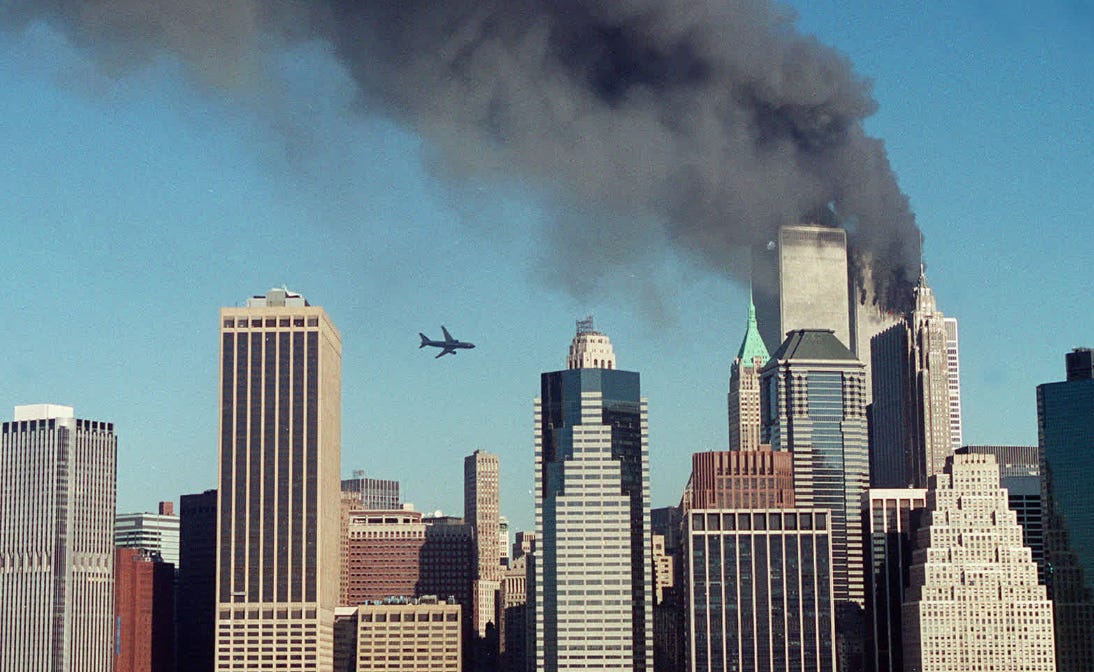
First, let us start with an important reminder: When 9/11 happened, nobody in the U.S. government knew much about al-Qaeda. The U.S. government, from the intelligence community to the Department of Defense, was entirely blind about the enemy it would soon be fighting.
Politicians love to blame intelligence failures, but every intelligence failure results from a policy failure. In this case, that failure was not paying adequate attention to Islamic extremism.
In 1979, the Islamic Republic assumed power in Iran. Later that year, Islamic extremists, inspired by the revolution in Iran, besieged the Grand Mosque of Mecca. In the 1980s, the Reagan administration supported religious fighters in Afghanistan against the Soviet Union. It was the right thing to do because it resulted in our victory in the Cold War soon after, but then America stopped thinking about Afghanistan and Islamic extremism and called it a day.
Islamic terrorism started in the 1980s. First, backed by Iran, Hezbollah killed dozens of U.S. Marines in Lebanon by bombing a Marine barracks.
In the 1990s, terrorism became more common. In 1992, Islamic terrorists attacked a hotel in Yemen where American military personnel were staying. Then in 1993, an Islamic terrorist bombed the World Trade Center. In 1995, a car bomb in Saudi Arabia killed five American National Guardsmen. In 1998, two simultaneous attacks targeted U.S. embassies in Kenya and Tanzania. In 2000, terrorists bombed USS Cole in Yemen.
America and Israel were not the only targets. The most high-profile case other than the ones above was an Islamic terrorist bombing in Mumbai in 1993 by individuals who had received training in Pakistan. The car bombings killed hundreds of people.
That was after the Cold War, and the Clinton administration wanted to do away with foreign policy headaches. So it did not pay much attention to these issues. Rather than understanding the enemy and going after it, the Clinton administration decided to prosecute those who had attacked the United States. They all had one thing in common: They were al-Qaeda members.
Despite the emergence of this threat, the Clinton administration still did not require the intelligence community to study al-Qaeda. So when the September 11 attacks happened, the Bush administration had nobody to ask who the attackers were, how they operated, and what they believed.
The Bush administration reacted quickly. It consulted with scholars of the Middle East to understand the enemy. It looked to see why the intelligence community had missed the attacks. It soon understood how al-Qaeda operated. Within months, the administration was proposing government reforms to prevent future attacks and had a strategy to go after al-Qaeda. The strategy included a military element—going after them where they were, so they could not attack us while on the run—but it also involved targeting their finances and cutting them off from the international banking system.
The military part was not very easy, either. The U.S. military had been designed mostly to fight the Soviets in the forests of Europe, not terrorists in the deserts of the Middle East and mountains of South Asia. The Bush administration had to fight a war with a military designed for a very different type of war. The administration worked hard with Congress to procure new types of weapons. Most importantly, the Bush administration pioneered the use of drones and worked to develop new types of drones.
It has been a quarter century since America was attacked. There have been lone wolf attacks on U.S. soil since, but there has not been a single coordinated attack by al-Qaeda. In 2001, people thought that planes flying into buildings and bombing blowing up in public places would be the new normal. The Bush administration feared the same thing. But thanks to President Bush’s leadership, none of that happened. President Bush had one job for the rest of his term: Keep Americans safe. He accomplished that. Everything else was peripheral.
Bush’s success is even more impressive when you think about how far behind America was in understanding the enemy.

By Chuck Warren