Venezuela was once one of America’s closest partners in the Western Hemisphere — a major energy supplier, a military ally, and an economic powerhouse built on the largest proven oil reserves in the world.
So how did a nation with that kind of wealth, influence, and institutional capacity become dependent on Cuba for doctors, intelligence services, and even the personal security of its president?
On the latest episode of Breaking Battlegrounds, Ambassador Thomas Shannon — a 35-year veteran of the U.S. Foreign Service and former Under Secretary of State for Political Affairs — laid out the rarely discussed story of how Venezuela’s internal collapse created an opening Cuba was uniquely positioned to exploit.
A Once-Integrated Partner of the United States
Before Hugo Chávez, Venezuela wasn’t isolated from the United States — it was deeply integrated with it.
Venezuelan oil was pumped at home, refined in the U.S., and distributed through Citgo, which at one point operated more gas stations in America than Kentucky Fried Chicken had restaurants. Militarily and economically, Venezuela stood as one of Washington’s closest partners in Latin America.
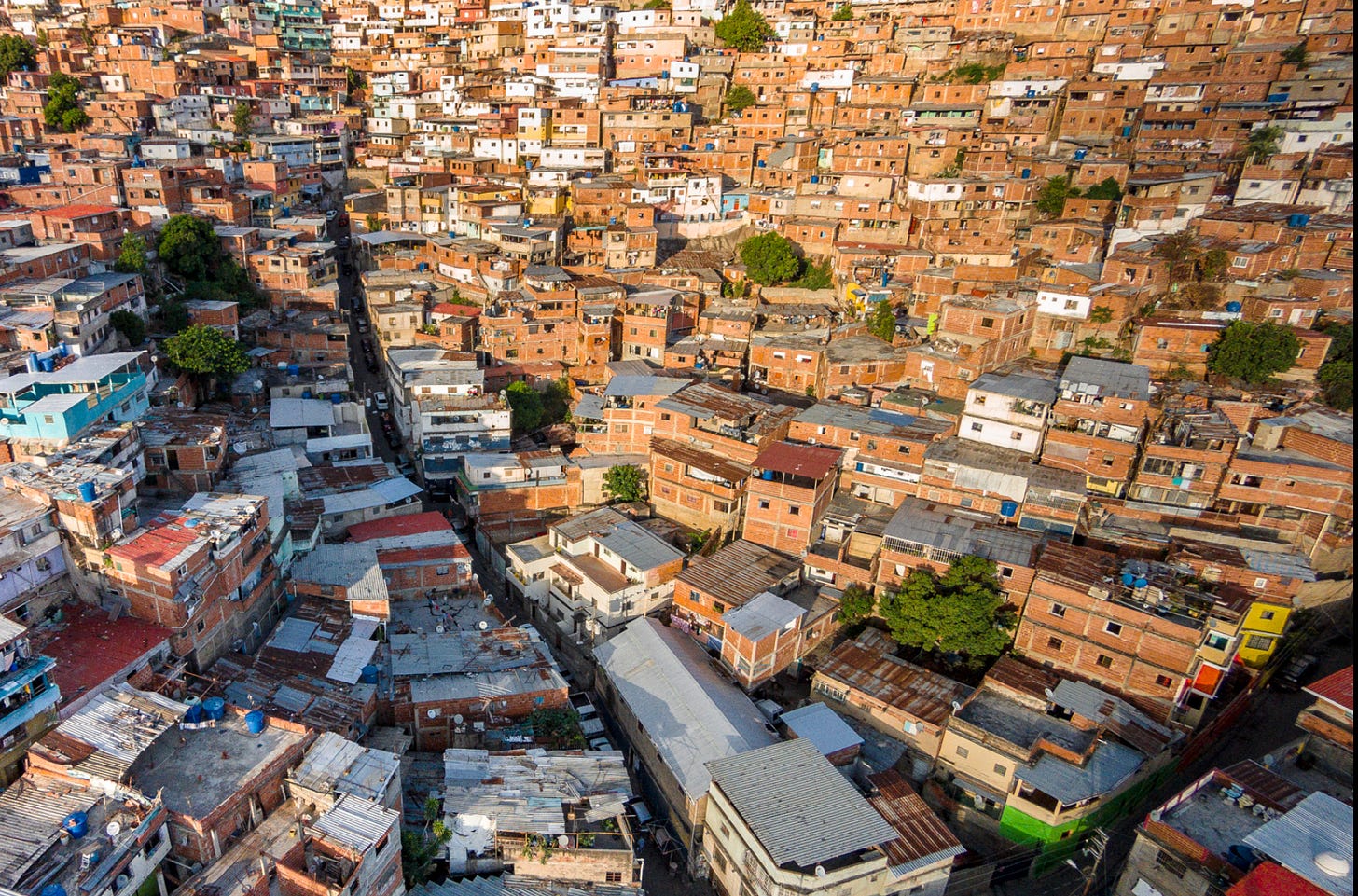
But beneath that prosperity sat deep social problems: poverty, massive urban slums, and medical needs the Venezuelan government had long failed to address — especially in places like Caracas.
That gap would prove decisive.
Why Chávez Turned to Cuba
When Chávez came to power, his political survival depended on reaching the poorest and most dangerous neighborhoods — places Venezuelan institutions struggled or refused to enter.
Cuba, however, was willing.
Cuban doctors and social workers embedded themselves deep inside Venezuela’s slums, delivering care while also building political loyalty. It became one of the cornerstones of Chávez’s populist outreach — and an early warning sign that social services and political control were becoming inseparable.
But the real turning point came soon after.
The Moment Venezuela Lost Control
In the early 2000s, Chávez faced open revolt — first from the petroleum sector, then from the military itself. He was briefly deposed.
When Chávez returned to power weeks later, he no longer trusted Venezuela’s own institutions to protect him — or even to tell him who his enemies were.
That’s when Cuba’s role fundamentally changed.
According to Ambassador Shannon, Chávez brought Cuban intelligence and security services in to rebuild Venezuela’s internal security apparatus, identify disloyal elements, and reshape the armed forces. Crucially, this wasn’t a temporary fix.
The Cubans stayed.
A Security State Built From the Outside In
What emerged was a regime dependent on foreign intelligence to maintain internal control — a recipe Ambassador Shannon implicitly described as deeply destabilizing.
Cuban operatives helped Chávez — and later Nicolás Maduro — monitor dissent, restructure the military, and consolidate power. Over time, Venezuela’s sovereignty eroded not through invasion, but through dependence.
What began as medical assistance became political leverage.
What began as intelligence support became structural control.
And once embedded, Cuba never left.
A Warning for the Hemisphere
Venezuela’s story is not just about socialism or oil mismanagement. It’s about how fragile institutions, social neglect, and political paranoia can invite foreign control from within.
As Chuck Warren put it bluntly during the conversation: “That sounds like a recipe for disaster.”
History suggests he’s right.
And the consequences of that disaster — from regional instability to mass migration — are still unfolding today.
Transcript
**Chuck Warren: **We’re with Ambassador Thomas Shannon, served 35 years for our country and was formerly the Under Secretary of State for Political Affairs. Why, so our audience would be asking this question. Why would Venezuela be dependent upon Cuba for doctors and security around the president? I mean, most people think, well, can’t Venezuela protect their own president? What is a special skill set, supposedly that Cuba has that Venezuela doesn’t to do such task?
Ambassador Thomas Shannon: You know, it’s a great question because Venezuela, because it has the largest oil and gas reserves in the world and because it was a prominent member of OPEC and because of its relationship with the United States prior to Hugo Chavez, in which it was one of our closest military partners in the hemisphere. It was our closest energy partner in the sense that Venezuela’s energy industry was vertically integrated into the United States.
All the oil was pumped in Venezuela. It was almost all refined in the United States. It had through Citgo, a distribution network in the United States that had more gas stations than Kentucky Fried Chicken had stores. So there was this remarkably connected and integrated relationship between Venezuela and the United States. But at the same time, Venezuela had significant problems with poverty.
And in large cities like Caracas major slum areas right and it had really significant medical and social needs that weren’t being met by the Venezuelan government prior to the Chavez. And therefore when Chavez came in one of the first things he wanted to do was ensure that he could meet the social needs of people who voted for him. And that meant putting doctors and social workers deep into some of the most difficult and dangerous parts of large cities and the Cubans were prepared to do that.
And that became an important part of Hugo Chavez’s political outreach. But in the early 2000s there was a revolt first in the petroleum industry against Hugo Chavez and then in the military against Chavez and he was momentarily deposed and in the aftermath of that several week loss of power when he returns to power he is determined to fundamentally reshape the Venezuelan security services and the army.
But in order to do that, he needs to have an understanding of where he has enemies. And he cannot trust his own institutions to figure that out. So he brings the Cubans in to do that. And the Cubans have stayed.
Chuck Warren: That sounds like a recipe for disaster.
Listen to the full episode of Breaking Battlegrounds anywhere you stream your podcasts!