When Americans argue about policing, they usually do it from the outside looking in.
But city leaders don’t have that luxury.
They’re the ones who get the 2 a.m. call.
They’re the ones who see recruitment numbers fall.
They’re the ones responsible when something goes wrong — and when something goes right.
On Breaking Battlegrounds, former Newport Beach Mayor Will O’Neill pulled back the curtain on what the public often misses in the national conversation about law enforcement — and what real leadership requires when the stakes are public safety and civil liberties at the same time.
The Part People Don’t See
Most people never have to make a life-altering decision in seconds.
Police officers do.
O’Neill points out that the public debate often skips over the reality of what officers face daily: unpredictable encounters, incomplete information, and decisions made in moments of extreme pressure. Those split seconds don’t happen in slow motion. They happen in chaos.
That doesn’t excuse poor performance — but it does explain why leadership, training, and standards matter more than slogans.
What a City’s Job Actually Is
According to O’Neill, city government isn’t complicated in theory. Its core responsibilities boil down to three things:
-
Public safety
-
Public infrastructure
-
Essential services like water and sewer
That first responsibility — public safety — comes with enormous moral weight. Cities grant officers significant authority, including the power to detain, use force, and make decisions that affect people’s freedoms in real time.
Because of that, O’Neill argues, cities must do three things exceptionally well:
-
Recruit the best
-
Train them thoroughly
-
Retain the best performers
Anything less is a failure of leadership, not just policing.
Support and Standards
One of the most overlooked truths in today’s debate: support and accountability are not opposites.
O’Neill is clear — not every officer meets the standard required for a role with this much authority. When someone isn’t up to the job, that’s a serious issue. Public trust depends on quality.
But when officers are performing at the level the public deserves, leadership has an obligation to back them — firmly and publicly. Morale, recruitment, and retention all hinge on whether officers believe their leaders will stand behind them when they act professionally and in good faith.
A Different Model in Orange County
O’Neill contrasts national turmoil with what he’s seen locally. Orange County, California — home to 3.2 million people across 34 cities — has maintained strong institutional support for public safety leadership.
That includes Sheriff Don Barnes, who leads the fifth-largest sheriff’s department in the country and remains one of the most popular elected officials in the region. O’Neill suggests that popularity isn’t accidental — it reflects consistent leadership, community trust, and a public safety model that emphasizes both competence and backing for those who serve.
The Real Balancing Act
This is the tightrope city leaders walk every day:
-
Grant officers significant authority
-
Demand high professional standards
-
Remove those who can’t meet them
-
Publicly support those who can
It’s not ideological. It’s operational.
And in O’Neill’s view, when cities fail at this balance, it’s not just politics that suffers — it’s public safety, community trust, and the willingness of qualified people to wear the badge in the first place.
The national conversation often lives in extremes. But governing doesn’t. It lives in hiring decisions, training budgets, disciplinary standards, and whether leaders are willing to say both:
“We expect the best.”
“We stand behind those who deliver it.”
That’s the part most Americans never see — but it’s where public safety is actually decided.
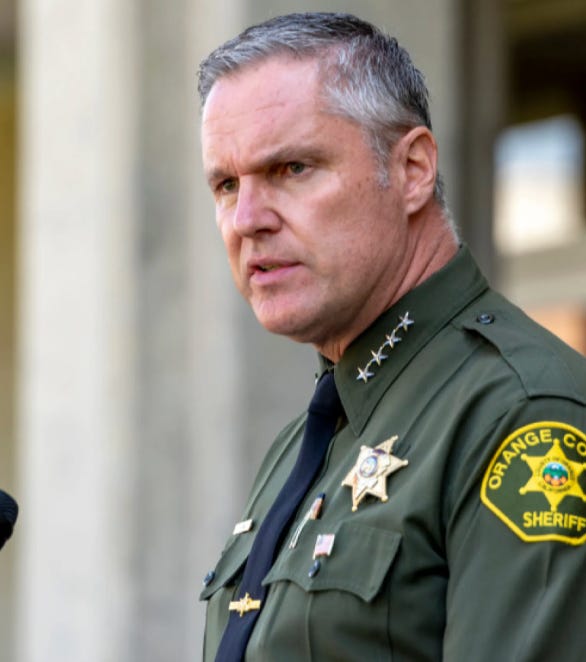
OC Sheriff Don Barnes
Transcript
Chuck Warren: What do you know, based on the what’s going on in Minneapolis and elsewhere times with law enforcement, what do people as a mayor, you dealt with police intimately day by day. What do people not understand about law enforcement and what they go through daily?
**Will O’Neill: **They don’t understand how difficult it is to make snap decisions and moments that are particularly difficult. But like I’ve always said that a police, you know, city council’s role it basically is three things.
It’s public safety, public infrastructure, good water, clean sewer, or good water and good sewer system. Those are the three core things. And so when it comes down to having police officers in particular, city council’s role is to recruit the best, train them well and retain the best. And there are times when you’re going to have an officer or two in your department that just isn’t up to the level that you need them to be at, which is a real problem because we give police officers a ton of authority.
To make massive decisions that affect all of our liberties. And so when we make those decisions and give them that much authority, we do expect the best from them. But when they are performing at that level, we need to support them aggressively. And so we’ve always done that in Newport Beach and actually Orange County, California, even though it is certainly in the Communist Republic of California, Orange County has 34 cities, 23 of them are actually majority Republican city councils.
And so you have a really strong support for our public safety here out in Orange County with 3.2 million people. It’s not a small issue to have, especially a sheriff like Don Barnes out in Orange County. He is the sheriff of the fifth largest sheriff’s department in the country. And he is the most popular elected official we have out here for a reason.
Listen to the full episode of Breaking Battlegrounds anywhere you stream your podcasts!