Inside a Breaking Battlegrounds conversation on family, faith, and the online forces reshaping a generation.
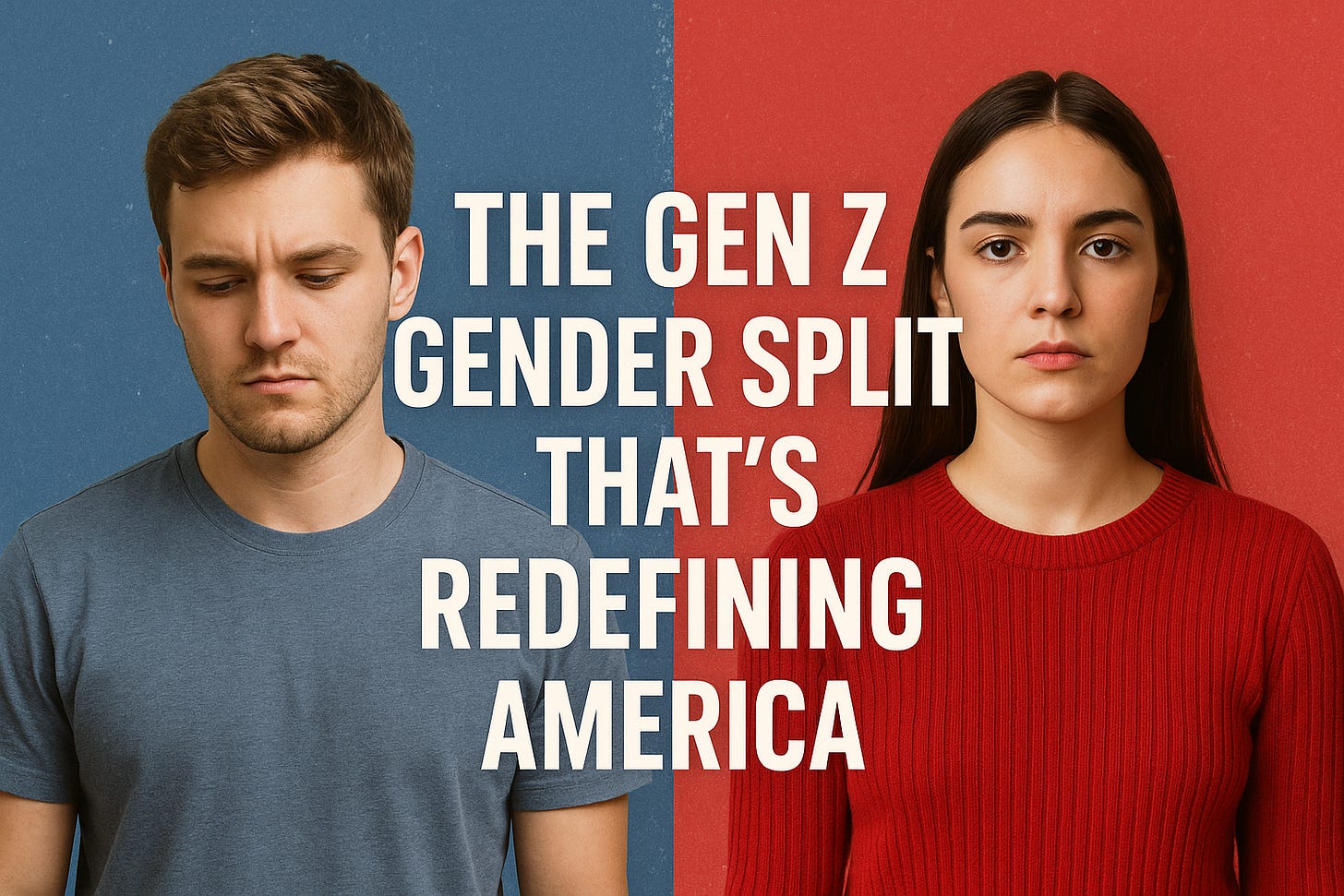
Gen Z isn’t just the youngest voting bloc in America—it’s the most politically unpredictable. And as this week’s Breaking Battlegrounds discussion makes clear, this generation is fracturing along lines few expected.
In a candid segment from our live conversation at Arizona State University, Carolyn Downey and Daniel DiMartino break down the widening gulf between Gen Z men and women—revealing cultural trends that could reshape everything from dating to democracy.
“Crashing Out”: Gen Z’s Struggle for Independence
Carolyn opens with a blunt observation: many young adults are entering the real world without the independence previous generations were forced to develop early.
She jokes—but not really—that bringing a parent to a job interview is “crashing out,” the moment where Gen Z’s sheltered upbringing collides with adult expectations. The instinct for a chaperone, she argues, reflects a deeper developmental delay:
A generation raised to be physically protected, but not prepared for real-world independence.
And this lack of independence, she says, is bleeding into politics.
Gen Z Men Are Turning Conservative. Gen Z Women Are Turning Left.
According to Downey, Gen Z isn’t a single political bloc—it’s two divergent camps.
-
Gen Z women: the most progressive cohort in American history
-
Gen Z men: increasingly conservative, even returning to church at higher rates
This divide isn’t small. It’s reshaping everything from dating to social priorities.
DiMartino highlights a recent NBC poll that stunned analysts:
-
Gen Z men ranked marriage and family as their top life priority
-
Gen Z women ranked marriage and family tenth
It is the first time in decades of polling where women deprioritized family below men. Sam Stone notes this reversal has no historical precedent.
Something massive has shifted.
Coddled Offline, Unsupervised Online
DiMartino draws a sharp distinction that older generations often miss:
Gen Z wasn’t just sheltered. They were sheltered physically—but left completely exposed online.
Parents protected them from scraped knees, sunburns, and unsupervised play.
But they had no idea what was happening on phones and laptops.
That online world—algorithmic, addictive, and often toxic—shaped a generation more than parents did.
The result?
-
Online addiction
-
Radicalization
-
Pornography exposure
-
Gambling apps
-
Digital echo chambers
All largely invisible to the adults responsible for raising them.
For DiMartino, that’s the root of much of Gen Z’s social anxiety, political extremism, and cultural fragmentation.
A Generation Pulling Itself Apart
Combine all these forces:
-
delayed independence
-
polarized gender priorities
-
online distortion
-
fragmented values
-
shifting beliefs on family, faith, and adulthood
…and you get a generation divided not only from older Americans, but from itself.
If Gen Z men prioritize family and faith while Gen Z women prioritize career and progressive activism, this divergence will shape everything from marriage rates to political coalitions.
The political implications are enormous.
The Big Question
Gen Z is now entering adulthood, voting in larger numbers, and influencing national conversations.
But with men and women heading in opposite ideological directions, the real question becomes:
Can a generation so split build a coherent political future—or even a shared culture at all?
Transcript
Carolyn Downey: Oh we’re going to give you a really big dose. Here’s another one for you crashing out. So the fact that Gen Z feels the need to bring a guardian into an interview. I mean I’d call that crashing out. It’s like, you got to be independent here, buddy. This is your chance to prove yourself. OK. Leave the nest. You don’t need a chaperone.
But when we translate this to the political context, Gen Z is difficult not to crack, especially because you have to divide it along gendered lines, because Gen Z men are going in a completely different direction than Gen Z women who are the most progressive group in American history. Gen Z men are increasingly conservative and that exacerbates, I think, the courtship that they’re not doing. You know, because they’re increasingly not seeing eye to eye on politics, on priorities. Gen Z men are going back to church.
Daniel DiMartino: Did you see that poll about what’s your priority in life? Getting married, having children, a career?
**Carolyn Downey: **The NBC poll?
Daniel DiMartino: Yeah. Men versus women. And shockingly, the men ranked having a family first.
Carolyn Downey: Yeah.
**Daniel DiMartino: **And the women ranked having a family tenth.
**Sam Stone: **And for the first time in history, as my understanding is, that poll has been done in some form or another for many, decades. That’s always been women have always ranked marriage and family higher than men have as a priority until this most recent poll.
Daniel DiMartino: Yes, so I think that that’s a reflection of this. You know, Carly mentioned that, you know, parents take care of them and it’s more of a coddled generation, but it’s coddled in the physical sense, not in the online sense. And I think that that’s where a lot of parents lost control of the kids, right? Because the parents don’t know what’s going on online. And that’s where a lot of these problems are happening. Online addiction.
You know, talked about before in the event pornography, radicalization, gambling, you know, so many things online that the older generations don’t even know happens because they’re not aware.
Listen to the full episode of Breaking Battlegrounds anywhere you stream your podcasts!