What if one of the world’s wealthiest, most stable democracies simply said: We’re full?
In June, Switzerland will vote on whether to cap its population at 10 million people. On the surface, that may sound administrative — even technical. In reality, it would function as a de facto immigration ban.
On the latest episode of Breaking Battlegrounds, Henry Olsen of the Ethics and Public Policy Center joined us to unpack what this vote means — not just for Switzerland, but for Europe and potentially the West. And his answer was clear: this could pass.
Why Switzerland? Why Now?
Switzerland is not new to political independence. Its direct democracy system allows voters to take issues into their own hands — even when political elites oppose them. The proposal is being backed by the Swiss People’s Party, the country’s largest political party, which regularly earns between 25–30% of the vote. The rest of the governing coalition opposes it.
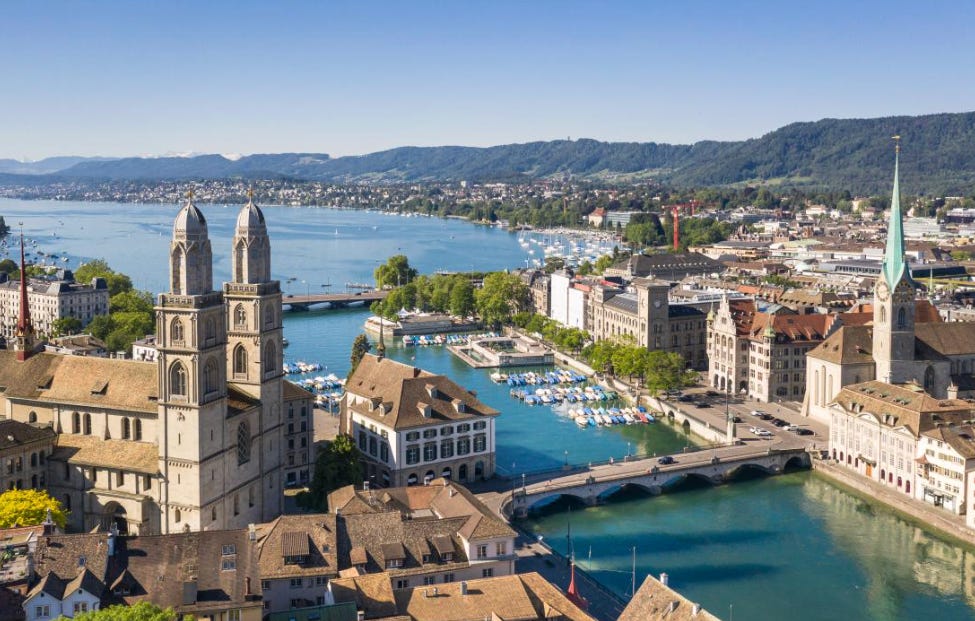
But here’s the key: Switzerland has one of the highest percentages of foreign-born residents in Western Europe. Yes, many are highly skilled professionals working in finance, diplomacy, and international organizations in Zurich and Geneva. But Switzerland has also seen significant migration from lower-income and non-European countries.
The 10 million cap isn’t just symbolic. Once the population reaches that number, the country would effectively shut the door to further immigration. For supporters, it’s about preservation — cultural cohesion, infrastructure strain, national identity. For opponents, it’s a drastic step that could isolate Switzerland and undermine economic growth. But either way, it signals something deeper: voter patience across Europe is wearing thin.
The EU Problem — And the Schengen Question
Switzerland is not part of the European Union. But it is tied into Europe through trade agreements and the Schengen zone, which allows free movement across borders. So what happens if the Swiss electorate votes yes? It could create legal and diplomatic friction. It could complicate Schengen participation. It could strain relations with Brussels. But the bigger impact isn’t technical — it’s political. The EU’s official position has largely been: mend immigration, don’t end it. Tighten asylum standards. Increase repatriations. Reduce abuse. But do not shut the door. If Switzerland adopts a population cap, it blows a hole in that consensus.
A Rallying Cry for Europe’s Populists
Henry Olsen made perhaps the most consequential point of our discussion:
If Switzerland passes this measure, it won’t stay a Swiss issue. It will become a European slogan.
Across the continent, populist parties have surged by arguing that immigration levels are unsustainable. If the Swiss — wealthy, orderly, globally connected Switzerland — say “enough,” it legitimizes similar arguments elsewhere. And nowhere would that ripple be more powerful than France.
The National Rally is currently leading in French polls. If Switzerland votes yes, it would be almost impossible for figures like Jordan Bardella or Marine Le Pen to ignore it. At minimum, they would adopt similar language. At maximum, they could push for comparable structural limits. And if France — a founding EU power — ever moved toward a hard cap on migration? That’s no longer a policy tweak. That’s a continental shift.
What This Really Signals
This isn’t just about immigration. It’s about sovereignty. It’s about identity.
It’s about who decides the future of a nation — voters or bureaucracies. Switzerland’s vote may look small on a map. But if it passes, it could become the first domino in a new European political era. And if it fails? The margin will still tell us how strong this sentiment has become. Either way, Europe is watching. You should be too.
Transcript
Sam Stone: Welcome to another episode of Breaking Battlegrounds. yours, Chuck Warren. I’m Sam Stone. Our first guest up today, a frequent Battlegrounds buddy on this program, Henry Olsen. He is the senior fellow at the Ethics and Public Policy Center. You can follow the Ethics and Public Policy Center, eppc.org. And for Henry, follow him on X, Henry Olsen, EPPC.
Chuck Warren: Henry, welcome.
Henry Olsen: Thanks for having me back.
Chuck Warren: So I’m going to throw you two questions that you probably won’t be asked today, but I think you could have good answers for them. First of all, Switzerland is going to have a vote in June to cap the population at 10 million people. Polling shows it’s winning between 8 and 9%. One, do you think this will pass? And two, explain to your audience why Switzerland’s pushing this and we could possibly see this in other countries in Europe.
Henry Olsen: You know, it could very well pass. Swiss have no problem going outside the mainstream in their direct democracy process, and it’s being backed by the largest party in Switzerland, the Swiss People’s Party, gets around 25 to 30% of the vote. The rest of the parties in government are opposing this, so I think it’s going to be very close. But the reason why it’s being pushed is because Switzerland has a massive number of migrants.
It’s got one of the largest populations as a percentage of the total population of non-natives in the world. Certainly in Western Europe and many of them are not of European background. Certainly there’s a lot of Europeans and Americans who go to Zurich or Geneva for international organizations or for finance or for business, but it has a large number of Muslim immigrants.
And by caping the population at 10 million, you would have a de facto immigration ban. Once you get to this point, you say the country is full and the people who want to come here can’t come here anymore. And the vast majority of those new immigrants are not the high-end Western immigrants who come for work at the high end, but people who come to try and have a better life and avoid their distressed countries on the low end. And this is the Swiss attempt to say no more.
Chuck Warren: Switzerland is not part of European Union, so what could be the ramifications if they do pass this from their European Union allies and trade packs and things of that nature?
Henry Olsen: Yeah, well certainly I’m not sure how the EU has reacted thus far to the proposed law. You know, it’s not a law yet. I believe Switzerland is part of the Schengen agreement, which allows for free transport. I don’t know how it would necessarily intersect with that. But what it does send is it would be a rallying call to similar parties to the Swiss People’s Party that want to completely cut off migration from undeveloped or lesser developed countries.
If it were to pass, it would certainly give an impetus to those parties to call for similar things in their own country, and that would be a direct blow to the Brussels approach, which is to immigration, mend it, don’t end it. They want to deal with repatriations and lower asylum calls, but they do not want to simply shut the doors. And if this were to pass in Switzerland, I think you would begin to see this become a European war cry or flag that’s waved by similar popular parties across Europe going.
And that would have particular importance in France because the national rally the populist party there’s leading in all the polls could very well get a majority which they need in their system to elect a president. I would be a little surprised if Jordan Bardella or Marine Le Pen, the two candidates who will lead RN into the April 2027 presidential elections would not adopt a similar call or something just short of that if it were to pass in Switzerland.
Listen to the full episode of Breaking Battlegrounds anywhere you stream your podcasts!