When military headlines dominate the news cycle, most Americans focus on the immediate battlefield results.
But according to Congressman David Schweikert, the real work — and real risk — often begins after the strikes.
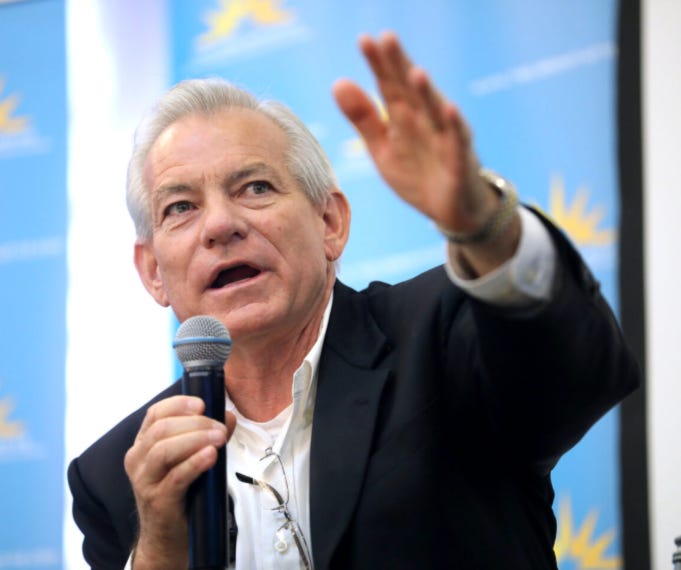
In a special episode of Breaking Battlegrounds, Schweikert joined hosts Chuck Warren to unpack the evolving situation involving Iran, the broader security picture, and what policymakers should be watching right now.
His message was clear: tactical success abroad does not eliminate strategic risk at home.
What Officials Actually Know
Schweikert began with a note of caution about the fog that often surrounds fast-moving international events.
Even as a senior member of Congress, he explained, much of the publicly circulating information mirrors what ordinary Americans are seeing in real time. While some limited briefings have occurred, many operational details remain closely held.
That uncertainty, he suggested, is exactly why policymakers must think several steps ahead.
Thinking Beyond the Strike
While many commentators focus on whether military action was successful, Schweikert emphasized what he sees as the more important policy question: what happens next.
He described early-morning conversations with members of Arizona’s Jewish community and local law enforcement focused on what he called the “Threat Matrix” — the web of potential secondary risks that can emerge following major geopolitical events.
Those concerns include:
-
potential retaliatory threats
-
coordination with local law enforcement
-
protection of vulnerable communities
-
and rapid resource deployment if needed
In Schweikert’s view, responsible leadership means preparing for these downstream effects before they materialize.
Iran’s Internal Reality
The conversation then turned to Iran itself, where Schweikert pushed back on what he sees as an overly simplistic Western narrative.
He noted that Iran’s population is:
-
relatively young
-
highly educated
-
and in many cases more secular than commonly assumed
At the same time, he characterized the ruling structure as deeply entrenched and economically self-interested, describing it in blunt terms as a system where a small elite maintains control through both ideology and financial power.
To illustrate the disconnect, Schweikert recalled observing affluent Iranian travelers abroad — a reminder, he argued, of the gap between the ruling class and ordinary citizens.
A Cautious Note on Regime Change
One of the more nuanced moments in the discussion came when the topic of regime change surfaced.
Schweikert was careful with his wording, acknowledging that the phrase itself carries heavy historical baggage given mixed outcomes from past Western interventions.
Rather than advocating sweeping predictions, he emphasized uncertainty and the importance of watching internal Iranian dynamics closely.
His tone throughout the exchange was notably pragmatic: geopolitical shifts do happen, but they rarely follow clean or predictable paths.
Why the “Secondary Effects” Matter Most
If there was a central theme to Schweikert’s analysis, it was this:
The first-order effects of military action get the headlines. The second-order effects create the long-term challenges.
From potential domestic security concerns to broader regional instability, he argued that policymakers must widen their aperture beyond immediate battlefield outcomes.
It’s a perspective that reflects the increasingly interconnected nature of global conflict — where events overseas can quickly generate consequences at home.
The Bottom Line
This special Breaking Battlegrounds conversation offered a window into how David Schweikert is thinking about the current moment: cautiously, strategically, and with a heavy emphasis on downstream risk.
Whether discussing Iran’s internal dynamics or the importance of domestic preparedness, his focus remained consistent — success abroad does not eliminate the need for vigilance at home.
And in today’s security environment, the aftermath may matter just as much as the action itself.
Transcript
Chuck Warren: Welcome to Breaking Battlegrounds for our special edition with Congressman Schweikert. How are you?
**Congressman David Schweikert: **You know, I always worry when you use the term special. As long as it’s not short bus.
Chuck Warren: It’s what your kids have told me to say, so I’m going to say it. I want to talk primarily today about your run for governor. OK. I think it’s a very important race. You know, we live in Trump world now where things change all the time. And right now we are making some parts of Iran a parking lot.
What are your thoughts on this?
Congressman David Schweikert: It’s, look, we haven’t had a truly broad official briefing yet. About two thirds of what I know is what I read, like you. Just like everybody else, yeah. And then about a third is we’ve had a couple, you know, being a senior member of Congress, a couple discussions of tactics, but some of this is more discussions of do they need something from Congress? Or what allies are playing nice but don’t want their names mentioned?
Chuck Warren: Which are quite a few, I’m sure.
Congressman David Schweikert: Yeah, there’s a lot of other things going on because, and then one of the other things we’re actually substantially involved in in my official office is Threat Matrix. Had a whole briefing conversation with a number of folks from my Jewish community early, early, early this morning.
Just saying, look, as we get towards Friday, what security measures are being taken? Do they need help in moving some resources around, liaisoning with the sheriff’s department, the local police department? So there’s dozens of things that go on in a moment like this, where we all see the pictures of the success of US weapons.
**Chuck Warren: **Right.
Congressman David Schweikert: You know, some of the decapitation strategy. But now, as a policy person, you also have to sort of manage through sort of the secondary effects of, we have terrorist events. You know, what just happened in Texas. Was that a terrorist event? It looks like it.
**Chuck Warren: **Sure does.
Congressman David Schweikert: But we need more details. And how do I make sure that at least the resources we can help provide make sure something like that doesn’t happen here.
Chuck Warren: What do you think after this action, would you consider it being successful? Complete regime?
Congressman David Schweikert: Yeah, there’s some fascinating demographics of Iran, Persia, as couple of my friends like to refer to it. It’s fairly young. Yes. Very well educated.
Chuck Warren: Very secular. A lot of them are secular.
Congressman David Schweikert: And that’s what a lot of people don’t know. So you use these fancy words like it’s a theocracy that is a klepto-government. In other words, it’s basically a religious-based mafia. Right. You know, is the better way to, an understandable language, where you have a small population that uses both the religious control to make money.
And I can give you a living example. I was in Azerbaijan a couple years ago. We were doing a big trade meeting. That’s where the location was. And this is right next to Iran. And I’m looking out and there’s these brand new Mercedes and BMWs and Audis driving by me with Iranian license plates. There’s no head scarf in that from that driver. And they were in the fancy hotels heading towards the beach. I mean, you realize what a fraud.
What so much we see. It’s there’s this aristocracy that’s figured out if you can crush and control people. You can make have a great life. Send your kids to school in Europe and other things. So from my heart, what would happen if you could actually I’m uncomfortable with the term regime change. It hasn’t worked particularly well for Western countries in the United States. But you got to give the president credit.
If I had told you Venezuela would move their vice president to the presidency and they would become a country that’s actually working with the West, you would have thought, but it’s working. It’s happening.
Listen to the full episode of Breaking Battlegrounds anywhere you stream your podcasts!