This week on Breaking Battlegrounds, we sit down with Mariam Wahba, a research analyst at the Foundation for Defense of Democracies who focuses on Egypt and minorities in the Middle East. Wahba brings a perspective few others can offer — shaped both by her personal experience growing up Christian in Egypt and by her cutting-edge research that covers issues almost no one else is addressing today.
She takes us inside what it meant for her family and community to live as Christians under three very different Egyptian presidents: Hosni Mubarak, Mohammed Morsi, and Abdel Fattah el-Sisi. Wahba explains the lived reality of being treated as admi — a term that translates to “second-class citizen” but carries far deeper cultural and political implications.
From Mubarak’s long rule and its undercurrent of Islamist violence, to the brutal crackdown under Morsi’s Muslim Brotherhood regime after the Arab Spring, to the complicated years under el-Sisi who still currently holds power, Wahba illustrates how each leader chose to either protect or abandon Egypt’s Christian minority. Her story shines a light on both resilience and vulnerability, showing why the status of religious minorities in Egypt is a critical issue not just for Egyptians, but for the region and the world.
This is a conversation you won’t hear anywhere else — a rare blend of lived experience and sharp policy insight.
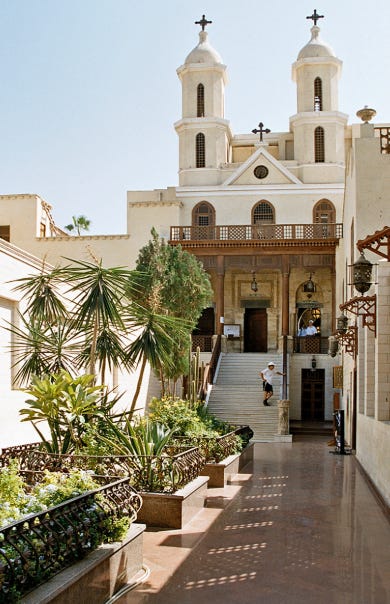
Coptic Church in Cairo
Transcript
**Chuck Warren: **Interesting, interesting. So you were raised in Egypt, Christian, under three different presidents. What was that like for your family and your friends and your community?
Mariam Wahba: Absolutely and look my family and my community's experience and that unique I'm living as a Christian and really any religious minority but particularly Christians under as semi Muslim or generally a Muslim state that it's a difficult experience because you're rendered to what is essentially admi which is an arabic word that loosely translates to second-class citizens but it evoke a larger emotion than just second-class.
Of course we had Mubarak who was the president for egypt for some thirty something years and I mean you had extremist and Islamist attacks under every one of these presidents but it's really to try to explain the differences between the three rulers of Egypt is to try to get at the heart of what role did they see themselves playing as protectors or not protectors of Christians and other minorities.
Of course the most brutal and bloody time and in recent history for Christian the Egypt is under the Muslim brotherhood leader Mohammed Bursi who came to power in the in the aftermath of the arab spring and that was a particularly difficult time for the cops having a Muslim brotherhood president in power. Currently President Sisi(Abdel Fattah el-Sisi) is coming up on year eleven of his rule after the Arab spring and things are complicated I'm happy to dig into that a little bit more as we continue our chat.
Listen to the full episode of Breaking Battlegrounds anywhere you stream your podcasts!