Coming this Friday on Breaking Battlegrounds — here’s your sneak peek inside our conversation with John Reid, who’s running for Lieutenant Governor of Virginia with just seven days to go before voters head to the polls.
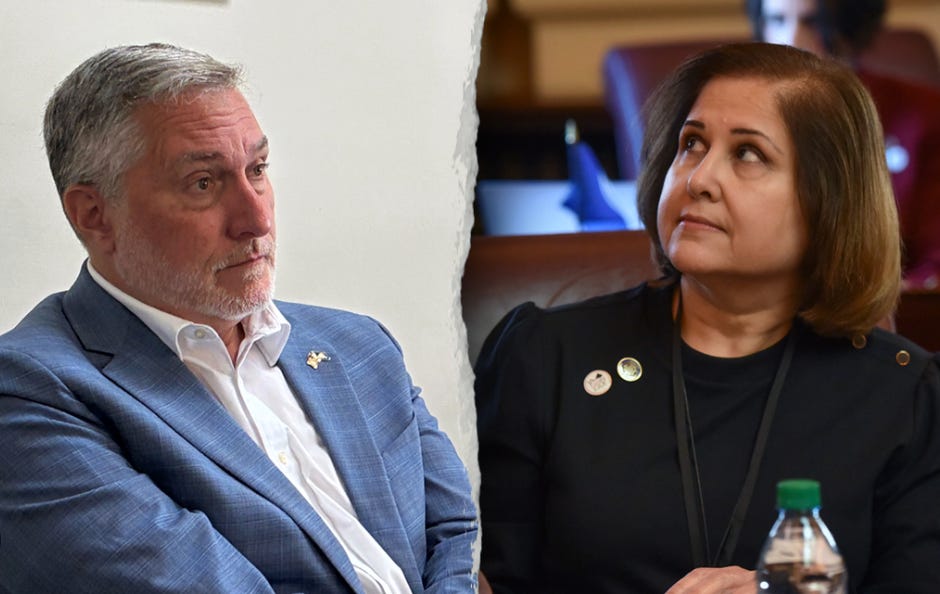
Reid, a longtime radio host and commentator, isn’t afraid to do things differently. When his opponent refused to debate him — for more than four months — he got creative. Instead of waiting around, he staged an AI-generated debate, using his opponent’s own verified quotes and positions to ensure Virginia voters still heard both sides.
It’s one of the most original campaign moments of 2025 — and it’s sparking a much bigger discussion about honesty, accessibility, and courage in politics today.
When the Opponent Won’t Show Up
As Chuck Warren put it during the interview: “You’re running against a state senator who refuses to debate you. So you had to be creative.”
After 125 days and multiple ignored invitations — including one from NPR in Washington, D.C. — Reid decided to give voters the debate they deserved, even if he had to use artificial intelligence to make it happen.
“I told the producer, this can’t be a Saturday Night Live skit or a hatchet job,” Reid explained. “We’re using her actual, documented quotes — nothing fabricated. I just wanted to respond as if it were a real debate.”
The result: a full-length, AI-powered debate featuring Reid facing an artificial version of his opponent, built from her real words and public statements.
Fairness Over Flash
Far from being a political stunt, Reid approached the project like a journalist — careful, factual, and fair.
“I was in television and radio,” he said. “My mind still works like a journalist. I’m not interested in being unfair to people. We used her real quotes, reflected her actual positions, and I responded without rehearsal or a teleprompter.”
His opponent’s response? She didn’t object to the content — only that she hadn’t given permission. “She tried to take the trademark route,” Reid said with a laugh. “But she couldn’t say we were inaccurate. That’s the difference.”
Where’s the Media?
For Reid, what’s more frustrating than his opponent’s silence is the media’s.
As Chuck Warren noted on the show, “A debate is a fundamental part of a campaign. If you don’t want to debate, you probably shouldn’t be running for office.”
Reid agrees — and says local reporters have completely failed to hold his opponent accountable.
“As a former television reporter and radio commentator, I’m disappointed in my colleagues,” Reid said. “If I refused to debate, that would be a legitimate story. But she’s hiding from voters — and no one’s calling it out.”
Instead, Reid says, his opponent has “been campaigning from her basement,” only appearing for friendly events and union gatherings. “Whether you like me or not is irrelevant,” he adds. “Journalists should want access to candidates. You shouldn’t get promoted to lieutenant governor if you won’t face voters or reporters.”
A Debate About More Than AI
What started as a creative workaround has turned into a broader commentary on political accountability — and the ways technology can be used to restore public dialogue, not replace it.
Reid’s AI debate wasn’t about theatrics. It was a stand for transparency — and a reminder that, in a democracy, candidates owe the public more than slogans and sound bites.
As Warren summed up at the end of the conversation: “We’re going to post the debate on our social media. People deserve to hear it.”
Transcript
Chuck Warren: So you’re running against a state senator who’s running for lieutenant governor who refuses to debate you. So you had to be creative as all great radio podcast broadcasters have to be. And you did an AI debate with her actual quotes and comments. And I love that her response was, well, you didn’t get my permission. It wasn’t that you said anything that’s not right. It’s just you didn’t have my permission. She tried to the trademark route.
Tell us about how that idea, how it came to pass.
**John Reid: **Well, I’m glad you noticed the distinction and the response because, I had to hire a guy to come in and produce the debate because she, for 125 days, refused every invitation to debate, even national public radio. NPR in DC offered to host a debate between the two of us and she refused. I mean, how much more could I rig it in her favor? I agreed to go to national public radio because I’m confident in my positions and I knew they’d beat me up a little bit, but that’s part of the deal if you’re running for statewide office.
So I hired this guy to produce the artificial intelligence debate. And I told him, said, I don’t want this to be a Saturday Night Live skit. I don’t want it to be a hatchet job where we find the dumbest thing someone’s ever said and we beat them up for that. Let’s make sure that these are documented quotes, that they accurately reflect her positions, which I think are foolish positions and discredited positions. But let’s not make anything up. We don’t have to.
And then I’ll come in to the studio, no rehearsal, no teleprompter, no script, and I will just respond to the same questions and to her as if it’s a real debate. And if people check it out, I thought we did a pretty good job. I was in television and radio and my mind still works like a journalist. I’m not interested in being unfair to people. So I think I acquitted myself pretty well, especially with no preparation. And I think we were fair to her.
Their response that it was some sort of gimmick. Well, I mean, maybe it was a gimmick. You wouldn’t show up in real life, lady. What do you want me to do? Not have a debate? The people of Virginia deserve to hear from the candidate.
Chuck Warren: Isn’t it frustrating that the media that covers the Virginia political races do not bring up the fact that she’s running for cover and does not Refuses to debate. I mean, I think a debate is a very fundamental process of a campaign And I really feel like if you don’t want to debate you probably shouldn’t be running for office I have felt that for most all races. What does has the press pressed her on this at all said? Hey get out there and debate this man. Nothing. They just give her freedom.
John Reid: No, and it is, a former television reporter and radio commentator in this market, in the state capital, I have to say I’m disappointed in my former colleagues. You don’t have to pull any punches with me. I can handle everything. I’m not looking for special treatment. But if I were to say I wouldn’t debate her, I think that would be a legitimate problem. And it’s very frustrating.
You know, I pull over on the side of the road all the time and take interviews. I pull over and do Zoom interviews. I have not turned down any interviews. So I’m trying to be really, really accessible, not just to the media, but to the public in Virginia. She is campaigning from her basement. When she comes up out of her basement, it’s usually to talk to union folks or people who are likely to vote for her anyway. And they don’t seem to have a problem with that, the lack of accessibility, the lack of candor.
I, you know, whether you like me or not is irrelevant. The journalist should want to have access to the elected officials. And I don’t think you should get a promotion to Lieutenant Governor of the state if you’re not willing to make yourself available for questions for the public and from reporters.
Chuck Warren: Well, we’re gonna post the debate on our social media. And we want people to hear it.
🎧 Catch the full conversation on Breaking Battlegrounds this Friday — Election Day is just 7 days away.