For years, residents of Southern California lived with a problem that was impossible to ignore — and yet somehow ignored anyway.
Closed beaches. Military training disrupted. Schools temporarily shut down. A stench hanging in the air that told you something was deeply wrong before anyone needed to explain it.
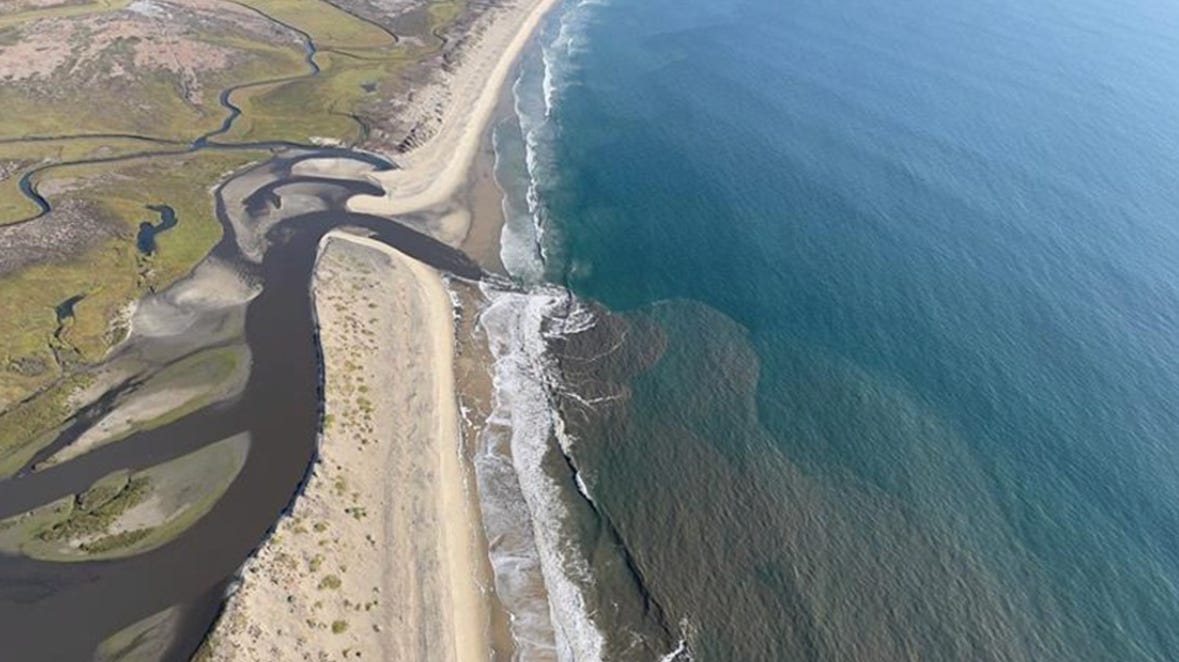
Raw sewage from across the U.S.–Mexico border was flowing straight into the Tijuana River, through sensitive wetlands, and out into the Pacific Ocean — shutting down iconic stretches of the San Diego coastline. Locals knew it. Tourists experienced it. The Navy felt it. And still, Washington did nothing.
Until suddenly, it did.
On Breaking Battlegrounds, former EPA Regional Administrator Josh Cook walked through how a decades-old environmental and infrastructure failure was finally confronted — not through new laws or new money, but through leadership, pressure, and a refusal to accept bureaucratic inertia as an answer.
A Border Crisis That Wasn’t About Immigration
As California steadily lost residents under Governor Gavin Newsom, the city of Tijuana was exploding in growth — expanding at a pace of more than 10 percent a year. But the infrastructure needed to support that growth never kept up.
For decades, sewage systems on the Mexican side of the border dumped waste into the Tijuana River, which flows directly into the United States. The result was predictable: contamination that worsened year after year.
International agreements already existed. A joint sewage treatment plant was supposed to intercept and treat wastewater. Mexico had long been obligated to fix the infrastructure failures on its side of the border.
It simply didn’t happen.
Under the Biden administration, the situation deteriorated further. Beaches were closed repeatedly. Tourism suffered. Navy SEALs stationed along the coast were forced to halt training on days when contamination levels made entering the water unsafe.
This wasn’t an abstract environmental issue. It was a public health crisis — and a national security concern.
When the President Decides Something Matters
According to Cook, the turning point came when President Trump personally took notice.
After repeated reports of sewage pouring into U.S. waters, Trump made it clear the status quo was unacceptable. He pressed EPA leadership and ultimately picked up the phone to call Mexico’s president directly — an environmentalist with a background in water law.
The message was blunt: You are sending sewage into our country, and it has to stop.
What followed wasn’t another study or task force. It was action.
EPA Administrator Lee Zeldin was dispatched to San Diego, where he made it clear the problem would be addressed — quickly. The money had already been appropriated. Hundreds of millions of dollars were sitting unused. Contractors were underperforming. Agencies were stalling.
In Cook’s telling, the solution wasn’t complicated — it was managerial.
Bureaucracy Doesn’t Move Until It Has To
One of the most striking takeaways from Cook’s account is how little progress had been prevented by lack of funding — and how much by lack of urgency.
Mexico had already built a new 10-million-gallon-per-day sewage treatment plant. It wasn’t enough, but it was a start. The International Boundary and Water Commission — created decades earlier specifically to handle issues like this — had the authority to act.
What was missing was pressure.
Once leadership made it clear that timelines mattered and excuses wouldn’t be accepted, things changed fast. Projects that had languished for years suddenly moved. Contractors were forced to perform. Cross-border coordination finally happened.
Despite skepticism from career bureaucrats, within 100 days, an additional 10,000 gallons of sewage per day were being diverted away from U.S. beaches.
For the first time in years, progress was measurable.
The Lesson Washington Doesn’t Like to Admit
The Tijuana River crisis wasn’t solved by rewriting environmental law or inventing new agencies. It was solved by enforcing existing agreements, demanding accountability, and making it clear that failure would no longer be tolerated.
As Cook put it, when President Trump said, “I want this fixed,” it wasn’t rhetorical.
It was operational.
And the results speak for themselves.
Transcript
Sam Stone: Welcome back to Breaking Battlegrounds. Our next guest up today, Josh Cook, was appointed by President Trump to serve as regional administrator for the EPA’s Pacific Southwest region, overseeing the implementation and enforcement of federal environmental laws across Arizona, California and Nevada, Hawaii, the Pacific Islands and 148 tribal nations. Josh previously had appointments at the U.S. Department of Interior, Bureau of Land Management, Northern California Resource Advisory Council and vice chair appointed by which he was vice chair of appointed by Secretary of the Interior Barnhart. So Josh welcome to the program.
Josh Cook: Hey, I’m glad to be here. It’s a great story to tell and you’ve got a big audience that I guess likes to hear about wins.
Chuck Warren: Yeah, so let’s talk about a win. So, USA Mexico signed a new agreement on the Tijuana River sewage crisis, something that amazes me that the environmentalists in the Obama or Biden administration did not solve. And I have a non-political business where my chief of staff is, we’ll call her moderate.
And I said, how bad, she was in Coronado for for July 4th last year, I’d go, how bad was it? She goes, you could smell it. People wouldn’t get in the water. So tell people what this story is because it has not got played because of course, why would you give Trump the success for this? But tell people what was the crisis and how was it solved?
Josh Cook: So it’s interesting as Gavin Newsom drives more and more Californians out of his state, Tijuana is growing at a rate of more than like 10% a year. And as they go, they don’t keep up with their infrastructure. And historically, they’ve just had this system there where the sewer just runs into the river. And then the river runs across the border into the United States, into the Tijuana, through the Tijuana River, through the marsh and out into the ocean.
And it just kept getting worse and worse and worse. And the Biden administration did nothing. The sewer plant, there’s a joint international sewer plant that’s supposed to catch part of it and clean it up. But the reality is the Mexicans were supposed to fix on their side, according to a US Mexico international agreement they signed 20, 30 years ago, you know, they were supposed to be fixing it and they weren’t. So, you know, I take the job at the EPA.
Get a call from the headquarters. Like, hey, the president’s upset about this, the Mexicans putting their fecal, let’s just, I know a better way to say this, Chuck, but like, let’s just call it raw sewage. Into the river and it closes all the beaches in San Diego. So you have the Coronado Hotel, iconic hotel, millions of dollars of tourism shut down. You have the Navy SEALs who specifically built their barracks on the beach because part of what they do is run out into the ocean and start swimming.
And that was impacted. They couldn’t do their training because on certain days there was so much fecal contamination. There, they had to shut down schools in the area on days when, and it’s not just, it wasn’t just sewage. They would find gangs that would come from Mexico to San Diego and take your toxic waste and drive it across the border.
And then just dump it in the river with all the sewage. And this was going on and on to the point where it was closing the beaches, impacting our military readiness. And you know, President Trump, he got, what does he say? He got a bee in his bonnet. And so he calls up Lee Zeldin and he says, hey, these people are running their fecal matter into our country and I want it solved. That was the situation in Coronado as of a year ago, year and a half ago. That’s what it was. That was the problem. That was what was happening. And it was just happening.
Sam Stone: And what did it take to solve it?
**Josh Cook: **Well, it’s pretty interesting because, it, you know, the, president, president Trump finally just called the president of Mexico on the phone. She’s an environmentalist and she’s, has a background, oddly enough in water and water law. And he’s like, Hey, you’re running your into my country. And she’s like, you’re just trying to embarrass me. And, so she sent her secretary of environment and the president sent, Lee Zeldin down to San Diego.
And they just sat down and Zeldin walked into the room with, we will fix this. You’re gonna do what you need to do. We’re gonna do what we need to do. The money was already appropriated. There was three or $400 million of Biden money here. The Mexicans had built a brand new 10 million gallon a day sewer plant on their side. It’s not enough. It doesn’t keep their commitment fully, but they had done something. But what happened and what this is reflective of is when President Trump says, I want this fixed, it’s really amazing how the bureaucracy responds.
They just act like that didn’t really mean anything. And in my position, I’m like, no, really, you ever see the show, The Apprentice? He fires people and he wants this fixed and the money’s already there. So if the money’s already there, this is simply a matter of leadership. So I went down with the Border Patrol, took a tour, got to learn a little bit about it.
We brought in the best people. when there were two government contractors that had contracts to fix some of this infrastructure, they just hadn’t been doing it. The money was there. And so they went back to, and Zeldin finally went to Mexico and they pulled out this decades old agreement that created the International Boundary and Water Commission, this little thing in the government that’s supposed to stop this from happening.
They started to spend the money on the projects that needed to be spent immediately to start fixing it. And literally, Lee Zeldin just goes in there and says, we’re going to do something significant within 100 days. And literally people just laughed him out of the room, the bureaucracy, the status quo. So we move forward. We worked with the state of Tijuana or the state of Baja and the state of California.
We started a process and within 100 days, they were taking an additional 10,000 gallons of sewage out of the river and stopping it from getting to the beaches.
Listen to the full episode of Breaking Battlegrounds anywhere you stream your podcasts!