Every time headlines float the possibility of peace talks in Ukraine, the rest of the world leans in with cautious hope. Analysts speculate. Commentators debate timelines. Social media fills with questions about whether the war might finally be winding down.
Inside Ukraine, those conversations barely make a ripple.
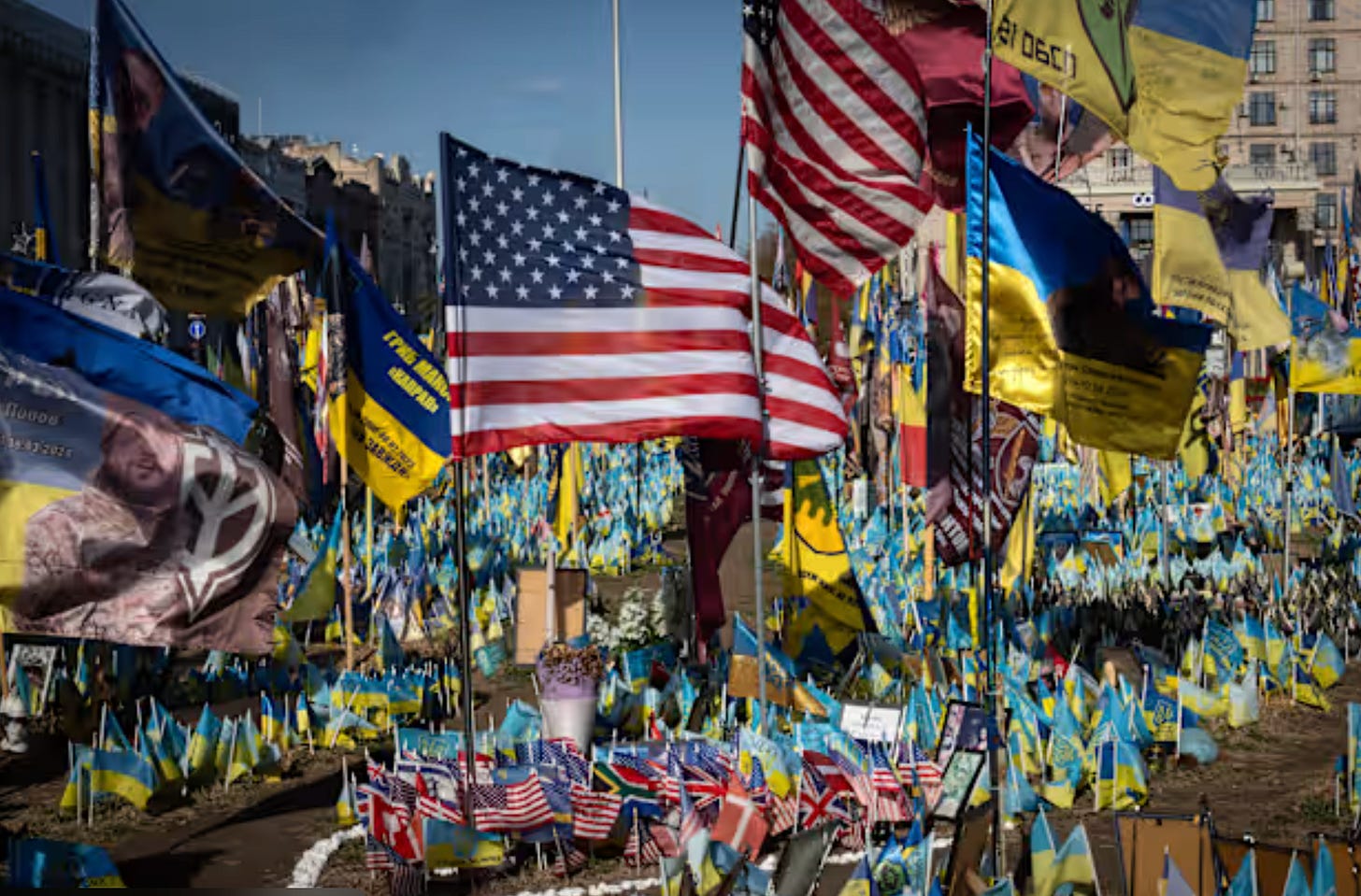
On Breaking Battlegrounds, journalist Alessandra Hay, speaking from Kyiv, offered a stark reminder of what the war looks like beyond the headlines. Her recent reporting focuses on a reality so grim it cuts through any illusion of resolution: Ukraine is running out of space to bury its dead.
Cemeteries across the country are filling. New burial grounds are being carved out. The sheer scale of loss has become impossible to ignore — and impossible to reconcile with distant optimism about negotiations.
Why Peace Talk Headlines Don’t Land in Ukraine
When Chuck Warren asked Hay what the global media is missing, her answer was simple and unsettling.
When stories emerge about peace talks or diplomatic feelers, the world reacts. Ukrainians don’t.
From their perspective, Russia has shown no genuine intention of ending the war. Decades of history — and nearly three years of full-scale invasion — have stripped diplomacy of credibility. For Ukrainians, peace isn’t something announced at a podium. It’s something earned through survival.
The prevailing belief inside the country is that continuing to fight isn’t just about Ukraine — it’s about protecting Europe itself. And so while international audiences debate outcomes, Ukrainians focus on endurance.
“Someone Has to Win”
That realism echoes what veteran war correspondents have long said. As Warren noted during the conversation, a Wall Street Journal reporter once summarized the conflict bluntly: “Someone has to win.”
Hay agreed — but with nuance.
Ukrainians understand that wars technically end with negotiations. But they also understand that negotiations only come after one side gains leverage. For many, the idea of bargaining with Russia feels detached from reality — not because they are reckless, but because experience has taught them that concessions invite future aggression.
The question isn’t whether the war ends with talks. It’s whether those talks come after Ukraine still exists as a sovereign nation.
Living With a War That Has No End Date
Sam Stone pressed further: how do people mentally live with a war that appears to have no finish line?
Hay described something quieter than despair — a kind of hardened patience.
Despite how long the war has already lasted, Ukrainians don’t necessarily see it as endless. Instead, they see it as a series of chapters. Each phase brings new realities, new technologies, new fronts — and the understanding that something unexpected could still change everything.
This isn’t blind optimism. It’s adaptation.
People are waiting to see what happens next because history has shown that wars can shift suddenly. Stalemates break. Alliances change. Momentum swings. Ukrainians don’t know how the war ends — but they know it isn’t decided by wishful thinking abroad.
A War Without Illusions
What makes Hay’s reporting so powerful is its refusal to soften the truth.
This is not a war Ukrainians believe will be resolved by clever diplomacy or international statements alone. It is a war they believe must be endured — one loss, one chapter, one uncertain day at a time.
While much of the world looks for signs of closure, Ukrainians are expanding cemeteries.
While pundits debate peace frameworks, families decide how to honor the dead.
And while hope cycles in and out of global headlines, the reality on the ground remains unchanged: Ukraine is preparing for whatever comes next — not for whatever sounds comforting.
Sam Stone: Welcome to another episode of Breaking Battlegrounds with your host Chuck Warren. I’m Sam Stone. Jumping into it as always, our first guest today, Alessandra Hay, journalist and writer known for her reporting and commentary on Ukraine, geopolitics and the ongoing war following Russia’s 2022 invasion. She is in Kiev right now and speaking to us from there, she’s got an amazing piece out that that caught our attention. Amazing and sad, Chuck. In counter offensive news, no place to rest Ukraine’s dead.
They’re running out of spaces in their cemeteries really kind of brings home the humanity of what’s going on over there. Alessandra Hay, thank you for joining us. Welcome to the program.
**Alessandra Hay: **Thanks so much for having me.
Chuck Warren: Before we get into your article, what is the world news, what are journalists missing about Ukraine right now? What are they not understanding?
Alessandra Hay: I think maybe one thing that is maybe being missed in the news that maybe I hear a lot of in Ukraine is that I think that when these big kind of stories come out about peace talks and stuff, the whole world starts going, okay, is like, is the war in Ukraine going to end blah, blah, blah, and they start talking about it. And I think that what’s really interesting is in Ukraine, that doesn’t really happen.
When these stories come out, people kind of aren’t affected by them because I think that from the Ukrainian perspective, what we’re seeing here is that Russia really has no intention of ending this war and that really the only way to keep going to protect Europe, to protect Ukraine is really to fight to the very end. think that it just really, I think for Ukrainians, they really seem unaffected by these stories about peace talks.
Chuck Warren: Yeah, that’s interesting. We had Thomas Grovon, he’s a reporter from the Wall Street Journal, lives in Poland now, but lived in Russia for years and has been banned in there. So he’s been covering the war. And we asked him a question three years ago. We said, how does this end? And he said, someone has to win. Do Ukrainians feel that? Like, there’s no peace, we have to just win. Is that where they’re at?
Alessandra Hay: I think that, I mean, there’s always the question of what does it mean to win and what does it mean to lose, right? Correct. Right? I think it seems kind of improbable that, like, how far will Russia really get? And, you know, there’s always some negotiation. That’s always how war ends. But I think that Ukrainians just feel incredibly disillusioned with the idea of diplomacy.
And I think that these ideas that you can, this idea that you can kind of negotiate and bargain with Russia really does not kind of hit people here in Ukraine. It’s really not an idea that people believe in, I think.
**Sam Stone: **How have people resigned themselves to what then would appear to be a very long war continuing this very long war still in front of them?
Alessandra Hay: How if people resign themselves to it?
Sam Stone: How are they facing it, I guess? Because, I mean, it seems like there’s no end in sight. It appears to be a high-tech stalemate, a very bloody one. So where do they see the end of this, I guess?
**Alessandra Hay: **Yeah, I think that, I think that although it has been like such a long time already and the end isn’t in sight, I think that what has happened in the last four years has been like there have been so many different chapters to the war. And I think that the reality is that, you know, something could happen that would totally change the course of the war and change the situation. So I think that people don’t see the war as kind of this never ending.
I think people are just really waiting to see what happens next because I mean look it’s like the 9th of January and look at how much has happened this year in the world already like it’s you know Anything could happen really right? That’s kind of the only answer really I don’t know. Yeah.
Listen to the full episode of Breaking Battlegrounds anywhere you stream your podcasts!