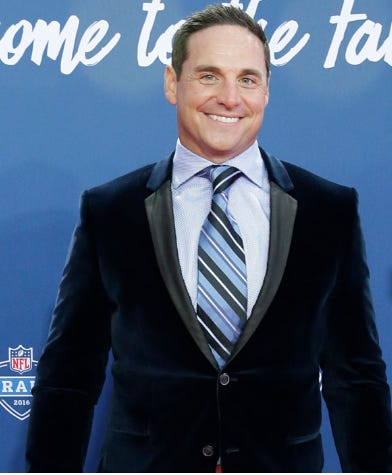
As the 2026 election cycle heats up, candidates across the country are trying to understand what matters most to voters. But according to congressional candidate Jay Feely, the answers aren’t complicated — and they aren’t necessarily partisan either.
On a recent episode of Breaking Battlegrounds, Feely joined the show to discuss the issues he’s hearing directly from voters — and why concerns about election security, government spending, and immigration continue to dominate conversations.
Election Security Tops the List
When asked what issues are at the forefront of voters’ minds, Feely pointed to election security as a major priority across party lines.
According to Feely, Americans want confidence in the electoral system — regardless of political affiliation. He described election security as an issue that resonates broadly, saying voters want reassurance that elections are secure and that only eligible voters are participating.
Feely also referenced the SAVE Act as a key policy initiative aimed at addressing those concerns, emphasizing that the popularity of election security measures could make it an area where lawmakers find common ground.
Waste, Fraud, and Government Spending
Another issue Feely highlighted was government spending and concerns about waste and fraud. He framed this as a nonpartisan issue, noting that taxpayers across the political spectrum want accountability for how their money is used.
Feely pointed to examples that he believes illustrate inefficiencies and misuse of funds, arguing that Americans who are working to pay their bills and mortgages are increasingly frustrated with government spending practices.
For many voters, he suggested, the concern isn’t political ideology — it’s practicality. People want to know their tax dollars are being spent responsibly.
Immigration and Assimilation
The conversation also touched on immigration policy and assimilation — another issue Feely said resonates with many voters.
Feely discussed concerns about large populations settling in concentrated areas without assimilation, arguing that unity and shared identity have historically been strengths of the United States.
He referenced Minnesota — where he was born — as an example of how communities have changed over time, reflecting broader debates happening nationwide about immigration policy and cultural cohesion.
A Broader Political Moment
The discussion reflects a broader political moment heading into the next election cycle. Issues like election integrity, government spending, and immigration continue to shape political debate and voter priorities.
For candidates like Feely, understanding these concerns — and addressing them directly — will likely play a major role in upcoming races.
As the political landscape continues to evolve, conversations like this one offer insight into what voters are thinking — and what issues may define the next election.
Transcript
**Chuck Warren: **What other issues are you hearing from constituents that are on top of their mind?
Jay Feely: I think everybody, whether you’re Republican or Democrat or independent, they want to make sure that these elections are secure. It’s an 80% issue. Most of Americans want to make sure that they have secure elections, that only Americans are voting in these elections. President Trump has talked about the SAVE Act and that it’s the number one priority.
I believe that as well. And because it’s such a popular issue, it should get done. And then waste and fraud. That should not be a partisan issue either. Getting rid of waste and fraud in government and our spending, our tax dollars being spent and being defrauded, when you look at Minnesota and you look at the Somali population, the fact that 80% after 10 years are still on welfare?
That’s ridiculous. It’s not sustainable. And then you see all the fraud on top of that. And the average American who’s just trying to get by and pay their mortgage and afford all their bills is saying, well, my tax dollars are being wasted. That’s how I feel.
Sam Stone: Well, controlled immigration with time for assimilation and an effort at it, right? We always made an effort in this country to assimilate new populations. And when you went to this multi, this idea about multiculturalism and you said all cultures are equal, we said assimilation is bad. We gave up our unity, we gave up our strength. And then this is the kind of result you see.
Jay Feely: Yeah. When you bring, you know, hundreds of thousands, take the Somali population of Minnesota and you bring them in and you put them into one area. And because they got asylum, they got the right to vote and they don’t assimilate. You know, then, then obviously you’re going to have that section. And I grew, that’s where I was born in Minnesota.
You know where you see this area fundamentally change. It does not look anything like, not only United States, but certainly Minnesota anymore.
**Sam Stone: **Minnesota, that was one of, go back 15, 20 years, that was one of the crown jewel cities in the country. Minneapolis, St. Pete was gorgeous.
Chuck Warren: Oh, 100%. I mean, was, now it’s been trashed.
Listen to the full episode of Breaking Battlegrounds anywhere you stream your podcasts!