In this week’s Breaking Battlegrounds, hosts Chuck Warren and Sam Stone sat down with Zineb Riboua, a research fellow at the Hudson Institute’s Center for Peace and Security in the Middle East, to unpack her recent essay, “Zoran Mumdani, Islam as a Language, and American Third Worldism.”
The discussion dove deep into how post-colonial ideology and political uses of Islam have intertwined — and how that fusion shapes how some on the modern left understand global power and identity.
What Is Third Worldism?
Riboua began by defining Third Worldism not as a reference to poverty or geography, but as an ideological school of thought that took root in the mid-20th century.
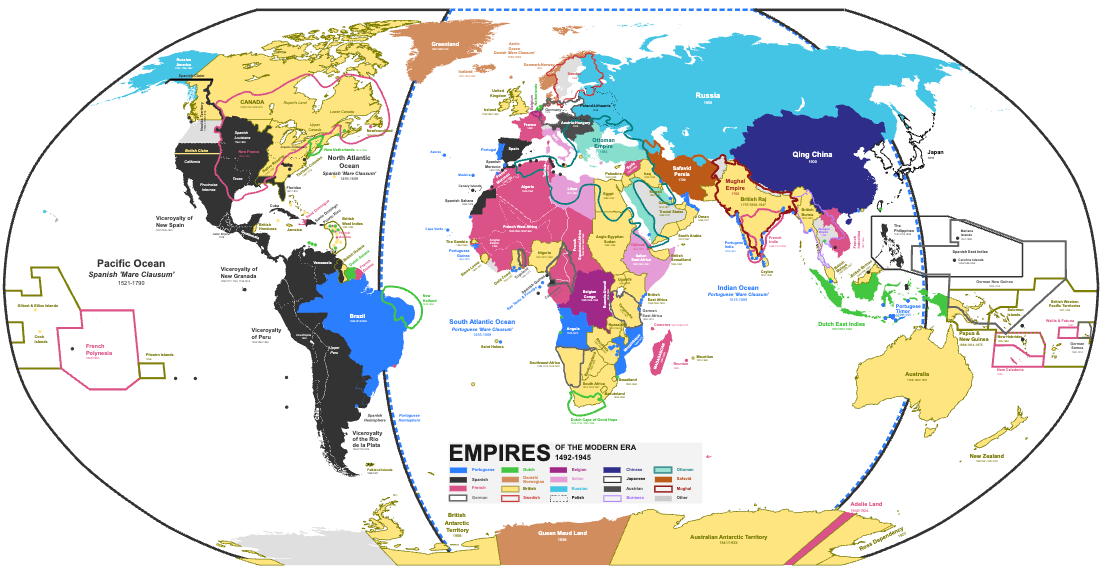
As the Cold War unfolded, newly independent nations — many emerging from European colonial rule — began to articulate their place in a world dominated by two superpowers. Third Worldism became a post-colonial framework through which these states and their intellectuals viewed themselves as structurally tied to the empires that once ruled them, even after independence.
This worldview divided the globe into two moral camps: the oppressors and the oppressed.
Western nations were cast as imperial powers upholding an unjust system; the developing world, as the collective victim of that system.
Riboua described it as more than just anti-colonial rhetoric — it was, and still is, a moral lens that interprets politics through victimhood and resistance, often adopted by the Western left as a permanent critique of Western civilization itself.
Islamism vs. Islam as a Language
From there, Riboua made a crucial distinction: Islamism and “Islam as a language.”
Islamism, she explained, is a political and theological project. It seeks to order society and government around Sharia law — explicitly framing Islam as both a faith and a system of governance.
But what Riboua identified in figures like Zoran Mumdani, a New York state legislator and self-described democratic socialist, is something different. In his rhetoric, she argues, Islam is not treated as a faith, but rather as a symbolic language of resistance — a shared identity for the “oppressed” in a global struggle against Western power.
“It’s Islam as a language,” Riboua said, “not Islam as a religion — a way to rally the masses.”
This framing, she noted, transforms Islam into a political vocabulary — one that merges easily with left-wing anti-imperialist discourse, but without the theological commitments of true Islamism.
Faith, Ideology, and the Politics of Identity
Riboua’s analysis points to a broader trend: the blending of Third Worldist moral frameworks with Islamic cultural symbols in Western discourse.
For many activists and intellectuals influenced by post-colonial theory, Islam becomes a stand-in for the oppressed world, a symbol through which to challenge the West’s perceived moral authority.
But as Sam Stone observed, this creates tension. Around figures like Mumdani are others who embrace genuine Islamist ideology — rooted not in symbolism, but in actual political theology. The two approaches coexist uneasily: one uses religion as rhetoric, the other as rule.
Why It Matters
Riboua’s insight cuts through the noise surrounding how religion, colonial history, and ideology are discussed today. Her analysis highlights a key distinction often lost in public debate — between faith as belief and faith as a political instrument.
In a world where Western elites often romanticize anti-colonial narratives, this difference matters. Understanding how movements conflate identity, grievance, and faith helps explain why political discourse around the Middle East, decolonization, and global justice often feels more moral than factual — and more symbolic than theological.
Transcript
**Sam Stone: **Welcome back to Breaking Battlegrounds with us, Chuck Warren. I’m Sam Stone. We’re continuing on now with Zineb Riboua. She is a research fellow at the Hudson Institute Center for Peace and Security in the Middle East. Follow her on X at Zineb Riboua. Zineb Riboua, you had a great piece. The Chuck and I both enjoyed Zoran Mumdami, Islam as a Language, and American Third Worldism. Can you touch on that piece and specifically, let’s start by explaining to the audience what I guess both Islam as a language and third world as a mean.
Zineb Riboua: Yeah, sure. Well, I’m glad you enjoyed the piece. So to start, Third Worldism is really a school of thought of how to see the world and how to study the world. And it really emerged later in the mid-20th century, where it was really this increased and great debate about the soviet union and also about non-aligned countries. Not so about other countries that were not as developed and where do they stand and how they should proceed.
And at the time one of the main thought regarding you know the third the third world actually means quite literally aware that it’s not a highly developed and not basically in the medium developed and then basically excluded from uh... from the great power competition etc. And third worldism actually means much more of a post-colonial project. In the sense that a lot of these countries are products of colonization and they just for example won independent.
They just succeeded in gaining independence and so they the school of thought basically explains how, as a country that just gained independence, it is a country that is structurally and systematically still tied to the colonial project of the empire that dominated it. And there is no other way to succeed as an independent country unless one purifies itself from all of the ills and evils of that said empire.
And it sets the tone for this idea of oppressor and oppressed and victim and and the victimhood side of it. As I basically explain how it is a very specific school of thought. It is at school that of the left. They genuinely some people genuinely see the world that way.
That the world is basically divided and that there should be a global uprising against what they think is evil empire, western hegemony. And I explained basically how it is very different from Islamism because Islamism affirms Islam as a real political project that can be pursued.
But people don’t actually usually realize because a lot of the media etc there’s much more coverage of terrorism then of genuine Islamic project. It’s that you cannot run as an Islamist without tying a lot of your policies to Sharia law in a sense that in a sense that Islamism is is basically the political pursuit of a political and theological project and and therefore there are laws that dictate that.
And I thought that Mumdami was not necessarily doing that. I mean he was talking about you know I I think some sort of Islam or Muslims but it was never in the way of a political Sharia project. It was more of the, of what I thought was the third world this way. Where Islam was more used as a language.
Where Islam is not seen as a faith, but much more as a way to rally the masses, the religion of basically the oppressed of New York, and that it is a call for unity. And so Islam here, I think in Mamdani’s way of talking and thinking, is much more of a religion that serves as a language, much more than a faith.
Sam Stone: And that certainly was true of him, but then you have that sort of counter to that, right, with some of the folks around him who embrace a very Islamist view.
Listen to the full episode of Breaking Battlegrounds anywhere you stream your podcasts!