When news cycles start sounding like parody — Americans joking about “invading Canada” and polls claiming Canadians think it could happen — it’s tempting to dismiss the entire story as political theater.
But as Breaking Battlegrounds hosts Sam Stone and Chuck Warren explored with Newsweek senior editor Josh Hammer, beneath the absurdity sits a serious geopolitical conversation about borders, ideology, and the future of North American security.
And while the Canada storyline grabs headlines, Hammer suggests the real strategic story may be happening a little farther east… in Greenland.
Canada: Similar — But Not the Same
On the surface, the U.S. and Canada feel like siblings. Shared language, trade, culture, and the longest peaceful border in the world.
But politically? Increasingly different worlds.
Hammer points out that Canada has moved significantly further left than the United States across immigration policy, governance, and cultural politics. Under Justin Trudeau in particular, Canada embraced large-scale immigration policies that critics argue lacked sufficient security safeguards.
Why does that matter to Americans?
Because borders don’t exist in isolation.
While U.S. political debate focuses heavily on the southern border, the northern border receives far less attention — despite documented cases of security concerns and unlawful crossings. If Canada’s screening standards or migration flows change, the United States inevitably feels downstream effects.
This isn’t just about Canada. It’s about how allied nations’ domestic policies can ripple into U.S. national security realities.
Did Trump Overplay His Hand?
Hammer offers a surprisingly strategic critique: former President Trump may have gone too hard, too fast in publicly needling Canada.
At the time, Canada’s Conservative Party was gaining momentum in reaction to Trudeau’s leadership. But aggressive rhetoric from Washington may have shifted political dynamics north of the border, contributing to the rise of Prime Minister Mark Carney instead.
It’s a reminder that foreign policy messaging doesn’t just influence diplomacy — it can shape elections in other countries.
Hammer’s advice, if he were whispering in the president’s ear?
Ease up on Canada.
There are bigger priorities.
Greenland: The Story That Isn’t a Joke
Here’s where the conversation turns from meme-worthy to strategic.
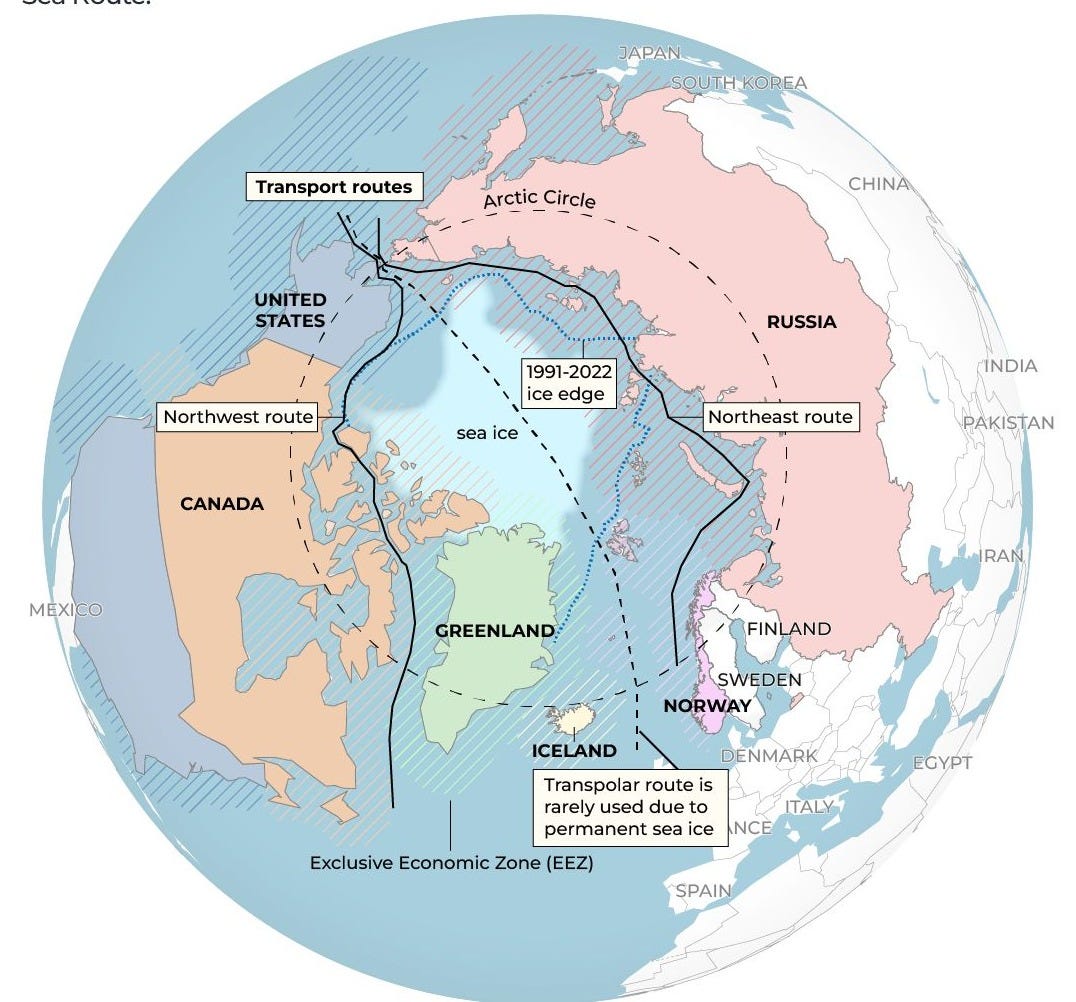
Greenland may sound like an odd obsession, but Hammer argues the focus makes sense from a national security and geopolitical standpoint.
Why Greenland matters:
-
Arctic access is becoming more strategically valuable
-
Major powers are competing for influence in northern regions
-
Military positioning, trade routes, and natural resources are all in play
-
Control or deep partnership there strengthens America’s global posture
In other words, while the Canada narrative feels like noise, Greenland represents long-term positioning in a world where geography still determines power.
The Bigger Pattern
This episode highlights a larger theme:
Not every loud political story is the important one.
The Canada discourse may be spectacle. But border integrity, allied policy alignment, and Arctic strategy are very real issues shaping the next era of global power politics.
As Hammer suggests, the question isn’t whether we’re “invading Canada.”
It’s whether America is paying attention to the strategic chessboard forming in the north.
Transcript
**Sam Stone: **Welcome to another episode of Breaking Battlegrounds. Here’s Chuck Warren. I’m Sam Stone. Our first guest up today, Josh Hammer, is the senior editor at large of Newsweek and the host of the Josh Hammer Show podcast. is also the author of Israel and Civilization, the Fate of the Jewish Nation and the Destiny of the West and a friend of the program, Josh Hammer. Welcome back.
Josh Hammer: It’s a pleasure to be back. Thanks so much.
Chuck Warren: So, Josh, the first question I want to ask you, it’s a little bit out of left field. What is... I did not have my bingo card this dispute the United States is having with Canada, and it seems to be a personal thing.
Sam Stone: Like 60% of Canadians think we’re about to invade them.
Chuck Warren: Yeah, I mean, why do you think we’re there?
Josh Hammer: Well, I mean, it’s kind thing that you on the one hand, you kind of want us to laugh at it. Yeah. Just the ridiculous spectacle of it all. On the other hand, look, mean, the United States and Canada are very similar in many ways, but we definitely have our differences. Canada is substantially further to the left than the United States in virtually every way that you can possibly measure that. I think that Donald Trump and his administration in particular are probably deeply upset at the way that Canada, especially under Justin Trudeau, just totally opened their borders to third world immigration.
This is not just a Canadian issue. When you have all sorts of terrible actors from the broader Islamic world and beyond that are making it to Canada, a lot of that ends up trickling into the United States. And we focus usually, for good reason, on the southern border, but there’s been a number of stories in recent years of infiltrations happening at the northern border as well.
That’s a bit of a microcosm. I would say this, I suppose, which is I would ease up on the Canada stuff. I’m personally a lot more passionate about the Greenland issue within the president’s basically right on Greenland. And I’m pretty much entirely supportive of his effort to try to acquire it, to try to get unmitigated access, whatever he decides is ultimately the best possible deal he can get there. So if I were whispering his ear, I would say, Mr. President, maybe it’s time to kind of drop it with the Canada thing.
I mean, we don’t like Mark Carney. We definitely didn’t like Justin Trudeau. It’s also probably true, or at least it’s possible, that if Trump had gone a little less hard on Canada back in January, February, right out the gate, it’s entirely possible that we might have avoided Prime Minister Mark Carney, to be honest with you. The Conservative Party, the Tories there in Canada, were actually leading in the polls around that time. The margin differ on the poll, but that was seen as essentially a backlash to the terrible prime minister tenure of Justin Trudeau.
And from my perspective, I do think that Trump needling them a little too aggressively helped, unfortunately, get us to where we are with Prime Minister Carney. So I would ease up on that. I mean, we have our differences with our northerly neighbors, but there are certainly I think more important things to focus on.
Listen to the full episode of Breaking Battlegrounds anywhere you stream your podcasts!