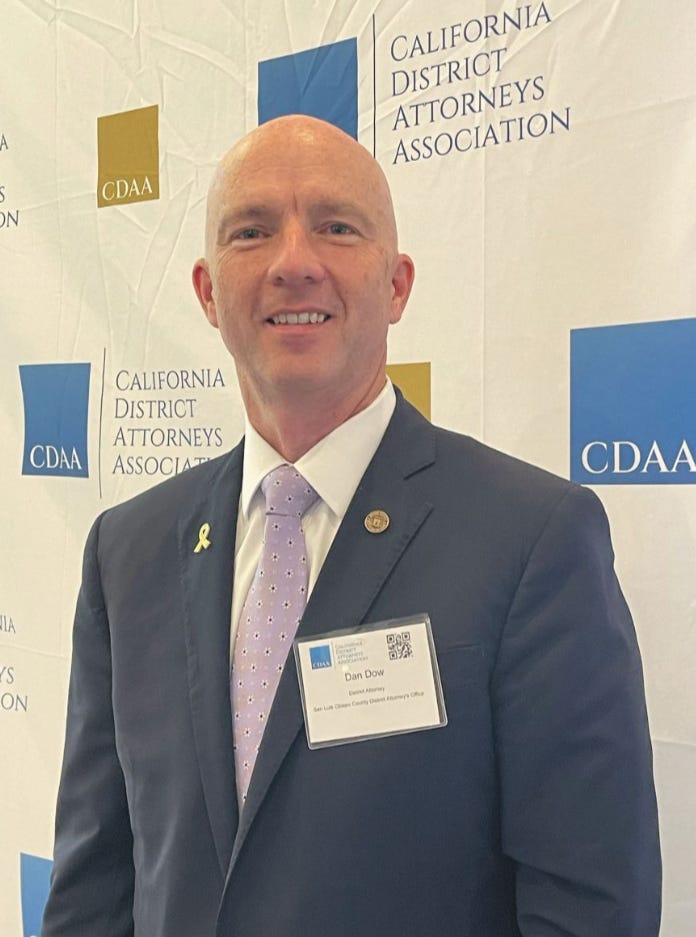
The criminal justice system is drowning in data — and artificial intelligence may be the life raft. On the latest episode of Breaking Battlegrounds, District Attorney Dan Dow pulled back the curtain on how AI tools are already reshaping investigations. The promise isn’t sci-fi speculation.
It’s practical, immediate, and potentially transformative: faster case reviews, sharper investigative focus, and hundreds of hours saved. But with any new technology touching law enforcement, one question comes first: What about the Fourth Amendment?
The Privacy Question Everyone Is Asking
Before diving into the tech, host Chuck Warren raised the concern many critics share: does using AI to analyze evidence create constitutional problems?
Dow’s answer was clear — the tool isn’t about expanding surveillance. Instead, it’s about making better use of evidence investigators already legally possess.
“What we’re really talking about is taking the evidence that exists… and then pull from all of this information.”
In other words, AI isn’t going out to find new evidence. It’s helping law enforcement make sense of the massive amounts they already have through warrants, reports, and interviews. That distinction matters.
Why Cold Cases Are Especially Ripe for AI
Dow highlighted a persistent problem in long-running investigations: institutional memory fades.
Over a decade or more:
-
Detectives retire or transfer
-
Case knowledge gets fragmented
-
New investigators must start from scratch
AI tools, he explained, can ingest enormous volumes of material — including typed reports and handwritten notes — and make them searchable and organized almost instantly. For cold cases especially, that could be a breakthrough.
The Real Impact: Hundreds of Hours Saved
When Warren pressed for numbers, Dow didn’t hesitate. In complex cases, AI could save hundreds of investigative hours. One of the clearest examples: recorded interviews.
Traditionally:
-
An investigator listens for hours
-
Someone manually transcribes
-
Teams sift through transcripts
With AI?
“We can have the first draft of a recorded interview put together in moments — literally moments.”
That speed changes the workflow entirely. Investigators can word-search across 15–20 hours of recordings almost immediately, zeroing in on key phrases or inconsistencies.
What AI Does Best in Investigations
Dow emphasized the technology’s sweet spot isn’t replacing investigators — it’s sharpening them.
The biggest benefits include:
-
Rapid transcription of interviews
-
Categorizing massive evidence files
-
Surfacing overlooked details
-
Helping investigators focus on high-value leads
Most importantly, he stressed, the human investigator still makes the decisions. AI is the filter — not the judge.
The Bottom Line
Artificial intelligence is already entering the justice system, not as a futuristic experiment but as a practical efficiency tool. If used responsibly, tools like the one discussed in this episode could:
-
Reduce investigative backlogs
-
Improve case accuracy
-
Help solve long-stalled cases
But the constitutional guardrails — especially around privacy and warrants — will remain the critical line to watch. As Dow made clear, the goal isn’t more surveillance. It’s making sense of the mountains of evidence already sitting in evidence rooms across the country.
Transcript
Chuck Warren: D.A. Dow let me ask you this question real quick before we really dive into it and before the Federalist Society gets upset with me. Should there be any Fourth Amendment concerns with this type of activity?
D.A. Dan Dow: Well, I mean, obviously that’s something privacy and Fourth Amendment is something that a lot of people are looking into. But what we’re talking about here is not going out and looking for something that you don’t already have. What we’re really talking about is taking the evidence that exists, including police reports. You know, in a cold case scenario that was mentioned, imagine that it took 10 years, 15 years to get to a point and you’re still trying to solve a case.
You’ve probably as a sheriff’s office or a police department, you’ve had a changeover in your staff. You’ve assigned new detectives over the years, and you don’t really have one dedicated person who understands and knows all of the background and information. And when a new person is assigned, they have to dig in and learn it for themselves in order to really take the investigation to the next step.
And so what AI promises, and we’ve already experienced here, is the ability to infuse and ingest large amounts of reports, both with type, but even handwritten notes in files, and then pull from all of this information. An investigator, for instance, can use this tool to ask the AI tool that we’re using with Closure, with Aaron’s company, to ask it information, categorize all the type of evidence that we have. And then the investigator can look at it, sift it more carefully.
And determine, okay, what are the next things that I need to do? And so it’s a tool to use the existing evidence you have not to go out and unlawfully pull evidence from someplace where you don’t have access. All the information that we get back from search warrants is oftentimes voluminous. So you’ve already, the fourth amendment’s already taken into account because we’ve had a judge sign a warrant to obtain whatever it was by that search. Once we get it back, we have to go through it.
And as Aaron said, you know, one detective pouring through hours and hours and hours of maybe recorded interviews or online videos that are on someone’s computer that was searched really could be very difficult, very time consuming. And you might miss something, you know. And so what AI, I think, proves where it’s going to really be the most helpful to us is helping us sort through. Make sure that we didn’t miss something by using this tool to gather the evidence that we already have and analyze it. Does that make sense?
Chuck Warren: It does. I’m going to follow-up with two questions in header of my co-host Sam Stone because I know all the women in our lives were very excited about this interview this morning. So first of all how many hours my first question how many hours will this save on a case? I mean you have attorney times you investigator time. How much how many hours do they got average this can help you on a case save?
D.A. Dan Dow: Well, depending on the case, I and Aaron may have some statistics from the other partners that he’s working with, but I would say it would save hundreds of hours in a really complicated case. If you have a, we’re able to use this tool in cases that are not as complex or maybe not a cold case to evaluate audio recorded interviews.
And so rather than having a person sit and transcribe and listen to the entire thing we can have the first draft of a recorded interview put together in moments, literally moments. To where you can now word search inquiry you know fifteen, twenty hours worth of recordings and know whether or not certain phrases were used in that interview.
So it’s exponential in terms of time savings and resource. And what I really love about it is it’s helping our investigators zero in immediately to that important part of the interview, perhaps, and not waste a lot of time listening to things that are not helpful.
Listen to the full episode of Breaking Battlegrounds anywhere you stream your podcasts!