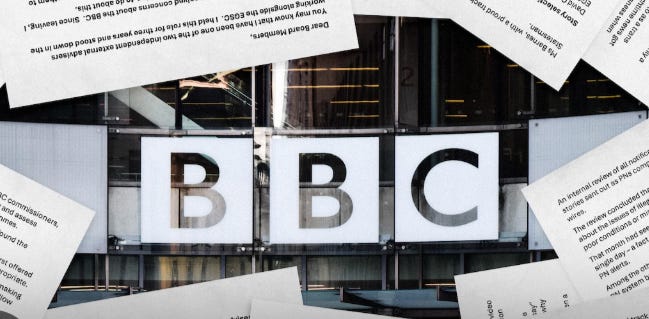
The BBC drama continues—this time not for a single editorial misstep, but for what an internal advisor describes as a deepening culture of bias and an unwillingness to confront it. A confidential memo, written by former standards advisor Michael Prescott and recently exposed by journalist Gordon Rayner, has ignited a new debate about the BBC’s direction, credibility, and commitment to impartiality.
In a conversation on Breaking Battlegrounds, Rayner walked through who Prescott is, why his memo matters, and what it reveals about the struggles inside one of the world’s most influential news organizations.
What Sparked the Memo
According to Rayner, the document was never leaked by Prescott himself. Instead, it was a memo he wrote directly to the BBC board—the very body responsible for hiring and firing the corporation’s leadership. Prescott served as an independent advisor to the Editorial Guidelines and Standards Committee, the internal arbiter of neutrality and editorial integrity.
His role was not to police newsrooms from within, but to observe with impartiality, offer counsel, and raise concerns when the BBC’s coverage strayed from its standards. What he saw, Rayner says, disturbed him.
Prescott flagged multiple examples of bias across major areas of coverage—from political reporting to global conflicts. And each time he raised concerns with senior managers, nothing happened. The pattern of dismissal ultimately drove him to produce a “stiff, lengthy memo” warning the board that the corporation’s credibility was at risk.
Who Is Michael Prescott? Why His Voice Matters
Chuck Warren pushed an important question: Was Prescott driven by ideology—or genuine concern?
Rayner’s explanation underlined why the memo carries weight:
-
Prescott is a former journalist and one-time political editor of the Sunday Times.
-
He later worked in corporate communications for major companies like BT.
-
He was selected specifically because he was external to the BBC and able to evaluate its editorial culture with independence.
His credibility lies not only in his resume but in the fact that he was appointed to challenge the BBC when needed—and what he saw led him to conclude that something fundamental was going wrong.
Why the Memo Matters Now
The conversation pointed to broader concerns about how major media institutions frame politically charged events—from January 6th coverage in the U.S. to conflicts in Gaza. The memo hints at a systemic issue: the BBC’s inability or unwillingness to confront its internal biases.
Rayner notes that Prescott was “appalled” by what he observed. When the watchdogs are disturbed—and ignored—that signals a deeper institutional failure.
This article summarizes key portions of our conversation with Gordon Rayner, associate editor at The Daily Telegraph and longtime chronicler of the BBC’s editorial evolution. Read more of his reporting on this story on Twitter at @GordonRayner.
Transcript:
Chuck Warren: So this memo, which you have released today, and folks, you can find this memo on Gordon’s Twitter account, and we also retweeted it, and we’ll be boosting it so we can have as many people see it as possible. So there’s a former standards advisor named Michael Prescott. He was an advisor to the BBC editorial board, is that correct?
**Gordon Rayner: **Yes, a committee called the Editorial Guidelines and Standards Committee. So it’s their arbiter of what impartiality is.
Chuck Warren: So what was Michael’s background? I mean, there’s gonna be some people say, why did he release this? Did he have an extra grind or he was generally concerned, do you feel about what BBC is doing on big topics? Because I wanna talk to you more about this besides the Trump January 6th and we’ve seen the press in America do as well. And we’re not justifying people who went to the Capitol the day at all folks, lets just get this clear, but just report the facts, right make your own opinion for the facts. And they’ve done it with Gaza and so forth.
What is his ideology, what’s his background? Because I think his background will give credibility more to this memo that he wrote.
Gordon Rayner: Yes, I think firstly it’s important to point out he is not the person who I got this document from. He wrote this memo to the BBC board who are, as we were saying before, they’re the ones who hire and fire the, you know, effectively the chief exec. He’s a former journalist, he was the political editor some time ago of the Sunday Times here in Britain.
And then he went on to have a career in corporate comms. He worked for, among others, BT, which is the sort of the biggest phone operator in Britain. And then he was hired to be an independent advisor to this editorial guidelines committee, as we said. So his job really was to sort of cast a sort of impartial eye over what they were doing, these sort of, you know.
Inside the BBC but not part of the BBC so that he felt that he could speak honestly and they had two of those people and he was frankly as you’ll see if you read the memo he was appalled by what he was seeing. He thought that he was seeing bias in all sorts of different parts of the BBC and in the way they were covering things. He tried to raise that with managers and whenever he raised it they they did nothing about it which is why he felt that he had to write this very stiff lengthy memo to the BBC board saying you need to sort this.
**Chuck Warren: **Folks are with Gordon Rayner. He’s the associate editor of the Daily Telegraph You can find his writings and more on this scandal at his Twitter account at Gordon Rayner R A Y N E R and he’s also a long-suffering Newcastle United fan, so.
Listen to the full episode of Breaking Battlegrounds anywhere you stream your podcasts!