Alessandra Hay has spent years speaking with Iranians living under one of the most tightly controlled political systems in the world. Her reporting captures something that headlines often miss: the quiet, daily pressures that slowly push a society toward unrest.
In a recent episode of the podcast Breaking Battlegrounds, hosts Chuck Warren and Sam Stone sat down with Hay to discuss the reality of life inside Iran — and the difficult choices faced by those who oppose the regime.
Their conversation was sparked by Hay’s recent reporting, including her article “The Dangers of Defecting,” published in Iran War Dispatches by Tim Mak. The piece explores one of the most dangerous acts imaginable inside authoritarian systems: turning against the government from within.
But before anyone defects, there’s another story unfolding inside the country — one defined by economic collapse, rising anger, and a population increasingly pushed to the brink.
What Everyday Life in Iran Looks Like
When Americans discuss Iran, the conversation often revolves around geopolitics: nuclear negotiations, sanctions, or military tensions. But for many ordinary Iranians, the defining reality of daily life is far simpler — and far more brutal.
Inflation.
Hay described conversations with people who told her that prices change so quickly that even a single meal can become more expensive before it’s finished. Imagine sitting down for lunch at a restaurant. By the time you finish eating, the cost of the meal has already risen. That’s the level of economic instability many Iranians are living through.
This kind of runaway inflation has fueled widespread frustration and contributed to repeated waves of protests across the country. Economic collapse has become one of the primary forces driving dissent against the regime.
Why These Protests Are Different
Iran has seen protests before. But many observers say recent demonstrations reflect something deeper. Unlike earlier protests focused narrowly on elections or individual policies, today’s unrest touches multiple layers of Iranian society — economic hardship, political repression, and cultural restrictions.
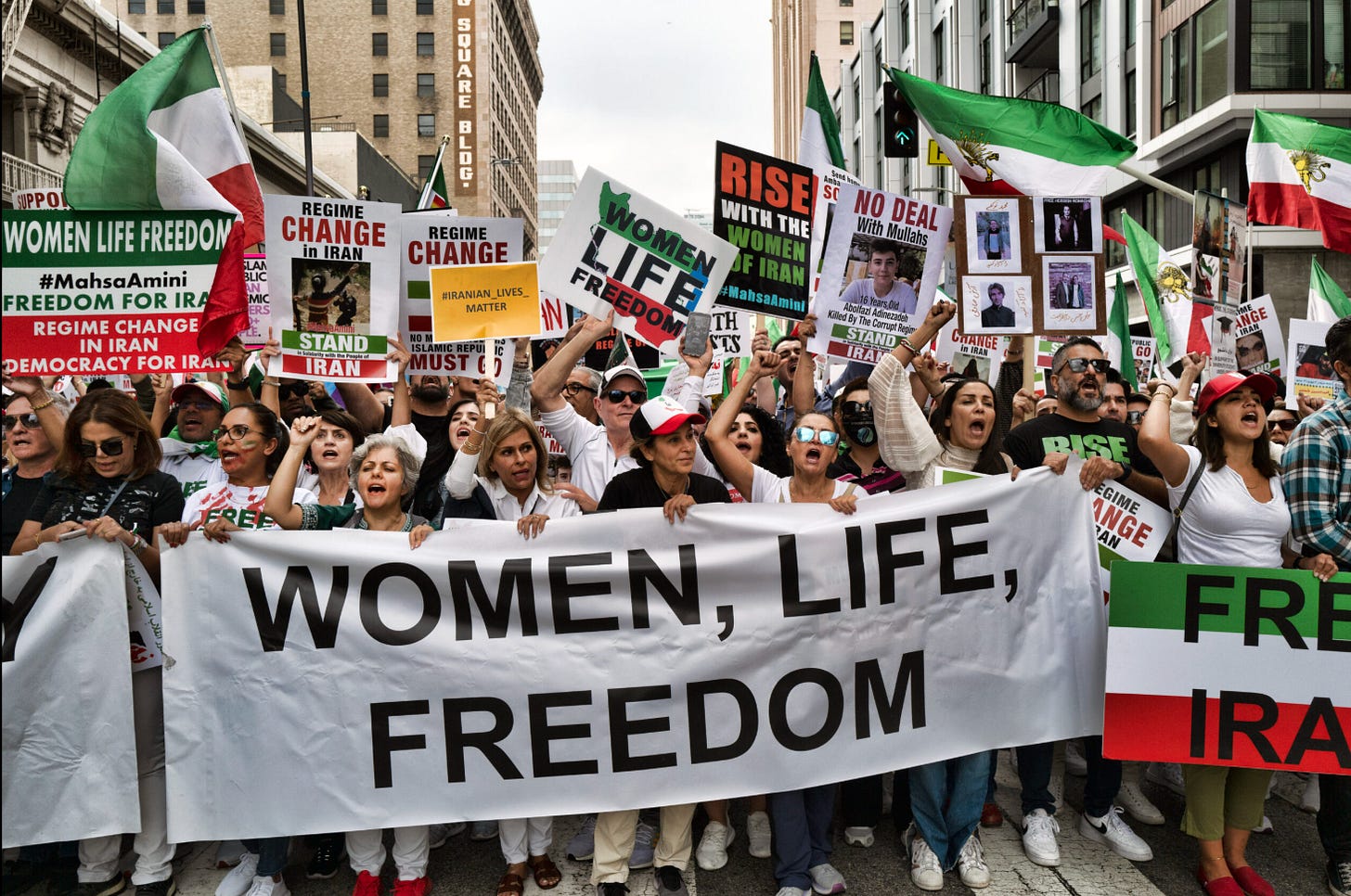
The protests that followed the death of Mahsa Amini in 2022 helped ignite the global “Woman, Life, Freedom” movement, which demanded broader civil rights and personal freedoms. The demonstrations spread nationwide and became one of the largest challenges to the Islamic Republic in decades. But Hay notes that economic collapse is now playing an increasingly central role. For many Iranians, the issue is no longer just political freedom — it’s survival.
The Rising Cost of Dissent
Even speaking out can carry severe consequences. According to Hay, the Iranian government has become noticeably more aggressive over the past decade in responding to protests and dissent. Punishments for opposing the regime can include imprisonment, harassment, or worse. Security forces have repeatedly used mass arrests, violence, and harsh legal penalties to suppress demonstrations.
The risk doesn’t necessarily end when someone escapes the country. Many dissidents who leave Iran still face intimidation and threats abroad — a reality Hay explores in her reporting.
The Dangerous Path of Defection
One of the most intriguing — and risky — developments inside Iran is the question of defection. Defection occurs when members of the government or security apparatus abandon the regime and side with opposition forces. In authoritarian systems, defections can be a critical turning point. If enough insiders abandon the leadership, the structure of power can begin to crumble. But defecting from Iran’s regime is extraordinarily dangerous.
Those who do so often face retaliation against family members still inside the country. Even in exile, they may deal with surveillance, harassment, and long-term security threats. Hay’s article “The Dangers of Defecting” explores how complex and perilous that decision can be. Yet for some insiders, defecting may eventually become the only path forward.
What Comes After the Regime?
One of the biggest questions surrounding Iran’s future is what happens if the current government loses its grip on power. Some observers point to Reza Pahlavi — the son of Iran’s last shah — as a potential figure in a post-regime political transition. Others argue the country’s future leadership will likely emerge from entirely new movements inside Iran itself. For now, the answer remains uncertain. What is clear is that the forces shaping Iran’s future — economic collapse, popular unrest, and potential defections from within the regime — are already in motion.
A Conversation Worth Listening To
The discussion between Chuck Warren, Sam Stone, and Alessandra Hay offers a rare look beyond headlines into the daily reality of life in Iran. Their conversation highlights something easy to forget in geopolitical debates: behind every political system are millions of people navigating economic hardship, political pressure, and difficult choices about their future.
And sometimes, those choices can shape the fate of an entire country. For readers interested in learning more about the risks faced by those who turn against the regime from within, Hay’s article “The Dangers of Defecting,” published in Iran War Dispatches by Tim Mak, is well worth reading.
Transcript
Chuck Warren: Let me ask you this question because you know we have some here in the country who like to claim that they want people to have freedom and so forth. And then when you do something for this regime, you know, Trump’s broken a lot of people’s brains here. It’s just, you can’t even look at a policy anymore. It’s just, it’s just sort of insane right now, whether it’s good or bad.
And you would think how much America’s talked about Iran for 47 years, that this would be a good thing, right? But because of Trump, it’s therefore controversial, right? But explain to our audience with the Iranians you have met, what is life like under the Iranian government? What is our life like daily before we started bombing them?
Alessandra Hay: Yeah, I think it was it was pretty bad. It was pretty bad. It seems like it. think what’s interesting is that I think that it’s important to recognize that these protests are really different to the Mahsa Amini protests or anything else. And obviously, all those issues become conflated. But I think really what’s this wave of protests happen this chapter of the unrest in Iran is that is that the economy got so bad.
And people were talking about just going to a store and you couldn’t, you know, you would sit down for lunch. And by the time you finished lunch, it cost more than when you sat down like the inflation was just spiraling totally out of control. So I think that that’s a lot of what people talk about is the economic effects. And I think yeah, a lot of people just talk about, you know, just protesting the repercussions for protesting are so severe.
And I think what I’ve noticed also, what I’ve noticed is that over the years, over like the last 10 years, I think the regime has become so much more violent. I didn’t really I didn’t really understand that it got so much more aggressive, but it’s it’s not easy for people in Iran, I think. But also it’s not easy under war. So it’s also difficult, you have to recognize that as well.
**Sam Stone: **You said earlier that the regime is dead. Is that the impression of Iranians generally that this is the end of the regime? Because it seems like we keep the U.S. keeps decapitating the leadership, but there’s an awful lot of them that keep stepping up.
**Alessandra Hay: **Yeah, I think what I meant when I said that is that, yeah, I guess just the decapitation of leadership, but it’s. I think it’s obviously much more complicated than that. And I think we have to wait to see what happens. But I actually wrote a really interesting piece that came out today about defection and what that looks like and the importance of people defecting from the government and how the US and Reza Pahlavi, the crown prince, kind of who everyone’s, you know, when you talk about regime change, a lot of people talk about Reza Pahlavi potentially taking over after, you know, this regime is gone.
You know, there’s that version of the future that’s optimistic and we’ll see what happens. But yeah, just kind of what the reality of defection is and how difficult it is for people. Cause often those people like are harassed in exile and you know, their life is often incredibly difficult.
Chuck Warren: Folks, you can find that piece on Iran War Dispatches of Tim Mack. It’s called The Dangers of Defecting and well worth the read.
Listen to the full episode of Breaking Battlegrounds anywhere you stream your podcasts!