If your social media feed makes it feel like ICE is randomly snatching people off the streets, you’re not alone. Viral videos, clipped context, and political outrage have fueled a perception that immigration enforcement has spiraled into chaos.
But the reality—according to those embedded with ICE and watching the process firsthand—is far more complicated, and far more deliberate, than the headlines suggest.
In a recent Breaking Battlegrounds conversation, journalist Anna Giaritelli breaks down how immigration enforcement actually works under the Trump administration: who ICE targets, why “collateral arrests” happen, and how sanctuary policies force federal agents into controversial tactics that spark public backlash.
What emerges is a story not of randomness—but of enforcement shaped by legal constraints, local resistance, and political optics.
Who Is ICE Really Targeting?
Despite viral claims to the contrary, ICE’s primary targets are illegal immigrants with criminal histories.
As of December, 70% of those arrested by ICE had prior criminal records in the United States. That category includes:
-
Individuals convicted of crimes
-
Individuals arrested and awaiting trial, with charges still pending
That distinction matters. A pending charge can disappear—or turn into a conviction—depending on the outcome of a case. But from ICE’s perspective, a history with law enforcement is a clear enforcement priority.
These are not random selections. ICE agents receive notifications every time an illegal immigrant is arrested anywhere in the country. From there, they assess:
-
The severity of the charge
-
Gang affiliations
-
Prior encounters with law enforcement
-
Country of origin and deportation feasibility
Only then do agents decide whether to pursue an arrest.
Why Sanctuary Cities Change Everything
Here’s where the system breaks down.
In roughly 95% of cases, sanctuary jurisdictions refuse to turn detainees over to ICE, even when those individuals are already in local custody.
That forces ICE into a far riskier approach: at-large arrests.
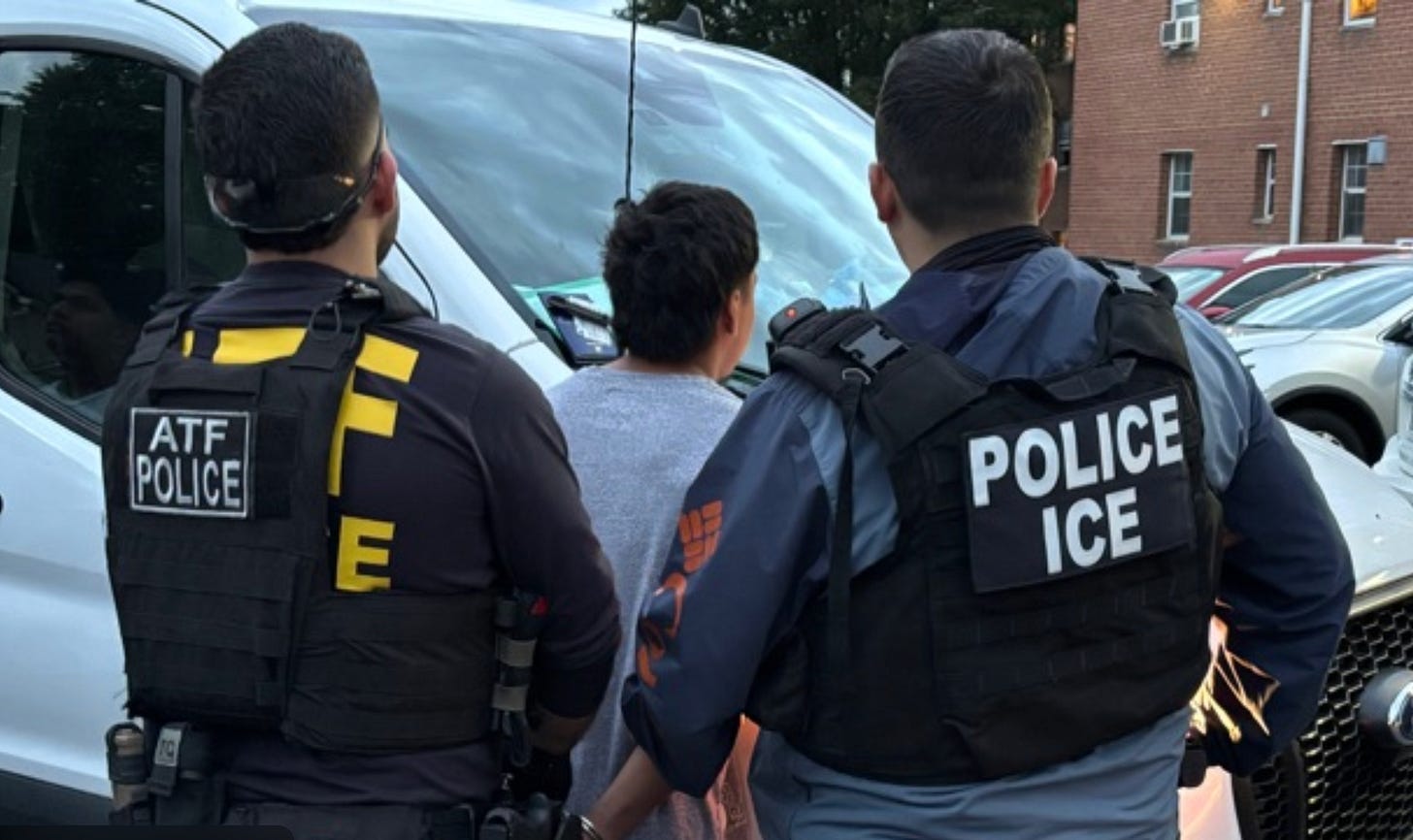
Instead of picking someone up safely from a jail, agents must track individuals for weeks—or even years—until an opportunity arises. Giaritelli recounts riding along with ICE during an arrest of a man who had been tracked for 16 years and had accumulated four DUI arrests before agents were finally able to detain him at his workplace.
This isn’t aggressive enforcement for sport—it’s enforcement shaped by obstruction.
What Are “Collateral Arrests”?
White House Border Czar Tom Homan has been blunt about this reality: collateral arrests are inevitable.
When ICE finally locates a target, others may be present. Agents are legally obligated to check immigration status, and if those individuals are also in the country illegally, they can be arrested—even if they don’t have criminal records.
That’s where many viral videos come from. The focus is often on the secondary arrests, not the primary criminal target who prompted the operation in the first place.
ICE vs. Border Patrol: What’s the Difference?
There’s another key distinction that often gets blurred online.
-
ICE targets specific individuals based on intelligence and criminal history.
-
Border Patrol, traditionally assigned to borders and coastlines, has increasingly been pulled into the interior to assist ICE.
Border Patrol agents—recognizable by their green uniforms—are often involved in broader enforcement actions, including large-scale checks in places like Home Depot parking lots. These operations generate intense community pushback and dominate social media narratives.
But they are not the same as ICE’s targeted arrest strategy.
The Bigger Picture
Immigration enforcement today isn’t just about policy—it’s about optics.
Local governments restrict cooperation. Federal agencies adapt. Social media strips away context. And the public is left with a distorted picture that fuels outrage without understanding cause and effect.
As this conversation makes clear, the system is messy, constrained, and politically charged—but it’s far from random.
If we want an honest debate about immigration, it starts with understanding how enforcement actually works—not how it’s clipped for clicks.
Transcript
Chuck Warren: Yeah, no. Let’s talk about ICE for a minute. So you’re saying these deportations and social media only exasperates it, that you see these people being pulled out of cars or whatever. You know, they’re at a courthouse or something of that nature. Is the Trump administration, how are they targeting individuals? Is it anybody who’s received a letter to show up for a hearing? Or do you feel they’re taking a wider scope? How are they determining who to go after?
Anna Giaritelli: They’re targeting criminals, right. People who have criminal histories in the United States. And we know that as of December, 70% of those who have been arrested have criminal history in the United States. And when I say history, that means someone who’s been convicted of a crime, as well as someone who’s been arrested and is pending charges. So they haven’t been convicted yet, but they have a history with the law that could go away. It could become permanent.
So there are a lot of collateral arrests though, which White House borders are Homan had told me last December, there’s going to be collateral arrests. The way they’re going after people is it’s a really difficult approach, right? Because cities won’t turn over people in their jails to ICE in 95% of circumstances. And so ICE is then forced to, ICE gets notified every time there’s an arrest in the country and it’s an illegal immigrant. They can see what the charge is.
Where that person’s from, oh this person looks like they actually might be a gang member. And that’s how they make those decisions behind the scenes of who we want to go after. And some cases I’ve been out with ICE plenty. It’s, it’s weeks till they actually get, get out and find that person or sometimes years. There was a man who they’ve been tracking for 16 years when I was out with them last and he had four DUIs and it was finally a chance to, to, to go arrest him at his workplace. And so.
Ice is going after individuals who they’re specifically looking after. There might be other people around who they check immigration papers and they end up getting arrested as well. They don’t have criminal histories. On the other hand, Border Patrol, those are the agents at the northern, southern and coastal borders. They’ve been pulled into the interior of the United States to assist ICE. They’re mostly doing at large arrests. So they’re helping ICE go after specific people.
But typically these are the men and women in green uniforms. They’re going to Home Depot parking lots and sort of just saying everybody here needs to show papers. And those are the ones that really get a lot of pushback from the community. Yeah. So that’s the difference in how they’re sort of going after people right now.
Listen to the full episode of Breaking Battlegrounds anywhere you stream your podcasts!