Recently, there was a lot of fuss about how stupid Donald Trump is for retiring four Avenger-class minesweeper ships last summer. Trump had little to do with retiring them.
The Navy wanted to retire them for a decade, and Congress demanded that the Navy prove it had new ways of clearing mines. Between 2020 and 2024, the Navy extensively tested its new platforms and convinced Congress that it was ready to retire the minesweepers. Congress eventually agreed and put it in a budget bill, which Joe Biden signed into law, requiring the ships to be retired by the end of Fiscal Year 2025, which ended in September.
Brilliant or stupid, Trump had little to do with it.
The Navy wanted to retire them for a variety of reasons. They were getting old and expensive to maintain. They were unequipped for uncrewed suicide vessels, which are basically mobile mines. The Navy also did not want to put sailors in minefields, risking injury or death. So it developed new mine countermeasure platforms. But what are these new things?
The first is the use of littoral combat ships and destroyers. These are motherships that carry uncrewed surface and underwater vessels, which are small water drones. These ships are equipped with sonar and airborne sensors to detect mobile and planted mines.
Second, the Navy uses laser-equipped helicopters to find mines from the air.
Third, the Navy uses advanced AI software to process the data it collects to figure out which objects are mines, and which objects are other things.
After finding these mines, the Navy uses a variety of ways to neutralize them. One way is by deploying small units called “destructors” from its drones to sit on the mine and overcharge it so the mine would blow up. The easiest way is by hitting them with small torpedoes. Torpedoes are expensive, so the Navy does it when it cannot use destructors. The last resort is the Explosive Ordinance Disposal unit, who are Navy divers. They would swim to the mine and neutralize it with hand, which is dangerous and the last resort.
This is how the Navy finds and neutralizes mines. Now, let’s focus on Iran.
There are two Arleigh Burke class, guided-missile destroyers, USS Frank E. Petersen and USS Michael Murphy, currently in the area. In addition to mining countermeasures, these ships are equipped with air defense to be able to defend the operation against Iran’s drone and missile attacks. They also are capable of sea combat, which is important.
The Strait of Hormuz narrows down to 21 miles, with Iran and the United Arab Emirates and Oman on its two sides. Iran has mined the strait closer to the United Arab Emirates and Oman to force ships to navigate near Iran’s coast, through a corridor between two Iranians islands called Gheshm and Larak, and toward its tollbooth in the sea to collect a toll from any ship that goes through the strait. These are commercial ships and incapable of defending themselves.
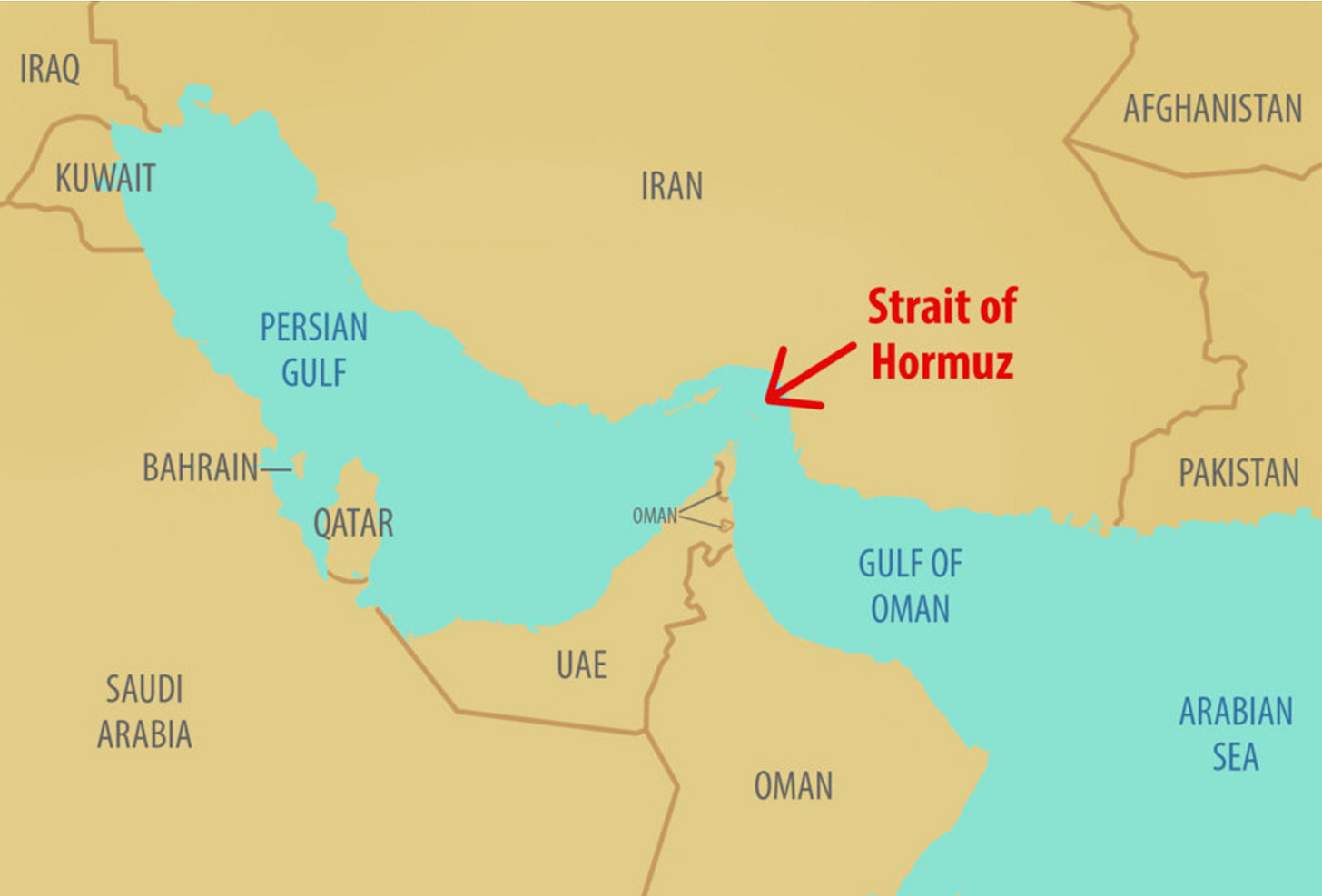
After clearing an alternative path away from Iran’s navy ships in the sea, the U.S. Navy will be able to escort these ships as they navigate near Iran’s tollbooths. If Iran decides to harass these commercial ships for toll money, they will have to deal with American destroyers.
Once the Navy establishes an alternative route away from Iran’s tollbooth, helped by the U.S. Navy, these ships will be able to exist the Persian Gulf into the Sea of Oman and enter the ocean.
In the meantime, the Navy will begin to blockade the exit route from the Sea of Oman into the Indian Ocean, as President Trump announced on April 12. George H.W. Bush Carrier Strike Group is currently exiting Eastern Mediterranean and is scheduled to arrive in the Sea of Oman late next week. Once it takes position, it will prevent the exit of any ships. Why is this important?
Mine clearance will take a while. In the meantime, Iran is supposedly making money from its tolls, and China is the primary beneficiary since it is one of the few countries still allowed to get oil from the Persian Gulf. The blockade will halt exports from the sea, which means that Iran will not make any money from the tolls. It will also prevent China from buying oil at a discount and, ideally, might lead to indirect pressure on Iran. If China starts feeling the pain, it could in turn pressure Iran to concede to U.S. demands.