What if 20% of the federal government’s discretionary spending vanished overnight — and most Americans didn’t even notice?
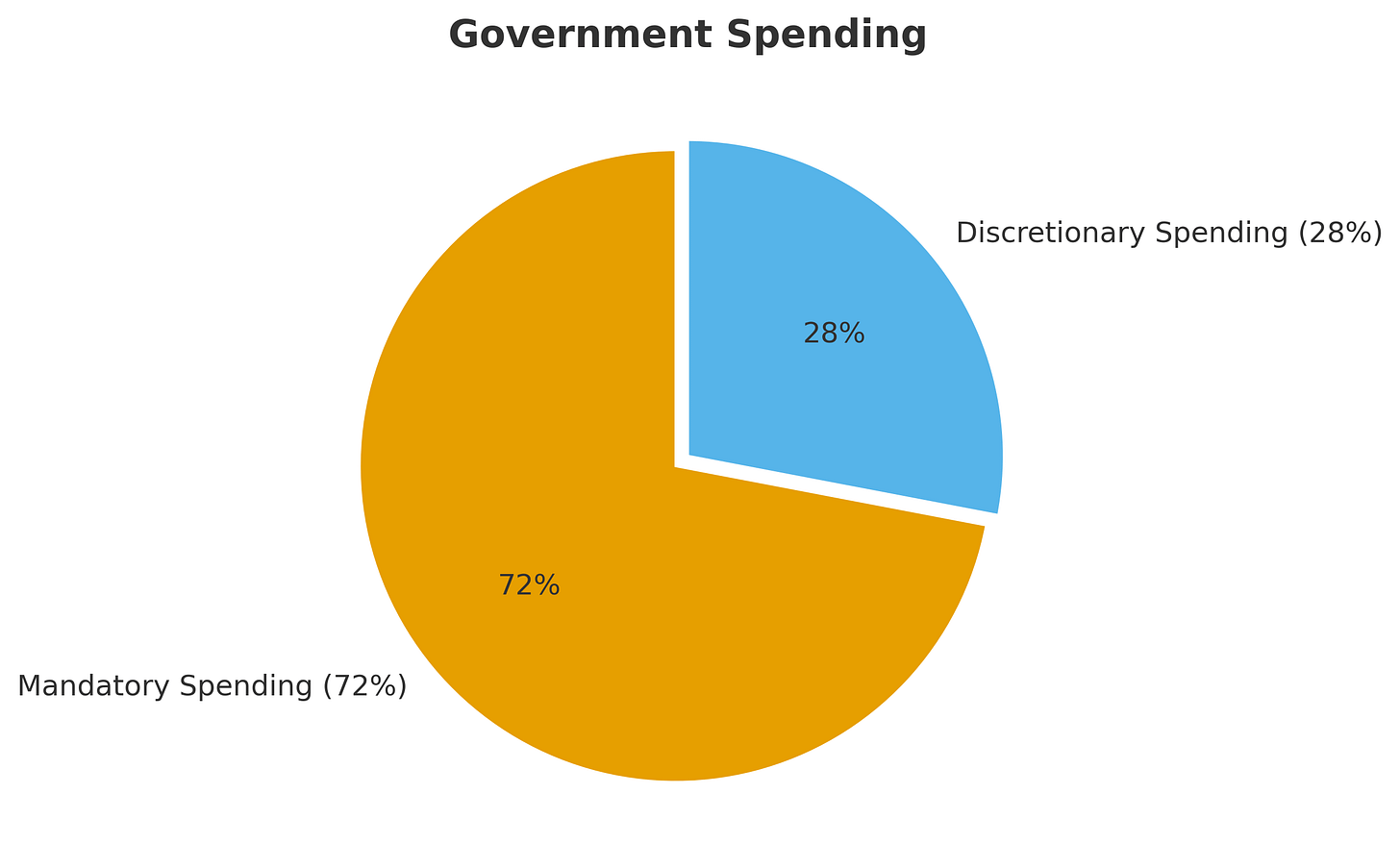
That’s the provocative question Congressman Mike Simpson tackled in this week’s episode of Breaking Battlegrounds with hosts Chuck Warren and Sam Stone. Simpson broke down the budget in blunt terms: only 28% of all federal spending is discretionary, meaning Congress actually votes on less than a third of the government’s budget every year. The other 72% is mandatory spending locked into programs like Social Security, Medicare, and Medicaid.
Simpson made the case that significant reductions in discretionary spending are possible without harming the services Americans rely on. In fact, he noted that appropriations bills passed this year already cut spending by $45 billion, with more reductions planned for next year. “You could probably lose 10, 15, even 20 percent of discretionary spending and still function and do everything the American people expect us to do,” Simpson argued.
But the congressman stressed that focusing only on discretionary cuts won’t solve the bigger problem: the $37 trillion national debt and the unsustainable math behind entitlement programs. When Social Security was created, there were 16 workers for every retiree, and the average lifespan was just 64. Today, there are only 2.5 workers per retiree and people live well into their late seventies — a formula that simply doesn’t add up.
Simpson called for reforms to Medicare and Social Security to ensure their survival for future generations — not by taking away benefits from current recipients, but by modernizing how these programs are funded and delivered. “If you ask young people today, most of them think they’re more likely to see an alien than to ever receive Social Security,” Simpson said. “And they may be right if we don’t fix the system.”
This episode is a candid look at the realities of Washington’s budget battles and why the hardest conversations — about entitlement reform — are the ones Congress can no longer avoid.
Transcript
**Sam Stone: **Congressman, I want to throw this out to you real quick and then Chuck’s got a question for you. What percentage of government discretional spending could disappear tonight and people would not know it tomorrow?
**Congressman Mike Simpson: **Well I don’t know what the exact percentage is, but I will tell you, the discretionary spending of the total amount the government spends, only 28% of it is discretionary spending. The other is mandatory spending. That’s Social Security, Medicare, Medicaid mainly are the three big programs. But we only appropriate money for about 28% of the total government spending. You could probably lose 10, 15, 20% of that and still function and do everything that the American people expect us to do.
And we found that out through a lot of the the recommendations of those in from the Trump administration of things that we could do better more efficiently or question things that we’re doing at all why we should be doing some of these things. So you can make significant reductions but it’s hard to turn the ship estate around but we’re doing it. Our appropriation bill reduce spending by forty five billion dollars this year it will be more next year and that’s the direction we’ve got to keep going if we’re going to get this country’s fiscal house back in order.
**Chuck Warren: **Speaking of 78% is mandatory spending, what entitlement or what line item on that 78% do you think is the first thing you can tackle and hopefully reach some bipartisan approach on? I take it a block by block. Is it social security? it Medicare? What is it?
**Congressman Mike Simpson: **It’s 72% of the 28% is is discretionary.
**Chuck Warren: **Alright, so 72%. What’s the first block that you feel that you could be fighting tooth and nails but get bipartisan support to reform it so you can save money? What agency is that?
**Congressman Mike Simpson:**You have to reform the medicare system and that’s not take away medicare from any individual or anything like that but you can reform the system and how health care is delivered in this country but you’ve gotta reform medicare and you’ve gotta reform social security. When social security started there were sixteen and a half workers for every retiree and the average lifespan was sixty four years old.
That’s a system that pencils out forever and now there are two and a half workers for every retiree and the average life span is what 75-78 something like that. It doesn’t pencil out anymore so you’ve got to change the system. Again not to take any benefits away from anybody that’s earned those benefits or that’s receiving social security but if you’re a young person paying into social security today. In poll after poll that you ask young people this they believe they’re more likely to see an alien than they are to get social security and they may be right if we don’t change the system for the future.
Listen to the full episode of Breaking Battlegrounds anywhere you stream your podcasts!