While headlines churn endlessly over Iran’s nuclear ambitions and regional provocations, one reality remains largely invisible: the quiet collapse of Iran’s Jewish community.
In this special episode of Breaking Battlegrounds, hosts Sam Stone and Chuck Warren sit down with acclaimed author Roya Hakakian, whose personal history as an American Persian Jew gives her a rare and deeply human perspective on what life inside Iran has become — especially for religious minorities living under the Islamic Republic.
It’s a conversation most media outlets won’t touch. And that silence matters.
From Flourishing Community to Near Extinction
Just four decades ago, Iran was home to more than 100,000 Jews. Today, that number has collapsed to roughly 8,000 — a demographic freefall that Hakakian describes as nothing short of devastating.
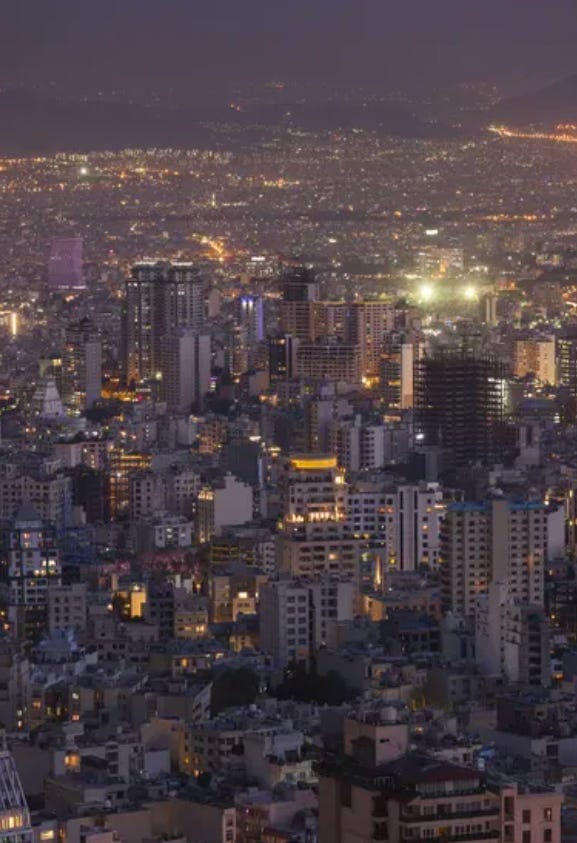
What was once a vibrant, geographically diverse community has been compressed into survival mode. Jews who once lived freely across Iran’s cities and towns are now largely confined to Tehran and Shiraz, the last remaining centers where Jewish life still exists — tenuously.
“When Jews were at their most comfortable in Iran, you could find them anywhere,” Hakakian explains. “Now… only two cities. And most of them are in terror.”
Fear After the Iran–Israel Confrontation
While the Iranian regime has spent decades broadcasting its hostility toward Israel and Jews, Hakakian notes a turning point came after last June’s direct confrontation between Iran and Israel.
Following the ceasefire, Iranian authorities rounded up more than 30 Jews, accusing them of espionage. Though some were eventually released, others remain imprisoned — and the message to the remaining community was unmistakable.
The threat is no longer rhetorical. It’s personal. And it’s immediate.
Why the World Isn’t Paying Attention
Perhaps the most troubling takeaway from this special episode is not just the brutality of the regime, but the global indifference surrounding it.
American and international media outlets have largely ignored the plight of Iran’s Jewish community, even as arrests, intimidation, and fear intensify. Hakakian suggests that this silence enables the regime — allowing repression to continue without scrutiny or consequence.
The result is a community fading in isolation, watched over by a world that seems unwilling to look.
Why This Conversation Matters
This episode of Breaking Battlegrounds isn’t just about Iran’s Jews — it’s about what authoritarian regimes do when they believe no one is paying attention.
The collapse of Iran’s Jewish population is a warning signal: when fear replaces citizenship, when loyalty is measured by silence, and when identity becomes a liability, no group is truly safe.
And if the world continues to look away, that number — 8,000 — will only keep shrinking.
Transcript
**Sam Stone: **Welcome to a special episode of Breaking Battlegrounds with yours Chuck Warren. I’m Sam Stone, also in studio today with us our very good friend and occasional co-host Shay Khatiri. We are obviously here to talk about the situation in Iran, which continues to develop and change day by day. The brutality of the regime is being reasserted and people are suffering.
American media and global media as a whole has largely been ignoring the issue. For myriad myriad reasons and we’ll get into some of that with our guest today. But as always, I’d like to jump in with our first guest, Roya Hakakian. She is, pardon me, she is the author of Journey from the Land of No and has a background as an American Persian Jew.
Which is very unusual obviously I think most Americans probably have never met an American Persian of Jewish ancestry. Roya welcome to the program.
Roya Hakakian: Thank you so much for having me on.
**Chuck Warren: **Roya, how many Jews were there in Iran 40, 50 years ago during the Shah?
**Roya Hakakian: **Over a hundred thousand and you’re only down to probably 8,000. It’s a dying community now, which is incredibly devastating.
Chuck Warren: I can’t imagine how lonely that must feel being one of the 8,000 people there now.
Roya Hakakian: Yes, and terrifying, especially after June of this last year, because even though the regime had always spoken a great deal against Israel and Jews and all that, it was only last June that there was actually a face off between Iran and Israel.
So I am quite certain that the community is even more unsettled now in the aftermath of that. And there was a slew of arrests that took place after the war ended or there was a ceasefire I should say and you know over 30 Jews were rounded up as spies and many were released but some are still in prison.
Sam Stone: Net, Roya, is the Jewish community in Iran concentrated in one location? Do they have an epicenter or are they at this point just spread out and they’re randomly interspersed throughout the population?
**Roya Hakakian: **That’s an excellent question, primarily because it actually captures the history and sort of the sociology of the Jewish community in Iran. When Jews were at their most comfortable in Iran, you could find them anywhere. They were spread out throughout the country in small cities, in large cities, everywhere. But as the pressure started to mount more and more and as the community started to leave the country more and more they they just dwindled in all the cities where there had been a long history of Jewish presence.
And now you have primarily Jews in Tehran which is the capital of Iran and in Shiraz which is where Jews had traditionally been concentrated outside of Tehran so yeah. Only two cities and most of them are in terror.
Listen to the full episode of Breaking Battlegrounds anywhere you stream your podcasts!