In the latest episode of Breaking Battlegrounds, hosts Sam Stone and Chuck Warren sit down with Ryan Berg, Director of the Americas Program and head of the Future of Venezuela Initiative at the Center for Strategic and International Studies (CSIS), to break down how Venezuela — once Latin America’s wealthiest nation — became one of the world’s greatest peacetime tragedies.
A Nation in Freefall
Since 2014, nearly eight million Venezuelans have fled their homeland — the largest displacement in Latin American history. But unlike many mass migrations, this wasn’t sparked by war. As Berg explains, Venezuela’s collapse was the product of policy, corruption, and criminal control.
It all began in the late 1990s when Hugo Chávez rose to power. His populist vision quickly turned the oil-rich nation into a political laboratory for authoritarian socialism. Over time, what started as redistributive policy transformed into a system of control, sustained by propaganda, patronage, and plunder.
Today, Venezuela’s GDP has fallen by over 70%, a level of economic devastation unseen in modern peacetime history. According to the International Monetary Fund, it’s the largest non-war economic collapse on record.
The Rise of a Criminal Regime
Berg notes that the Maduro regime no longer resembles a government — it’s a criminal enterprise. With the nationalized oil sector in ruins, the regime now funds itself through drug trafficking, illegal gold mining, and human smuggling.
“We at CSIS began referring to Venezuela as a criminal regime,” Berg says. “Not only because it works closely with criminal organizations, but because it funds itself through criminal activity.”
This illicit ecosystem has blurred the lines between the state, the cartels, and the military — turning Venezuela into a hub for organized crime across the Western Hemisphere.
Why There’s No Uprising
Host Sam Stone asked the question many are thinking: Why haven’t Venezuelans overthrown the regime?
Berg’s answer is chilling: the exodus itself protects Maduro.
Millions of the country’s most capable, connected citizens — those who might have led an uprising — have fled abroad. Their remittances, ironically, now help the regime survive by easing economic pressure at home.
“It’s a pressure release valve,” Berg explains. “They have fewer mouths to feed, fewer people to repress, and money still flowing in from abroad.”
Those who remain have already endured years of protest, imprisonment, and violence. Opposition figures have been tortured, exiled, or killed. Many Venezuelans now see resistance as futile.
Elections Without Hope
In 2024, the international community — led by the Biden administration — placed its hopes in a “freer and fairer” election. Venezuelans turned out in record numbers, voting for the opposition by a reported two-to-one margin. They even obtained copies of the vote tally sheets proving the fraud.
But the regime simply changed the numbers, silenced dissent, and cracked down harder.
“They did what they were asked to do,” Berg says. “They voted, peacefully, and the regime repressed its way out of the problem once again.”
The End of the Road
After decades of failed negotiations, sanctions, and false starts, Berg believes the world has reached the limit of its diplomatic toolbox.
“We’ve tried everything,” he says. “The toolkit is well used and well worn.”
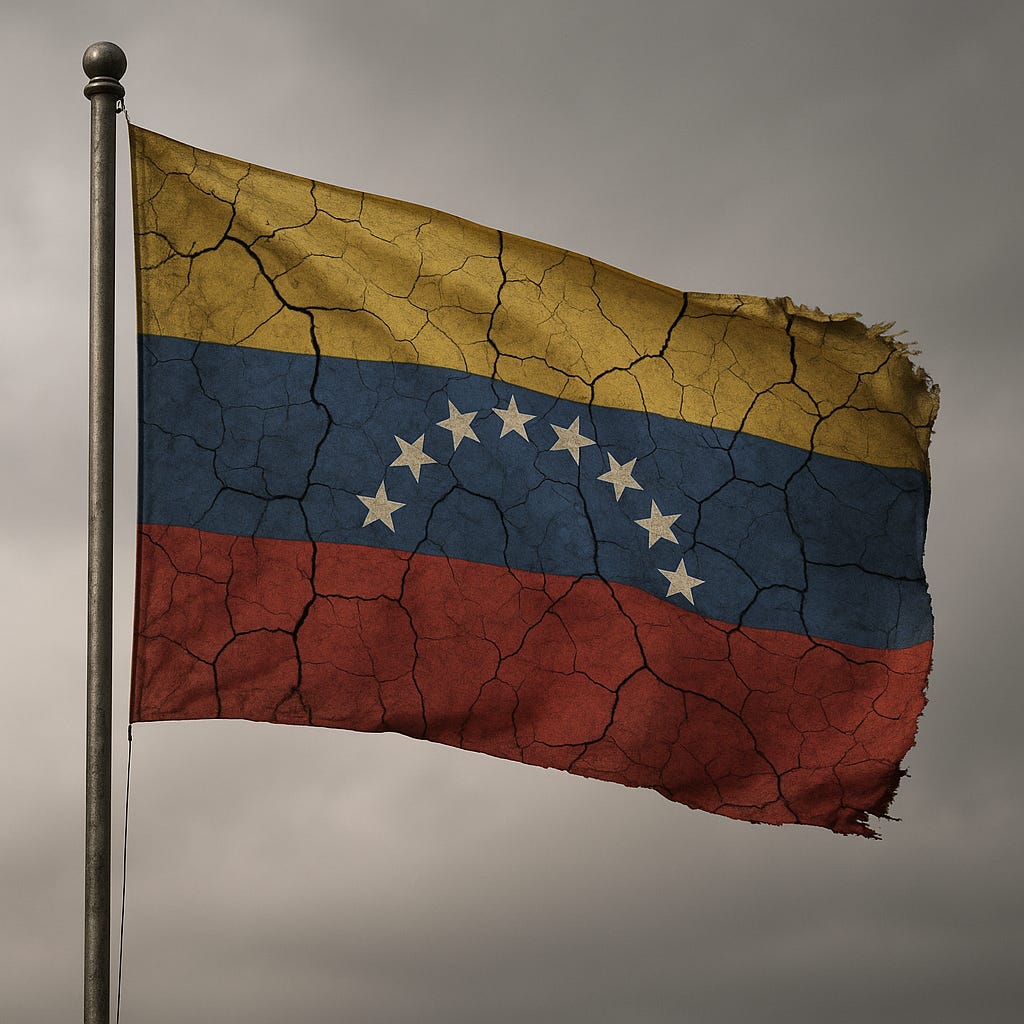
Venezuela today stands as a cautionary tale — a nation where populism, corruption, and crime fused into a system too profitable for those in power to ever let go.
Transcript
**Chuck Warren: **Fantastic. All right, so let’s talk to the foreign policy. know, the world moves constantly and now we have Venezuela. And before we get going into it, can you explain to our listeners why we’re at the point we’re at with Venezuela? I mean, since 2014, nearly eight million Venezuelans have left the country. It’s been the largest movement ever in Latin America. Why are we at that point and how did we get here?
**Ryan Berg: **Well, the story really begins with Hugo Chavez in the late 1990s getting elected after first trying to commit a coup as a lieutenant colonel in the Venezuelan Armed Forces. The populist policies and eventually criminal illicit economies that Venezuela has grown over the years have taken their toll. And Venezuela’s lost about 70% or more of its gross domestic product in a little over a decade and a half.
It’s the largest peacetime economic collapse in world history, according to the International Monetary Fund. There’s no war going on in Venezuela. There’s no internal conflict. There’s no civil conflict of any kind. This is just bad policy, populist politics, and a mentality of a sort of mafia state where not only is the regime there incredibly repressive and committing all sorts of human rights abuses up to and including crimes against humanity, according to the International Criminal Court.
But they don’t really have sound economic policies either. Now, the lifeblood of the economic picture in Venezuela has always been oil. And for years, the publicly dominated oil sector in Venezuela was always seen as the kitty, as the pot of money that populist regimes like Chavismo in Venezuela could grab from to engage in particular policies that eventually led to Venezuela’s ruin.
As Venezuela is going through this period of time where there’s this 70% or so decline in GDP, in order to survive, the regime is not only getting more repressive, but it is starting to engage much more tightly with criminal organizations and is making more and more money for state coffers by participating in illicit gold mining, in drug trafficking, in human trafficking, and other types of crimes.
And so at some point in about 2018 or 2019, the organization I work at, CSIS, began referring to Venezuela as a criminal regime. The Maduro regime is a criminal regime. We meant that in two senses. Number one, it has a very tight working relationship with some of these criminal organizations that occupy territory within Venezuela. But number two, it derives much of its public financing, much of the money it has to spend on programs and maintain itself in power from criminal activities like drug trafficking.
**Sam Stone: **How we’ve seen pushback in Venezuela, we’re talking about a country that in the relatively recent past was the most prosperous in Latin America. Is there why I guess I’m a little baffled why we haven’t seen more of a popular uprising against the Maduro government and against these regimes.
**Chuck Warren: **Well, eight million people have left. Yeah. mean, they’re emptying it.
**Sam Stone: **But I mean, you know, at what point when everyone’s starving in the streets, do you not overthrow this regime?
**Ryan Berg: **So eight million Venezuelans have left, as has been mentioned. That is a pressure release valve for the regime, right? They have fewer mouths to feed. They have fewer people they need to worry about repressing. And in many cases, those individuals who have usually high levels of social and economic capital, they’re able to send remittances back to their family members in Venezuela, thus relieving the pressure even further from the Maduro regime.
But to step back, think it’s important to mention, Venezuelans have done a lot. They have, especially the opposition, those who are politically organized and active in the country, we have asked a lot of them and they have done a lot. Protest in the street, they’ve gone out in the street. Participate in these elections and this will be the moment of change. They participated in those elections. Many people have the scars to prove it. Many people have died in the process.
Many people have gone to famous torture centers like El Ejio, and they’ve got the scars or the PTSD or the trauma to prove that they’ve put their lives on the line for political change in Venezuela. And I think the last straw, frankly, was the 2024 presidential election, which the Biden administration was keen on organizing and had basically marketed as the point of greatest potential change in Venezuela.
Vote for the opposition in a freer and fairer election than we’ve had in some of the past moments in Venezuela. And that will be the theory of change. Guess what? Venezuelans did it. They did what they were asked to do. They went out and voted. They voted for the opposition in a two to one ratio. They got the, what are called the octas, the vote tally sheets from the individual polling centers to actually prove that the regime cheated and made up numbers.
And yet, they found a way to repress their way out of the problem, drive more opposition and other Venezuelans into exile. And here we are more than a year later with the same regime and power engaged in the same criminal activities as always. And so I think if you’re from the Venezuelan standpoint and also from the U.S. international community standpoint, you’ve tried everything at this point. The toolkit is is well used and well worn. And we may be reaching for that last.
Listen to the full episode of Breaking Battlegrounds anywhere you stream your podcasts!