What if life-changing scientific discoveries were delayed — or even hidden — during one of the most secretive periods in modern history?
That question was at the center of a recent Breaking Battlegrounds conversation with science and technology journalist Stacy Liberatore, who has written extensively on Cold War intelligence activity, emerging medical research, and the lingering mysteries surrounding declassified government files.
Her reporting on these subjects helped spark the discussion, bringing renewed attention to claims that early research into unconventional cancer treatments may not have received the public scrutiny it deserved.
The Origins of a Persistent Theory
According to historical documents discussed during the interview, intelligence summaries from the Cold War era referenced scientific studies exploring similarities between parasitic organisms and cancer cells. Researchers at the time reportedly experimented with anti-parasitic drugs in attempts to influence tumor growth, with early findings suggesting possible reductions in cancerous tissue in laboratory settings.
What continues to generate debate is not only the science itself, but the question of why such research did not become widely known or aggressively pursued. For some observers, this raises the possibility that promising avenues of treatment were overshadowed by geopolitical priorities, institutional caution, or the secrecy that defined intelligence operations during the period.
Secrecy, Context, and Unanswered Questions
Liberatore noted that intelligence agencies during the Cold War operated with far less oversight than they do today. National security concerns often justified keeping information classified, even when it related to scientific developments with potential public health implications.
Whether this secrecy ultimately slowed medical progress is still a matter of interpretation. What is clear is that incomplete records and decades-old decisions continue to fuel speculation — and renewed journalistic investigation.
Modern Research Rekindles Interest
Adding to the intrigue is the fact that contemporary researchers have continued to explore similar scientific ideas. New studies and patents examining unconventional treatment strategies suggest that lines of inquiry once considered obscure or controversial may still hold relevance in today’s search for more effective cancer therapies.
This intersection between historical research and modern innovation has helped revive public interest in the question of whether important discoveries were overlooked, misunderstood, or simply ahead of their time.
Why the Debate Resonates Now
Stories about potential hidden cures strike a powerful emotional chord. They touch on fears about institutional transparency, frustration with the pace of medical breakthroughs, and the universal hope for life-saving treatments.
By covering these issues across multiple articles, Liberatore has helped bring renewed visibility to a complex and often polarizing topic — one that sits at the crossroads of science, politics, and public trust.
Continuing the Conversation
As researchers continue their work and historical archives are revisited, the debate surrounding these claims is unlikely to fade. Instead, it serves as a reminder of how scientific progress, government secrecy, and public perception can become deeply intertwined.
Listeners who want to better understand the background behind this discussion are encouraged to explore Stacy Liberatore’s ongoing reporting, where she specializes in covering science, technology, and the historical investigations that continue to shape modern debates.
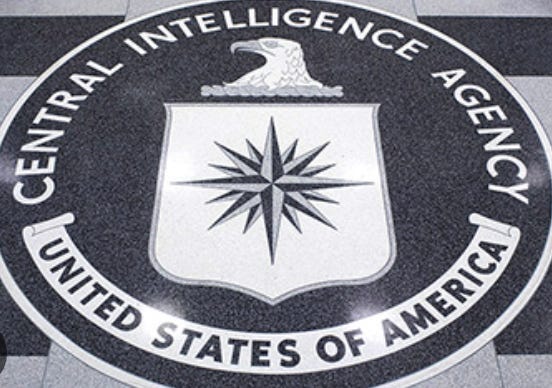
Transcript
**Chuck Warren: **All right, we’re back. We’re back with Stacy. How are you, Stacy?
**Stacy Liberatore: **Yeah, I’m good. I’m good. How are you guys?
Chuck Warren: Good, good, good.
Sam Stone: So you had another piece out, outrage over potentially cancer-causing drug hidden by CIA for years, and then a follow-up where Johns Hopkins has actually been using or developing that drug. Tell us about this story because all of this seems to tie together a little bit with the previous conversation and it, the deeper someone like you digs the wilder it gets.
Stacy Liberatore: Yeah, this one is interesting because the CIA report was basically summarizing research that they got from the Soviets during, I think it was like, it was a 1951 study, was declassified in 2014, and it just summarizes this Soviet scientific paper where they found similarities between parasitic worms and cancerous tumors. You know, how they thrive, what they survive on, it seems to be pretty similar. So these Soviets decided like, okay, well if that’s the case, we have anti-parasitic drugs, so let’s try it out. And they tested it on mice with tumor tissues. And they found that they were able to reduce the tumor tissues.
ChucK Warren: So why would they hide this?
Stacy Liberatore: I mean, we don’t know. It’s mind-blowing to me. I mean, it’s... It makes no sense why you would hide something like this.
Chuck Warren: Well, I mean, the CIA has publicly disclosed employees of 20, 22,000 people. Who knows how many contractors, let’s add another 10, 20,000 to that list. At least, yeah. At least okay. And the thing about these stories which cause me concern is the CIA there is really there to protect the United States, right? And sometimes, a lot of times, that work is ugly. But when I hear things like this, that they would go and suppress a cancer-curing drug, I can’t follow the logic on it. Is that a question you ask yourself when you come across these files? Why would they do this when they’re supposed to be defending America and its people?
Stacy Liberatore: Yeah. And like I said, I’ve been covering this for a long time and I have spoken with current CIA members and they made a really good point that this was a time that was completely different from the CIA now. So like I call it, it was a wild wild west. There’s no oversight over the CIA at all. Nobody was monitoring them. And then they had all this money. So they were just going buck wild with what they could think of. So the CIA now is completely different from the CIA during the Cold War.
Sam Stone: So now the turn to this story though is that your follow-up piece at the Johns Hopkins actually started researching this and experimenting it. What did you learn there?
Stacy Liberatore: That they filed a patent in, I believe it was 2021 for another anti-parasite worm drug after they also found that it, the parasites and cancerous cells act, you know, act similarly. And they actually tested on animals as well. Found it could also be a great treatment for brain tumors, which we all know is just one of the most deadliest forms of cancer out there.
Chuck Warren: Right. It’s a death sentence.
Stacy Liberatore: Yeah.
Sam Stone: Is part of the reason this isn’t more widely known, for instance, is because of the whole thing around ivermectin and COVID? Like is, there sort of an, an attitude within, you know, certain medical circles not to want to point to this type of drug as being successful at, at such a wide range of things?
Stacy Liberatore: I think, I mean, I’m, have two theories. So my one is, you know, I’m going to be more conservative about it is the fact maybe doctors don’t want people, you know, honestly, I can’t imagine what it’s like to have cancer and you’re probably going to want to try anything and everything. And doctors probably don’t want people who do have cancer going straight to anti-parasitic worm drugs for their treatment. So maybe that’s a reason why, because I know John Hopkins in their 2021 patent, just said that they were soon starting human trials. So they’re probably stopping it there. But then, you know, I was, after I did the cancer CIA file, I saw a lot of people making comments about, you know, big pharma and things like that. So that’s my devil’s advocate there.
Sam Stone: Certainly that amount of money in any system could change outcomes, right? Especially when you’re talking about those those are the institutions that fund the research along with the government at many of our medical colleges and universities.
Chuck Warren: Well, I mean Stacy, I feel like your reporting could almost if I was creating a file be termed this is why people hate government. This is just insanity.
Listen to the full episode of Breaking Battlegrounds anywhere you stream your podcasts!