It’s easy to talk about Ukraine in abstractions — aid packages, battlefield maps, diplomatic summits, and strategic calculations. It’s much harder to reckon with the reality of life inside a city under attack.
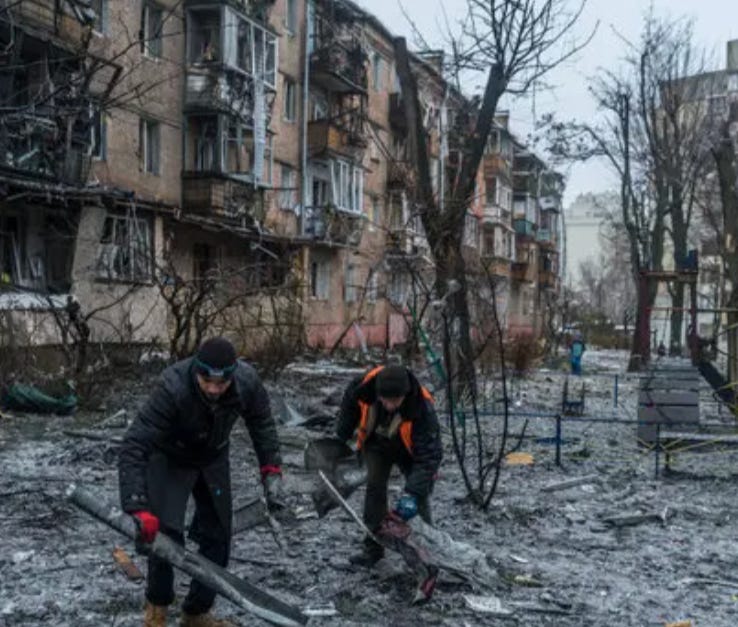
On the latest episode of Breaking Battlegrounds, journalist Alessandra Hay joined us from Kyiv, where Russian strikes had left much of the city without electricity, water, or heat. Snow on the ground. Temperatures dropping. A population trying to maintain morale in darkness.
Her reporting cuts through the geopolitical noise and forces a harder question: Is the West helping Ukraine survive — or deliberately preventing it from winning?
Kyiv in the Dark
When Chuck Warren asked Hay what daily life in Kyiv looks like right now, the answer was stark.
A massive overnight attack had knocked out power across much of the city. Water was gone in the morning. Electricity was a rare luxury. Winter conditions only intensified the strain.
And yet, life continues.
People adapt. They endure. They try to keep morale intact even as the cold, the darkness, and the uncertainty press in. Winter, Hay noted, is always the hardest season — and war only compounds it.
This is the part of the conflict rarely visible from Western capitals: the quiet resilience required just to get through the day.
“Enough to Keep Fighting, Not Enough to Win”
Sam Stone posed the uncomfortable question many observers have been asking from afar:
Is Ukraine being kept in a perpetual war — supplied just enough weapons and aid to bleed Russia, but never enough to actually end the conflict?
Hay didn’t hesitate.
That frustration, she said, is widespread.
Many Ukrainians believe Western support has been calibrated to prolong resistance rather than secure victory. And the human cost of that strategy is devastating. Real people are dying. Families are being destroyed. Cities are freezing.
From Kyiv, the war doesn’t feel like a chess match. It feels like loss, day after day.
Europe’s Stake Is Bigger Than Ukraine
While U.S. politics loom large — and shift every four years — Hay emphasized that Europe increasingly understands what’s at stake.
Russia’s behavior hasn’t been confined to Ukraine. Drone incursions into Poland. Intimidation of the Baltic states. Sabotage operations across Europe. These aren’t theoretical threats — they’re warnings.
Europe, Hay argues, needs Ukraine to hold the line. Because if Ukraine falls, Russia doesn’t stop at the border. History has made that painfully clear.
Ukraine isn’t just fighting for itself. It’s absorbing a threat Europe doesn’t want to face directly.
The War Isn’t Abstract From Here
From Kyiv, the war doesn’t feel frozen or stalemated. It feels volatile — capable of shifting suddenly, violently, and without warning.
Despite exhaustion and loss, Ukrainians don’t view the conflict as endless. They’re waiting for the next turn, the next rupture, the moment when the balance changes.
But waiting comes at a cost. And winter makes that cost impossible to ignore.
Why This Conversation Matters
What Alessandra Hay describes isn’t ideology or strategy — it’s lived reality.
Dark apartments. Cold streets. Uncertain futures. A population caught between Russian aggression and Western hesitation.
The question hanging over Ukraine this winter isn’t whether people will endure. They already are.
The question is whether the West will finally decide what it wants this war to be.
Transcript
Chuck Warren: Alessandra, tell us folks, what is life like in Kyiv? What is life like in Kyiv today?
Alessandra Hay: Well today, I’m probably one of the only people in Kyiv with electricity, so it’s good you chose me to call. Yeah, there was a huge attack last night and most people don’t have electricity. I didn’t have water this morning, but it came back. But it’s very cold, very dark, there’s snow. Yeah, it’s not good. But people are, you know trying to keep morale high, it is difficult in the winter.
Sam Stone: I gotta ask a bit of a tough question because this is just my impression from looking from the outside, but it seems like realistically Europe and the United States are perfectly fine to leave Ukraine in a perpetual war to just continually wear down and drain Russian resources. Is there frustration with that? you know, it’s kind of one of those do it or get off the pot moments at some point for Western support, right? Like either really support Ukraine or or what are you doing?
Alessandra Hay: I think definitely that’s something I hear a lot of. A lot of people say like, you know, they’re kind of just giving them enough to keep fighting, but not giving them enough to win. And that’s obviously incredibly painful because, you know, what that’s doing is it really is like real people are dying and that’s real human loss. And I think that. I think that, I mean, you never know what’s going to happen. And also you talk about the US, but again, who the US is changes every four years.
You don’t know what’s going to happen in a few years, I guess. But I think from my perspective, think really. I mean, I wish I wish the US would support Ukraine more, but I also think that Europe is really stepping up. I think that one thing that maybe is becoming a bigger story is Russia’s attacks, kind of sabotage attacks in Europe.
And I think that that is making people anxious. And I think that that we’ve kind of seen Europe’s kind of rearmament period. But I think one I think the truth is, that Europe needs Ukraine because Europe doesn’t want to, you know, be confronted with Russia. And the truth is, Russia has like really done some pretty scary things this year last year, I guess now with, you know, flying drones into Poland, intimidating the Baltics like that’s real stuff. It’s scary.
So I think that I mean, what can Russia really do? I guess, I guess what I mean to say is that Russia I think poses a real threat to Europe. And Europe can’t really just leave Ukraine to fight this battle on its own because in the end it will end up being Russia’s neighbor and we see what happens to Russia’s neighbors. It’s not a good thing.
Listen to the full episode of Breaking Battlegrounds anywhere you stream your podcasts!