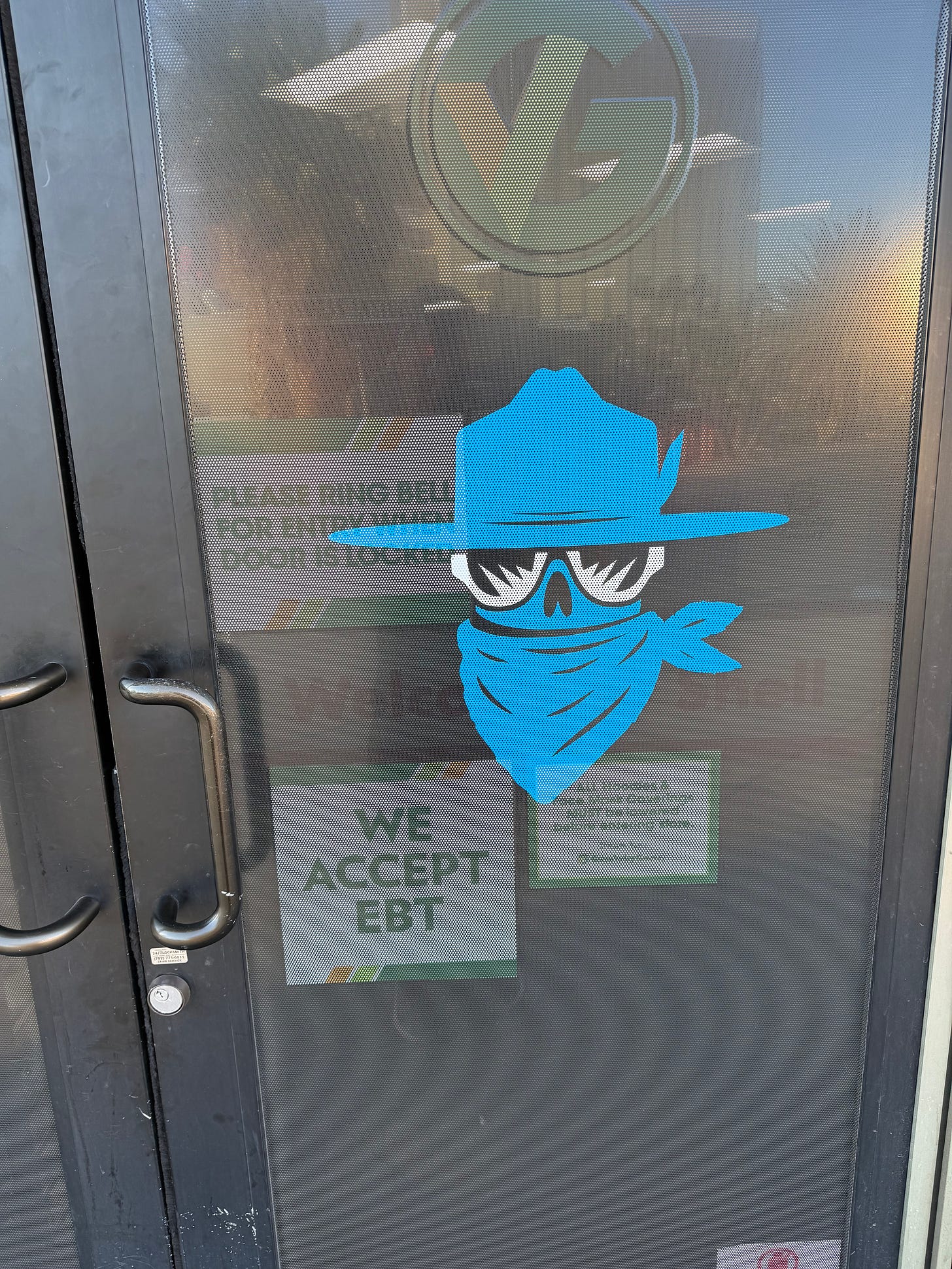
A friend of ours was recently staying at the Four Seasons in Las Vegas and told us about something that happened across the street.
He said that when he is usually in Las Vegas, he stays at the Four Seasons. Across the street, there is a convenience store where he goes to buy energy drinks because the Four Seasons charges $10 for an 8-ounce Red Bull.
But this time, when he walked over to the convenience store, the door was locked. He noticed a sign saying customers had to ring the bell. After he rang it, the cashier came over and let him inside.
He asked, “My goodness, what is going on?”
The cashier told him it was because of “crime and all those homeless guys.” According to our friend, there were about seven people outside at 6 a.m. — two near the door and five on the sidewalk.
The cashier said they lounge in the store all day, make a mess of the bathrooms, and cause problems. He then added, “No one wants to work anymore.”
That is the part people should pay attention to. When a basic convenience store has to keep its doors locked during business hours, it changes the entire experience for customers, workers, and the business itself. Something as simple as walking across the street to buy an energy drink now requires ringing a bell and waiting to be let inside.
It also puts workers in a difficult position. Instead of simply running the store, they are having to manage who comes in, who stays outside, and whether customers feel safe enough to walk through the door.
There is also a bigger issue here. When people are hanging around a business all day, not working, not buying anything, not helping the business, and instead creating problems for employees and customers, it becomes more than just an inconvenience. It disrupts the normal flow of business. It makes customers think twice before walking in. It forces employees to deal with situations that have nothing to do with their actual job.
A business is supposed to be able to serve customers, sell products, keep its bathrooms usable, and operate without having to lock the door and screen every person who comes in. When that stops happening, everyone pays the price — the employees, the paying customers, and the business owner.
Again, this is a gas station and convenience store across the street from the Four Seasons.
If this is what businesses are dealing with in an area like that, it says a lot about how crime, disorder, and people refusing to contribute can affect everyday life.