In the latest episode of Breaking Battlegrounds, hosts Sam Stone and Chuck Warren sit down with Ryan Berg, Director of the Americas Program at the Center for Strategic and International Studies, to unpack the shifting dynamics of Latin American diplomacy — and how they’re shaping the future of Venezuela.
As Venezuela faces the world’s worst peacetime economic collapse, the question now is: who in the region is willing to help usher in real change — and who’s content to quietly stand aside?
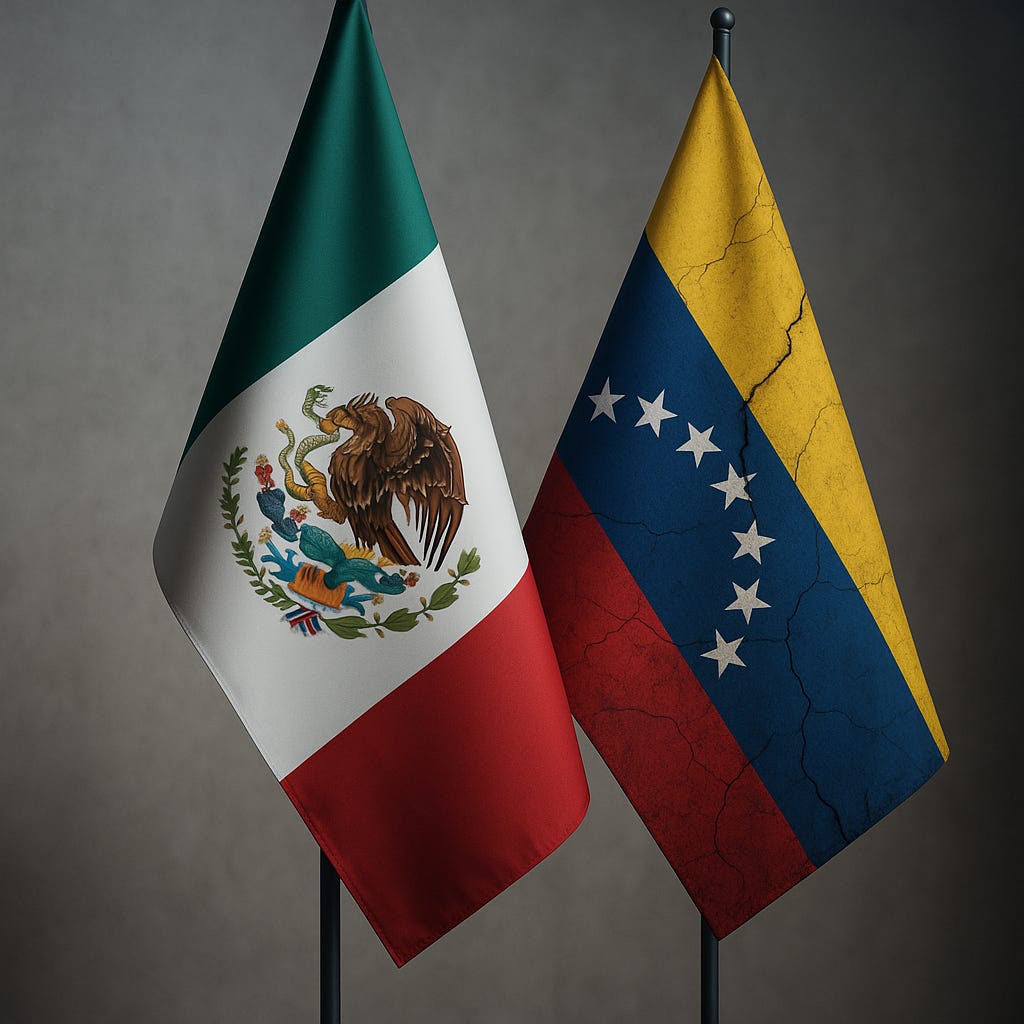
Mexico’s Quiet Stance
When Mexico’s President Claudia Sheinbaum was asked about Venezuelan opposition leader María Corina Machado winning the Nobel Peace Prize, her answer was just two words: “No comment.”
For Berg, that silence says everything. “That tells you all you need to know about where Mexico stands in a potential transition in Venezuela,” he explained.
While Sheinbaum’s government isn’t actively supporting Venezuela’s embattled regime, it’s not pushing for change either. Instead, Mexico is caught between hemispheric politics and domestic realities — and the Trump administration’s growing demands.
Berg notes that Mexico is under tremendous pressure to deliver results for Washington: more border security, more cartel interdiction, and fewer migrants crossing north. “Even if Mexico isn’t going to be a strong ally in bringing about regime change,” Berg said, “it’s also not going to stand in the way.”
Regional Divide and Cooperation
While Mexico keeps its distance, other nations in the region have stepped up their stance toward Venezuela. Caribbean and South American countries — including Trinidad and Tobago, Guyana, Jamaica, the Dominican Republic, Peru, Ecuador, Paraguay, and Argentina — have shown strong support for recent U.S. naval deployments in the southern Caribbean aimed at countering criminal networks linked to the Maduro regime.
Some of these nations have gone even further, designating groups like Tren de Aragua and the Cartel de los Soles as foreign terrorist organizations, aligning themselves with the U.S. approach and signaling a new phase of regional coordination against transnational crime and Venezuelan repression.
Handling Trump with a “Cold Head”
The conversation then turned to Sheinbaum’s leadership style — and how she’s managing a complex relationship with President Trump.
“She’s dealt with a lot of alphas,” Chuck Warren noted, “and she just doesn’t overreact to him.”
Berg agreed, pointing out that Sheinbaum describes her approach as cabeza fría — a “cold head.” She favors calm, rational engagement and has reportedly held 14 to 16 productive phone calls with Trump. “He’s said some very positive things about her,” Berg said. “It seems he enjoys the dialogue.”
But behind that poise lies serious pressure. With Mexico’s economy expected to grow less than 0.5% this year, Sheinbaum’s administration must deliver tangible results — and fast. “So far they’ve delivered,” Berg said, “but much of it comes from the incentive structure the U.S. has created.”
A Region in Motion
From the Caribbean to South America, Latin America’s political landscape is shifting rapidly. Mexico’s neutrality may buy it time, but the growing coordination among its neighbors suggests a region increasingly unwilling to ignore the consequences of Venezuela’s collapse.
In Berg’s words, the hemispheric picture is clear: some nations are stepping up, some are stepping back — but none can afford to stand still.
Transcript
**Sam Stone: **Welcome back to Breaking Battlegrounds. We’re talking now with Ryan Berg, director of the Americas program at the Center for Strategic and International Studies. We’ve been discussing Venezuela. Ryan, right before we went to break, you mentioned the role some of the other Latin American countries, particularly Mexico and others, have played in the negotiations or in the process of trying now to potentially create regime change in Venezuela.
Are those countries our ally in that or are they more interested in propping up a fellow leftist regime against what is likely to be a right-wing kickback?
**Ryan Berg: **So when Claudia Sheinbaum, the current president of Mexico, was asked what she thought of Maria Corina Machado winning the Nobel Peace Prize, her comment was, no comment. So I think that says everything you need to know, or for our listeners, that says everything they need to know about where Mexico stands in a potential transition in Venezuela.
That said, Mexico is under tremendous pressure to deliver on their own domestic security for the United States and the Trump administration is pushing more and more for that on a daily basis. So Mexico, even though it is not going to be a strong ally and partner in getting to a potential regime collapse or regime change in Venezuela, will I think at least step back, focus on its own domestic issues and not necessarily be a barrier in that sense.
There are other countries in the region that I would highlight as being far more in favor of the very large naval deployment in the southern Caribbean. There’s Trinidad and Tobago, which has been very vocal and in favor of this. There’s Guyana. There’s Jamaica. Those are Caribbean countries, the Dominican Republic. Peru, Ecuador, Paraguay, Argentina, they’ve been strong supporters in South America.
And some of those countries within the last month, have actually declared the train to Aragua and the Cartel de los Soles to be foreign terrorist organizations, just as the United States has. So there’s a lot of synchronization or harmonization of the approach going on here, even if Mexico isn’t our best partner in this endeavor.
**Chuck Warren: **By the way, this is totally different than what we’ve been discussing, but I really think Mexico’s president handles Donald Trump quite well. Is that a fair? We talked about this a lot, and I think it’s because in Mexico she’s dealt with lot of alphas, and she just seems to not overreact to him, which I think a lot of world leaders could learn a lot from how she reacts and communicates with him. Your thoughts?
**Ryan Berg: **Well, she has described her strategy as cabeza fría, cold head, or rational mindset. Don’t let the temperature rise too much and try to have a level-headed dialogue. And it seems to me that President Trump really enjoys his conversations with her. He’s said some very positive things about her as a person, even if they haven’t met yet in person, because they’ve had a number of productive phone calls, I think somewhere in the range of 14 to 16 phone calls at this point.
I think that she is handling the situation well, but make no mistake, she’s delivering as well. She’s under tremendous pressure to deliver. The economy in Mexico is not doing particularly well, something around 0.3 or 0.4 percent growth expected for this year. Mexico needs much, much higher to be able to meet its fiscal and policy goals. And so they’re under a lot of pressure to deliver more interdiction, more security gains, and less migration to the southern border.
And so far they’ve delivered that, but I would argue a lot of it is because of the pressure and the incentive structure that the U.S. has put before Mexico.
Listen to the full episode of Breaking Battlegrounds anywhere you stream your podcasts!