China isn’t just building roads, ports, and airports around the world.
It’s building leverage.
While Washington debates permits, lawsuits, and environmental reviews, Beijing is pouring concrete—fast. Under the banner of the Belt and Road Initiative (BRI), China has reshaped global infrastructure in less than two decades, embedding itself into the economic and political future of dozens of nations.
On Breaking Battlegrounds, Sam Stone sat down with Dr. Mike Waller to explain why this isn’t development—it’s domination. And why America’s own inability to build anything efficiently has become a national security crisis.
The Belt and Road “Deal” That Isn’t a Deal
At first glance, China’s Belt and Road Initiative looks generous. Low-interest loans. Massive infrastructure projects. Ports, airports, highways, and rail lines delivered in record time.
But as Dr. Mike Waller explains, the offer comes with a catch.
These projects are so large and expensive that they rarely generate enough revenue to pay for themselves. Countries take on debt they cannot realistically service—not in five years, not in ten.
And when they default, China doesn’t renegotiate.
It takes control.
Sri Lanka is the cautionary tale. After failing to repay Chinese loans, the country was forced to hand over control of a major port—granting China long-term operational authority just miles from India’s coast.
That’s not foreign aid.
That’s a debt-driven sovereignty transfer.
What Happens When China Owns the Port?
When a nation loses control of its port or airport, it doesn’t just lose an asset—it loses authority.
Under Belt and Road contracts, China gains effective sovereignty over these facilities. Local governments no longer control who enters, what moves through, or what activities take place inside those zones.
Now imagine that happening across the Caribbean, Central America, or South America.
As Waller warns, these would become Chinese-controlled nodes scattered throughout the Western Hemisphere—outposts that host commerce, logistics, intelligence gathering, and potentially military access.
And that’s before you factor in the technology.
Infrastructure as Intelligence Collection
Sam Stone raised a critical point often ignored in mainstream coverage: these projects aren’t just concrete and steel.
They are wired.
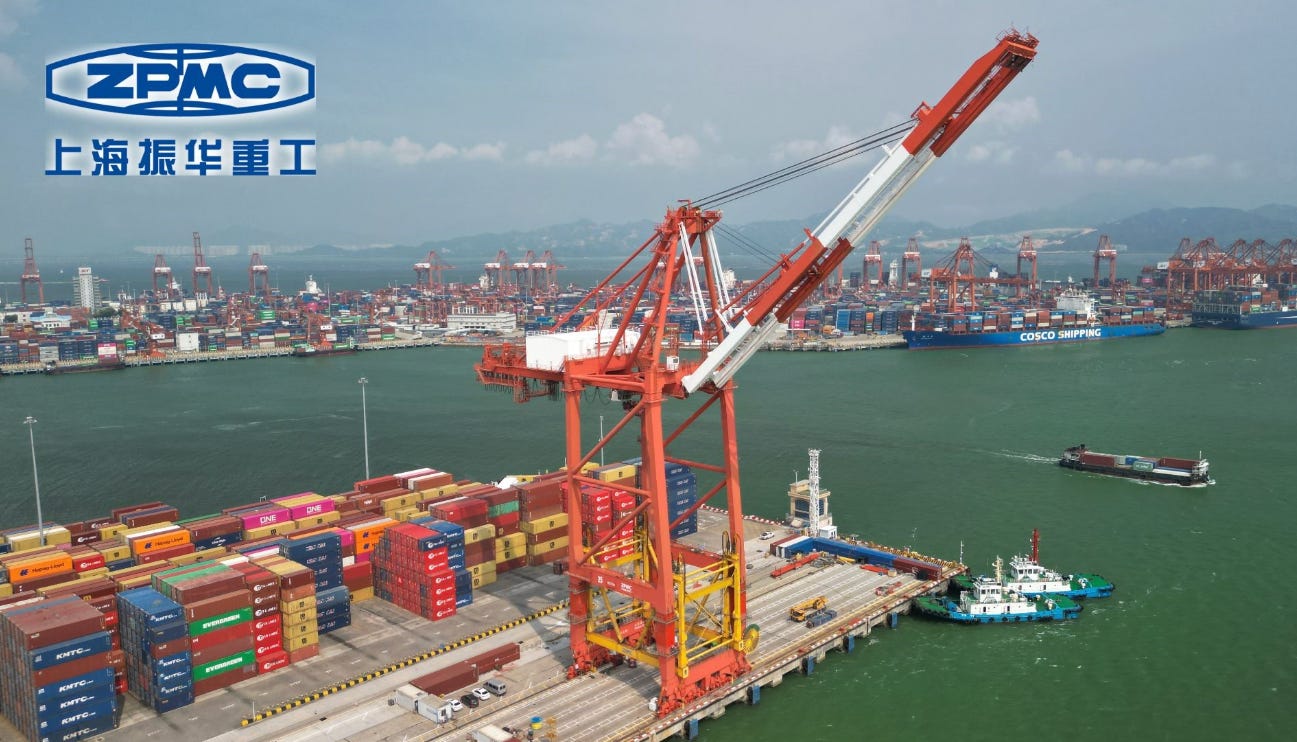
From ports to cranes to digital logistics systems, Chinese-built infrastructure is embedded with data-collection technology. Every shipment. Every movement. Every system interaction.
As Waller put it bluntly:
Those massive Chinese-made cranes? “Just big, huge spy antennas.”
The U.S. military and ports authorities already recognize the risk—so much so that Chinese cranes are now banned from sensitive American facilities.
But across the developing world, those same cranes are welcomed with open arms.
And every byte of data flows back to Beijing.
America’s Self-Inflicted Weakness
Perhaps the most sobering part of the conversation wasn’t about China at all—it was about us.
China can build a port in months.
The United States struggles to build one in decades.
Environmental reviews, lawsuits, regulatory paralysis, and political infighting have made large-scale infrastructure nearly impossible in the West—even at home.
That failure leaves a vacuum.
And China is more than happy to fill it.
Until the U.S. can build efficiently, finance responsibly, and compete seriously, Belt and Road will continue expanding—not because it’s good, but because it’s fast.
The Bottom Line
China’s Belt and Road Initiative isn’t about helping developing nations.
It’s about control—through debt, infrastructure, and data.
Ports today.
Sovereignty tomorrow.
And unless America relearns how to build—and how to counter this strategy—the map of global power will continue shifting quietly, one harbor at a time.
Transcript
Sam Stone: Mike we have just about two minutes two and a half minutes left in this segment. We’re gonna be bringing you back for one more segment after this. But I wanted to touch real quick before we we drop out and I’ve got some other questions and some other areas I wanted to talk about next but. How how do we start countering that Belt and Road because the truth is they can build ports in in months and years.
We can’t ever build them even in our own country anymore. mean, this is one of the things that’s hamstringing us is our inability to do things efficiently.
Mike Waller: Right, yeah. First, the Belt and Road Initiative is a really good deal for the countries that are having these facilities there, but it’s also a debt trap for them. So they get trapped in these low interest loans that they can’t repay because the infrastructure is so vast that it’s not going to be able to generate the income over the medium term to pay for itself.
So under the terms of these loans, China has the right to take sovereignty over those airports and seaports and other facilities everywhere around the world, as they did in Sri Lanka, right off the coast of India. And if they do that in the Caribbean, then they will have literally sovereign zones where those countries will no longer be able to govern what goes on in those ports.
**Sam Stone: **Well, and I would add one more thing before we go to break and tell me if I’m wrong on this. They also imbue those projects with essentially a load of spy technology. They are gathering, call it data gathering, but whatever those things touch, that information is going directly back to China.
Mike Waller: On the cranes? We can’t even use those Chinese-made cranes because they’re just big, huge spy antennas.
Sam Stone: Mike, we’re going to be coming back with more from Dr. Mike Waller here in just a moment, folks. Stay tuned.
Listen to the full episode of Breaking Battlegrounds anywhere you stream your podcasts!