For years, cable news panels and political activists have painted a familiar picture of U.S. Border Patrol and ICE agents: ideologues driven by racism, enforcing immigration law out of animus rather than duty. It’s a narrative that spreads quickly — and one that collapses the moment you actually talk to the people wearing the uniform.
On Breaking Battlegrounds, host Chuck Warren sat down with Anna Giaritelli, the award-winning Washington Examiner reporter who has spent years embedded in border communities, to unpack a reality the media rarely acknowledges: most Border Patrol agents are Hispanic, many are from the border itself, and nearly all are simply doing a job their communities depend on.
The Reality on the Ground
According to Giaritelli, roughly 60 percent of Border Patrol agents are Hispanic — a fact that directly contradicts the accusation that the agency is fueled by racial hostility.
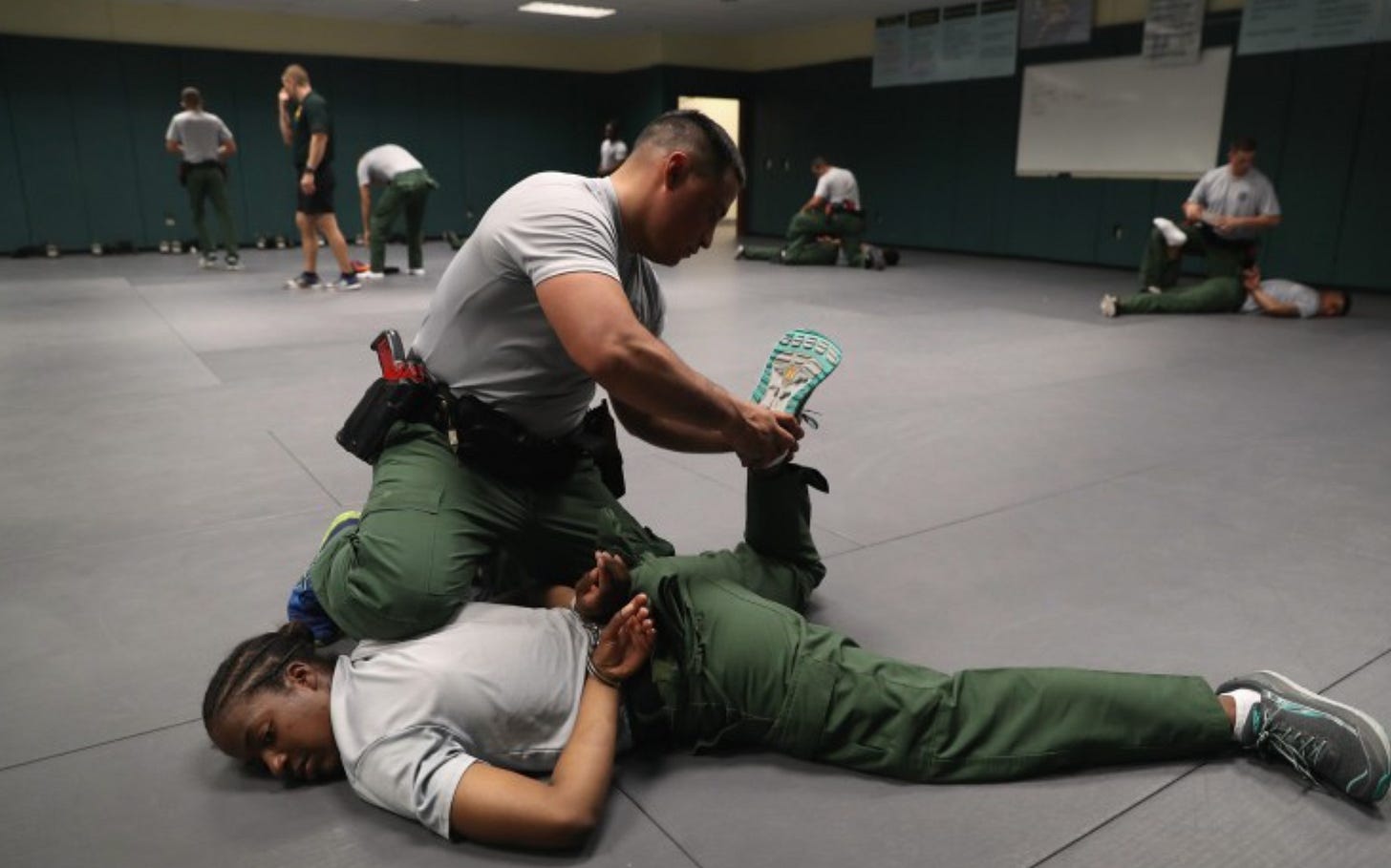
Recently, even CNN stumbled onto this reality. While reporting from the Border Patrol Academy, a CNN journalist asked a classroom of trainees two simple questions:
-
How many of you are Hispanic?
-
How many of you come from border communities?
In both cases, well over half raised their hands.
These are not outsiders parachuting in with political agendas. They are locals — people who grew up along the border, understand the terrain, the culture, and the consequences of chaos firsthand.
Why They Take the Job
As Giaritelli explained, this isn’t about ideology. It’s about opportunity.
In many border towns, a federal law-enforcement position offers something rare: stable employment, benefits, and a pension. For families rooted in these communities, Border Patrol represents one of the most reliable career paths available.
No one is signing up, Giaritelli emphasized, because they “want to punish people.” They sign up because law enforcement is needed, and because border communities live with the consequences when the law isn’t enforced.
How Agents Respond to the “Racist” Label
So how do Hispanic Border Patrol agents react when pundits label them racist?
According to Giaritelli: they mostly laugh it off.
After years of hearing the accusation, many agents find it too disconnected from reality to take seriously. Their focus isn’t on cable-news narratives — it’s on the work: rescues in the desert, drug interdictions, human trafficking cases, and keeping their own communities safe.
A Narrative Built Far From the Border
What this conversation exposes is a widening gap between media commentary and lived experience.
The people most eager to define Border Patrol agents rarely visit the border. Meanwhile, the people who live there — and often work there — are left shaking their heads as their neighbors are reduced to caricatures.
As Giaritelli put it, the truth isn’t complicated. It just doesn’t fit the storyline.
Transcript
Chuck Warren: We’re with Anna Giratelli. She is the award-winning journalist for the Washington Examiner. She covers the U.S. border and immigration. I forget recently what liberal pundit said it, but she was basically calling any Hispanic that worked for Border Patrol or ICE as racist. Have you talked to any of those Border Patrol or ICE agents who are Hispanic about how they feel about being called racist doing their job?
Anna Giaritelli: Oh many times. And ironically, the majority of border patrol agents are Hispanic, 60 % at last count. And CNN just did a great piece a few, a few weeks ago, they were actually at the border patrol academy where new agents are training to before they hit the field. And they walked into a random classroom and said to the agents, how many are you Hispanic? So they raised their hands, was well over half. And then they said, how many are you from border communities? So they live on the border.
And again, well over half. And so the CNN reporter, think was Cohen, forget his name, great reporter, just looking for the truth, right? Just goes to show it’s not about racism for Asians. It’s about, honestly, it’s about jobs available in your community and a federal job with a pension is a great job.
You know, those are the things people are thinking of. They’re not thinking, let me get a job where I can go punish people who break the law. And so I think that’s the, and the agents I’ve spoken with through the years who are Hispanic, they don’t even, it’s hard to explain why they would do that. They kind of laugh it off, you know.
Chuck Warren: Yeah, no.
Listen to the full episode of Breaking Battlegrounds anywhere you stream your podcasts!