For years, the debate over rare earths and critical minerals has revolved around scarcity: Do we have enough? Are there big enough discoveries? Can we compete with China’s scale?
In the latest segment of Breaking Battlegrounds, that framing gets turned on its head.
As hosts Sam Stone and Chuck Warren continue their conversation with Dr. Meg Reiss, founder and CEO of Solid Intel, the focus shifts from geology and permitting to something far more consequential: strategy.
Because when it comes to critical minerals, America doesn’t need massive new discoveries.
It needs leverage.
Why the Utah Discovery Is Bigger Than It Looks
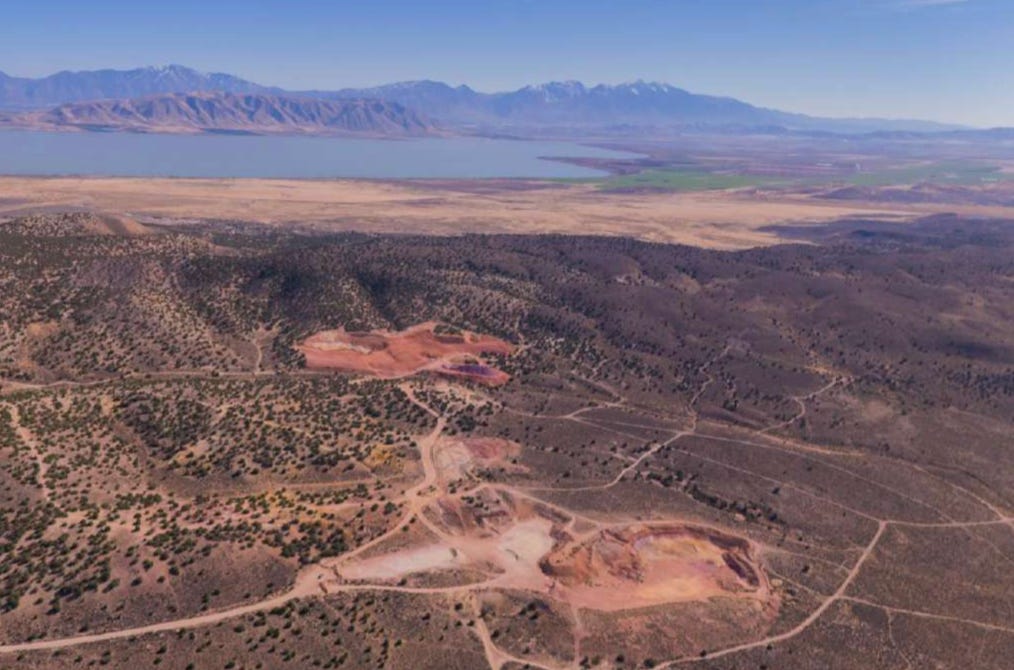
A recent report highlighted the discovery of multiple rare earth and critical minerals in southern Utah — a find that quickly drew national attention.
But Dr. Reiss explains why the true importance of discoveries like this isn’t their size.
The U.S. doesn’t need enormous reserves to reduce dependence on China. What it needs is distributed production and the ability to scale quickly. Smaller sites, when permitted and activated efficiently, can meaningfully shift supply chains in America’s favor.
Utah is especially well positioned because state leadership understands this dynamic and is actively supportive of production. That alignment matters — because speed, not volume, is what breaks dependency.
The Forgotten National Defense Stockpile
The conversation then turns to a question few Americans realize has national security implications: Do we stockpile critical minerals the way we stockpile oil?
The answer is yes — technically.
The National Defense Stockpile, overseen by the Department of Defense, was designed to ensure access to materials essential for wartime production. But Dr. Reiss explains that these reserves have been systematically reduced year after year since the early 1980s.
Despite bipartisan efforts to rebuild them, the stockpiles remain dangerously underfilled — leaving the U.S. exposed during supply disruptions or geopolitical crises.
Smart Ideas, Incomplete Execution
Dr. Reiss draws on her experience as a Senate staffer to explain that lawmakers have long understood the problem.
Efforts were made to:
-
Increase funding for mineral reserves
-
Mandate stronger stockpile levels
-
Accelerate domestic processing
But without consistent follow-through from the executive branch, these initiatives stalled. The result is a system that recognizes the threat — but hasn’t fully acted on it.
China’s Most Effective Weapon: Price Warfare
Perhaps the most important part of this segment is Dr. Reiss’s explanation of how China actually maintains dominance.
It isn’t just mining.
China routinely floods global markets with minerals at artificially low prices, deliberately driving competitors out of business. Once production elsewhere collapses, prices rise — and dependency deepens.
This tactic has wiped out U.S. and allied producers multiple times over the past few decades.
The Quiet Breakthrough: Guaranteed Off-Take Agreements
To counter this strategy, policymakers proposed a simple but powerful solution: price floors backed by government purchasing power.
Under this model, the U.S. government commits to buying minerals at a guaranteed minimum price — ensuring domestic companies can survive even when China manipulates the market.
This summer, that idea finally moved from paper to practice through agreements with companies like MP Materials, marking one of the most consequential — and least discussed — supply chain shifts in years.
By guaranteeing demand, the U.S. creates stability. And stability is what allows production, investment, and resilience to exist at all.
The Strategic Shift That Matters
This phase of the conversation reveals a crucial truth:
America’s mineral vulnerability isn’t about whether resources exist.
It’s about whether the system supports production when it matters.
Stockpiles, price guarantees, and distributed discoveries won’t grab headlines — but together, they change the balance of power.
As Sam Stone puts it, Washington still has smart ideas. The challenge is turning them into durable strategy.
Transcript
**Chuck Warren: **Meg so Wall Street Journal reported yesterday or the day before that a trove of critical minerals uncovered in the Utah desert. There’s a mineral production company called Ionic, said they discovered 16 rare earth and critical materials in the southern Utah desert and they’re already... you know, they’ve already received the permits and stuff for mining. How important is a finding like that for our efforts?
Dr. Meg Reiss: At this point, so the US doesn’t actually need huge enormous stocks of these critical minerals, you don’t actually need it in large quantities. So if you can figure out ways to find even like smaller subsets of these and restart mining and processing, we can actually surge these capabilities and reduce our dependencies very, very fast.
And so yeah, I used to work with Utah mining groups and defense groups all of the time. And so it doesn’t surprise me even in the slightest that this stuff is being discovered in Utah. And they actually have pretty great leadership there that wants to search this production. So it’s going to be very, very helpful, as long as there are not these concurrent federal reviews that end up being issued.
Sam Stone: One of the things that sort of just occurred to me on this, but do we have national stockpiles of these minerals like we do with oil? Is there a national reserve kept?
Dr. Meg Reiss: There is, there is at the Department of Wars, a national defense stockpile, but unfortunately it has been reduced pretty much every year since the early 80s. And so something that I did when I was a staffer in the Senate is we actually tried to put in place a couple of mandates to increase those stockpiles.
So Senator Ernst of Iowa, for instance, and a lot of other members were pushing money to be able to search these stockpiles. And then we were actually trying to figure out different ways to expedite processing. However, they’re vastly understocked and without continued support from the administration. I just don’t see these stockpiles getting up to their capacity.
What happened this year though with what’s called the MP materials deal. So this is a mining company. And then a couple others have followed is the stockpile essentially agreed to set a floor for off take of these minerals.
Which means that, so China loves to do this really, really bad thing where they flood the market with different products, drop the price, and then put US and other companies out of business. And so with this stockpile, what we were trying to push back when I was in the Senate, I actually wrote legislation with some support.
Is we wanted to have the stockpile have a guarantee to these processing and mining companies that they would off take the minerals at a price that would make sure that they’d be able to continue production even if China flooded the market again. And what we saw with the administration this summer, and now they’ve done it a couple of times, is they have acted on this and they have said, we are going to create a floor for the off take of the minerals. So when China does this again, and it takes this bad action again, these companies will not go out of business and they’ll be able to maintain their production.
**Sam Stone: **You see, Chuck, we still do have smart ideas in Washington, D.C. They’re just not getting implemented is the problem.
Listen to the full episode of Breaking Battlegrounds anywhere you stream your podcasts!