Artificial Intelligence isn’t just about innovation — it’s about national security. That was the warning from Satya Thallem, Senior Advisor at Americans for Responsible Innovation, in this Breaking Battlegrounds episode.
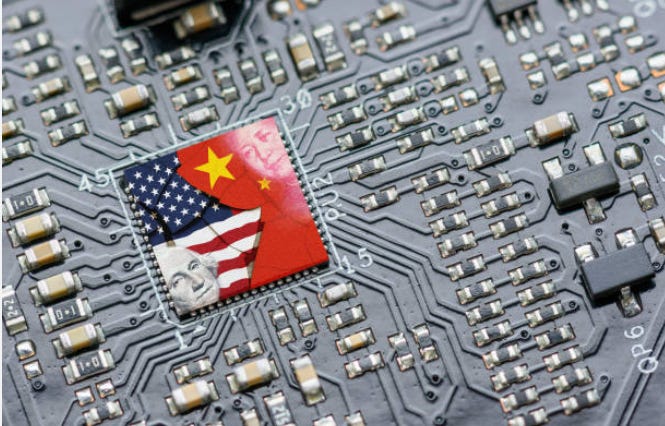
Thallem joined hosts Sam Stone and Sean Noble to discuss the growing concern over easing export restrictions on advanced AI chips — a decision that could hand China a dangerous edge.
“The same way we wouldn’t sell an F-35 to China,” Thallem argued, “We shouldn’t be selling our most advanced AI technologies either.”
The concern is straightforward: AI hardware, like NVIDIA’s GPUs, may power life-changing civilian technologies, but they’re also dual-use technologies with clear military applications. Every chip sold to China is one less chip available to American companies, research labs, and defense initiatives — especially since production is already limited by Taiwan Semiconductor’s output.
Despite these risks, companies like NVIDIA see the Chinese market as too massive to ignore. Thallem and the hosts raised the alarm that short-term corporate profits could undermine long-term U.S. security — setting a precedent where America’s technological edge is negotiated away.
As Stone concluded, America is entering a new industrial revolution with AI. Whether we lead it — or watch adversaries use our own tools against us — may hinge on decisions being made right now.
Transcript
Sam Stone: Welcome back to Breaking Battlegrounds. Our next guest up as advertised Satya Thallem, Senior Advisor at Americans for Responsible Innovation and nonprofit supporting AI policies that protect the public while maintaining our country's lead in innovation. Obviously blends really well from our last segment, Sean.
**Sean Noble: **Well, it does. Satya, thanks for being here. You have some expertise that all of our listeners need to know about, but you have recently had some concerns about the way the White House is moving to ease the restrictions on AI chip export controls and how that deals with innovation and national security. Talk to us a little bit about what you're seeing.
**Satya Thallem: **Yeah, I think it comes down to this. I think everyone, unless you're just absolutely crazy, wants the US to win the AI race. We want America to lead the world in innovation. We want American companies and American values to be reflected and ultimately exported into the world's adoption of these technologies and all the great benefits that can flow from it.
But we have export controls for things that we call dual use technologies, technologies that can be used for legitimate civilian purposes, but have clear military applications. There's no doubt that the hardware and the software, such as AI, fall into this category. And frankly, administrations, going back to the first Trump administration and continued in the Biden administration, have acknowledged that these core technologies are part of our national security regime.
And our concern is the same way that we would not sell an F35 to China. We shouldn't be selling our most advanced technologies and AI, including NVIDIA's GPUs and AMD. It boils down to that.
**Sean Noble: **Yeah, that's a great point and you know for some context I mean obviously the Trump administration just announced that they're gonna collect sales tax essentially for any of these chips sold to China for 15%. I think
**Sam Stone: **Yeah.
**Sean Noble: **That strikes me as…
**Sam Stone: **Bad bargain.
****Sean Noble: **Yeah, not only a bad bargain, but really bad precedent because now you've got the president involved and you know dealing with what the economy looks like from a standpoint of production.
**Satya Thallem: **Yeah. And it, it, in a sense, it kind of anchors the price on what is our national security costs. And I don't want to be too reductive about it. And that's kind of like the, that's sort of the sweet length kind of version of it. It's more subtle than that. And I get that the president is a deal maker, but actually these restrictions were put in, in the first couple of months of this Trump administration, they got it right the first time. And, I don't really see the logic of why that of why that justification has suddenly changed other than it seems like the CEO of Nvidia made a pretty good sales job.
****Sean Noble: **Yeah, which is fascinating because, you know, I mean, guess it's he's willing to pay the price because the market for China is just so massive. I mean, that which is which is again points to why this is a concern.
**Satya Thallem: **Well, yeah, I mean, every company ultimately wants to sell to China. Of course, they want to do so without having to compromise their IP and be subject to corporate espionage and all the kinds of things that that that China does. Nvidia seems to not be so concerned about that. But here's the thing that I just can't quite get my head around the production of the GPUs that Nvidia sells. they actually design them, right?
They don't actually technically manufacture them from right from beginning to end. They all come out of all of a hundred percent come out of the Taiwan semiconductor manufacturing corporation, which of course is based in Taiwan. Every one of those GPUs that roll off the assembly line has four or five customers that would like to buy it already. It's already supply constraint. Now, maybe this is a play for the future for when that capacity can be expanded. But as of this moment,
every GPU that is not sold in the, that sold to China is one less that can be sold in the U.S.
**Sam Stone: **Which is, that's a critical point because as we're entering, we're talking with our last guest a little bit from the humanitarian side of AI and talking about entering into a new industrial revolution with a. It's essential that America win that race to the top of this revolution like we have prior ones.
Listen to the full episode of Breaking Battlegrounds anywhere you stream your podcasts!